Products Categories
Basic Information
| CAS No.: | 108-75-8 |
|---|---|
| Name: | 2,4,6-Collidine |
| Article Data: | 96 |
| Molecular Structure: | |
|
|
|
| Formula: | C8H11N |
| Molecular Weight: | 121.182 |
| Synonyms: | 2,4,6-Trimethylpyridine;NSC 460;s-Collidine;sym-Collidine;a,g,a'-Collidine;g-Collidine; |
| EINECS: | 203-613-3 |
| Density: | 0.917 g/cm3 |
| Melting Point: | -43 °C(lit.) |
| Boiling Point: | 171 °C at 760 mmHg |
| Flash Point: | 57.2 °C |
| Solubility: | 35 g/L (20 ºC) |
| Appearance: | colourless liquid |
| Hazard Symbols: |
 Xn Xn
|
| Risk Codes: | 10-20/21/22-36/37/38 |
| Safety: | 26-36/37-36 |
| Transport Information: | UN 1992 3/PG 3 |
| PSA: | 12.89000 |
| LogP: | 2.00680 |
Related products
- 144851-82-1METHYL2-AMINO-3-FLUOROBENZOATE
- 483366-12-7(2S,4R)-1-Boc-2-cyano-4-hydroxypyrrolidine
- 173606-50-3BOC-10-AMINODECANOIC ACID
- 361456-36-2METHYL (R)-(+)-ISOCYANATO-3-PHENYLPROPI&
- 5156-58-1N-(1-Benzyl-4-pipperidinyl)-N-phenylpropanamide HCl
- 81281-59-67-Benzylideneaminotheophylline
- 50288-62-5threo-Phenyl-2-piperidyl acetamide
- 82993-81-5D-threo-Ritalinic acid hydrochloride
- 47087-37-6Z-D-Glu-OMe
- 1219080-61-1IMIDAZOLE-2-BORONIC ACID
Downstream Products
Hot Products
- 553-26-44,4'-Bipyridine
- 111025-46-82,4-Thiazolidinedione,5-[[4-[2-(5-ethyl-2-pyridinyl)ethoxy]phenyl]methyl]-
- 8000-78-0Essential oils, garlic
- 103-23-1Hexanedioic acid,1,6-bis(2-ethylhexyl) ester
- 13755-29-8Sodium tetrafluoroborate
- 53003-10-4Salinomycin
- 2192-20-3Ethanol,2-[2-[4-[(4-chlorophenyl)phenylmethyl]-1-piperazinyl]ethoxy]-, hydrochloride(1:2)
- 33626-98-1Methyl 6-bromo-2-naphthoate
- 104987-11-3Tacrolimus
- 141-53-7Sodium formate
- 8001-54-5Quaternary ammonium compounds, alkylbenzyldimethyl, chlorides
- 9003-39-8Povidone
- 10161-34-9Trenbolone acetate
- 402957-28-2Telaprevir
- 68-19-9Cyanocobalamin
Post a RFQ
1


What can I do for you?
Get Best Price
Get Best Price for 108-75-8
2,4,6-Collidine


Chemistry
The Molecular formula of 2,4,6-TRIMETHYLPYRIDINE(108-75-8): C8H11N
The Molecular Weight of 2,4,6-TRIMETHYLPYRIDINE(108-75-8): 121.18
The Molecular Structure of 2,4,6-TRIMETHYLPYRIDINE(108-75-8):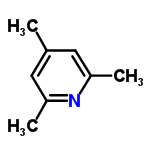
EINECS: 203-613-3
Melting point: -43 °C(lit.)
Boiling Point: 171 °C at 760 mmHg
Flash Point: 57.2 °C
Index of Refraction: 1.502
Molar Refractivity: 38.81 cm3
Molar Volume: 131.4 cm3
Polarizability: 15.38 10-24 cm3
Surface Tension: 32.6 dyne/cm
Density: 0.921 g/cm3
Enthalpy of Vaporization: 39.87 kJ/mol
Vapour Pressure: 1.9 mmHg at 25°C
storage temp.: 2-8°C
Water Solubility: 35 g/L (20 oC)
Sensitive: Hygroscopic
Stability: Stable. Combustible. Incompatible with strong oxidizing agents.
Appearance: colourless liquid
Merck: 14,9718
BRN: 107283
IUPAC Name: 2,4,6-trimethylpyridine
Synonyms: 2,4,6-Kollidin;2,4,6-trimethyl-pyridin;Pyridine,2,4,6-trimethyl-;S-COLLIDINE;a,g,a'-Collidine;alpha,gamma,alpha'-Collidine;g-Collidine;alpha,gamma,alpha’-collidine;
The Molecular Weight of 2,4,6-TRIMETHYLPYRIDINE(108-75-8): 121.18
The Molecular Structure of 2,4,6-TRIMETHYLPYRIDINE(108-75-8):
EINECS: 203-613-3
Melting point: -43 °C(lit.)
Boiling Point: 171 °C at 760 mmHg
Flash Point: 57.2 °C
Index of Refraction: 1.502
Molar Refractivity: 38.81 cm3
Molar Volume: 131.4 cm3
Polarizability: 15.38 10-24 cm3
Surface Tension: 32.6 dyne/cm
Density: 0.921 g/cm3
Enthalpy of Vaporization: 39.87 kJ/mol
Vapour Pressure: 1.9 mmHg at 25°C
storage temp.: 2-8°C
Water Solubility: 35 g/L (20 oC)
Sensitive: Hygroscopic
Stability: Stable. Combustible. Incompatible with strong oxidizing agents.
Appearance: colourless liquid
Merck: 14,9718
BRN: 107283
IUPAC Name: 2,4,6-trimethylpyridine
Synonyms: 2,4,6-Kollidin;2,4,6-trimethyl-pyridin;Pyridine,2,4,6-trimethyl-;S-COLLIDINE;a,g,a'-Collidine;alpha,gamma,alpha'-Collidine;g-Collidine;alpha,gamma,alpha’-collidine;
Uses
2,4,6-TRIMETHYLPYRIDINE(108-75-8) is used in organic synthesis.
Toxicity Data With Reference
The Toxicity Information of 2,4,6-TRIMETHYLPYRIDINE(108-75-8):
| 1. | orl-rat LD50:400 mg/kg | 85JCAE Prehled Prumyslove Toxikologie; Organicke Latky Marhold, J.,Prague, Czechoslovakia.: Avicenum,1986,847. | ||
| 2. | ihl-rat LCLo:2500 ppm/2H | 85JCAE Prehled Prumyslove Toxikologie; Organicke Latky Marhold, J.,Prague, Czechoslovakia.: Avicenum,1986,847. | ||
| 3. | skn-gpg LD50:1 g/kg | 85JCAE Prehled Prumyslove Toxikologie; Organicke Latky Marhold, J.,Prague, Czechoslovakia.: Avicenum,1986,847. |
Consensus Reports
Reported in EPA TSCA Inventory.
Safety Profile
Poison by ingestion. Moderately toxic by inhalation. When heated to decomposition it emits toxic vapors of NOx.
The Hazard Codes of 2,4,6-TRIMETHYLPYRIDINE(108-75-8): Xn
Xn
HazardClass: 3
The Risk Statements information of 2,4,6-TRIMETHYLPYRIDINE(108-75-8):
10: Flammable
20/21/22: Harmful by inhalation, in contact with skin and if swallowed
36/37/38: Irritating to eyes, respiratory system and skin
The Safety Statements information of 2,4,6-TRIMETHYLPYRIDINE(108-75-8):
26: In case of contact with eyes, rinse immediately with plenty of water and seek medical advice
36: Wear suitable protective clothing
36/37: Wear suitable protective clothing and gloves
RIDADR: UN 1992 3/PG 3
WGK Germany: 3
RTECS: UU0970000
PackingGroup: III
HS Code: 29333999
The Hazard Codes of 2,4,6-TRIMETHYLPYRIDINE(108-75-8):
Xn HazardClass: 3
The Risk Statements information of 2,4,6-TRIMETHYLPYRIDINE(108-75-8):
10: Flammable
20/21/22: Harmful by inhalation, in contact with skin and if swallowed
36/37/38: Irritating to eyes, respiratory system and skin
The Safety Statements information of 2,4,6-TRIMETHYLPYRIDINE(108-75-8):
26: In case of contact with eyes, rinse immediately with plenty of water and seek medical advice
36: Wear suitable protective clothing
36/37: Wear suitable protective clothing and gloves
RIDADR: UN 1992 3/PG 3
WGK Germany: 3
RTECS: UU0970000
PackingGroup: III
HS Code: 29333999