Welcome to LookChem.com Sign In|Join Free
  • or

Encyclopedia

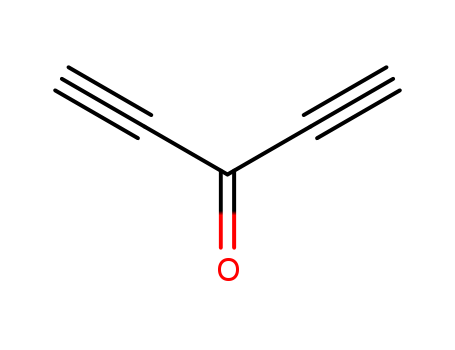
Penta-1,4-diyn-3-one

Base Information
  • Chemical Name:Penta-1,4-diyn-3-one
  • CAS No.:33576-71-5
  • Molecular Formula:C5H2O
  • Molecular Weight:78.0703
  • Hs Code.:
  • DSSTox Substance ID:DTXSID20503861
  • Nikkaji Number:J2.398.691D
  • Wikidata:Q82357937
Penta-1,4-diyn-3-one

Synonyms:penta-1,4-diyn-3-one;1,4-Pentadiyn-3-one;33576-71-5;ethynyl ketone;DTXSID20503861;CHEBI:189222

Suppliers and Price of Penta-1,4-diyn-3-one
Supply Marketing:
Business phase:
The product has achieved commercial mass production*data from LookChem market partment
Manufacturers and distributors:
  • Manufacture/Brand
  • Chemicals and raw materials
  • Packaging
  • price
Total 1 raw suppliers
Chemical Property of Penta-1,4-diyn-3-one
Chemical Property:
  • PSA:17.07000 
  • LogP:-0.17810 
  • XLogP3:0.9
  • Hydrogen Bond Donor Count:0
  • Hydrogen Bond Acceptor Count:1
  • Rotatable Bond Count:0
  • Exact Mass:78.010564683
  • Heavy Atom Count:6
  • Complexity:129
Purity/Quality:

99% *data from raw suppliers

Safty Information:
  • Pictogram(s):  
  • Hazard Codes: 
MSDS Files:

SDS file from LookChem

Useful:
  • Canonical SMILES:C#CC(=O)C#C
  • General Description 1,4-Pentadiyn-3-one, also known as diethynyl ketone, is a key intermediate in the synthesis of 4H-chalcogenopyran-4-ones through reactions with disodium chalcogenides (e.g., sulfide, selenide, telluride). It forms enol ether intermediates when treated with sodium ethoxide/ethanol, which further react selectively to produce 2,6-disubstituted chalcogenopyranones. These derivatives have applications in electrophotography and optical recording due to their electron-accepting and heat-generating properties.
Refernces

Chalcogenopyranones from disodium chalcogenide additions to 1,4- pentadiyn-3-ones. The role of enol ethers as intermediates

10.1002/jhet.5570360322

The research focuses on the synthesis of 4H-chalcogenopyran-4-ones using disodium chalcogenides and enol ethers derived from 1,4-pentadiyn-3-ones. Key chemicals involved include diynones such as 1,5-diphenyl-1,4-pentadiyn-3-one (2a), 1,5-di-tert-butyl-1,4-pentadiyn-3-one (2b), and 1,5-di-(4-N,N-dimethylaminophenyl)-1,4-pentadiyn-3-one (2c), which are reacted with disodium chalcogenides like disodium sulfide, disodium selenide, and disodium telluride. Enol ethers 9 are formed as intermediates from the addition of ethanol to diynones in sodium ethoxide/ethanol, and these enol ethers react with disodium chalcogenides to yield 2,6-disubstituted chalcogenopyranones with high selectivity. The study also examines the addition of hydrogen sulfide to diynones and the role of intermediates in the formation of chalcogenopyranones and dihydrochalcogenophenes. The research aims to improve the synthesis of chalcogenopyranones, which have applications in various fields including as electron-accepting materials in electrophotography and as heat-generating elements in optical recording.

Post a RFQ

Enter 15 to 2000 letters.Word count: 0 letters

Attach files(File Format: Jpeg, Jpg, Gif, Png, PDF, PPT, Zip, Rar,Word or Excel Maximum File Size: 3MB)

1 Customer Service

What can I do for you?
Get Best Price

Get Best Price for 33576-71-5