Welcome to LookChem.com Sign In|Join Free
  • or

Encyclopedia

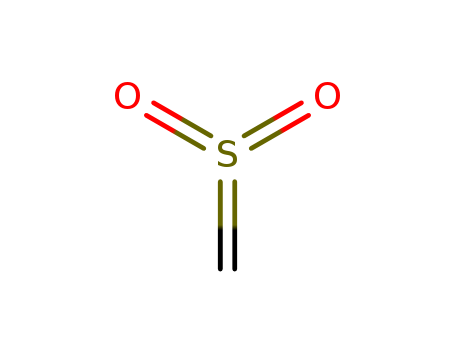
Sulfene

Base Information
  • Chemical Name:Sulfene
  • CAS No.:917-73-7
  • Molecular Formula:CH2O2S
  • Molecular Weight:78.0917
  • Hs Code.:
  • DSSTox Substance ID:DTXSID60482121
  • Nikkaji Number:J371.658I,J546.053K
  • Wikidata:Q2801282
  • Wikipedia:Sulfene
Sulfene

Synonyms:isosulfamerazine;sulfaperine;sulfene

Suppliers and Price of Sulfene
Supply Marketing:
Business phase:
The product has achieved commercial mass production*data from LookChem market partment
Manufacturers and distributors:
  • Manufacture/Brand
  • Chemicals and raw materials
  • Packaging
  • price
Total 4 raw suppliers
Chemical Property of Sulfene
Chemical Property:
  • PSA:66.23000 
  • LogP:0.37830 
  • XLogP3:0.7
  • Hydrogen Bond Donor Count:0
  • Hydrogen Bond Acceptor Count:2
  • Rotatable Bond Count:0
  • Exact Mass:77.97755048
  • Heavy Atom Count:4
  • Complexity:83.7
Purity/Quality:

99% *data from raw suppliers

Safty Information:
  • Pictogram(s):  
  • Hazard Codes: 
MSDS Files:

SDS file from LookChem

Useful:
  • Canonical SMILES:C=S(=O)=O
  • General Description Sulfene (also known as sulfonyl methane or thioformaldehyde-S,S-dioxide) is a highly reactive intermediate in organic chemistry, traditionally generated from methanesulfonyl chloride with triethylamine, though this method can introduce complications due to amine reactivity. A more efficient synthesis involves fluorodesilylation of trimethylsilylmethanesulfonyl chloride using cesium fluoride, which avoids amine-related issues and produces sulfene under mild, neutral conditions with improved yield and selectivity, particularly when trapped with substrates like cyclopentadiene. This method offers a superior alternative for accessing sulfene adducts.
Refernces

A NEW SULFENE SYNTHESIS

10.1016/S0040-4039(00)88704-3

The research aims to develop a novel method for generating sulfene, a reactive intermediate in organic chemistry, without the use of amines. The traditional method involves using methanesulfonyl chloride with triethylamine, which can lead to complications due to the amine's reactivity. The new procedure involves fluorodesilylation of trimethylsilylmethanesulfonyl chloride in the presence of a trapping agent, such as cesium fluoride, to produce sulfene. This approach avoids the issues associated with amine use and provides better yields of sulfene adducts under mild, neutral conditions. The study demonstrates that this method is superior in terms of yield and selectivity compared to the conventional approach, especially when trapping sulfene with substrates like cyclopentadiene.


Post a RFQ

Enter 15 to 2000 letters.Word count: 0 letters

Attach files(File Format: Jpeg, Jpg, Gif, Png, PDF, PPT, Zip, Rar,Word or Excel Maximum File Size: 3MB)

1 Customer Service

What can I do for you?
Get Best Price

Get Best Price for 917-73-7