10.1016/0022-328X(91)83138-T
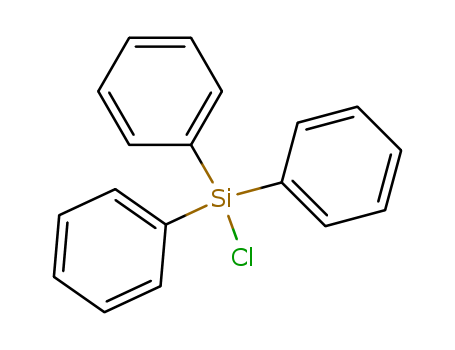
The research investigates the synthesis and reactivity of silicon compounds featuring the tris(trimethylsilyl)silyl (Me3Si)Si group. The study aims to explore the reactivity of these silicon-centered compounds compared to their carbon analogues, hypothesizing that the increased bond lengths around the central silicon atom would result in less steric hindrance and thus different reactivity patterns. Key chemicals used in the research include (Me3Si)SiLi, various silicon halides such as SiCl4, Me3SiHCl, and Ph3SiCl, and other reagents like LiAlH4 and Ag salts. The researchers synthesized a range of compounds like (Me3Si)SiSiCl3, (Me3Si)SiSiMe3H, and (Me3Si)SiSiPh3Cl, and observed their reactions with different reagents. The findings revealed that the silicon-centered compounds exhibited significantly higher reactivity compared to their carbon analogues, with reactions such as hydrolysis and substitution occurring more readily. This enhanced reactivity was attributed to the reduced steric hindrance around the silicon center. The study concludes that the (Me3Si)Si group, despite not showing particularly unusual chemistry, is a valuable ligand in transition metal chemistry, forming interesting derivatives with various metals.


 C
C


