10.1002/pola.26584
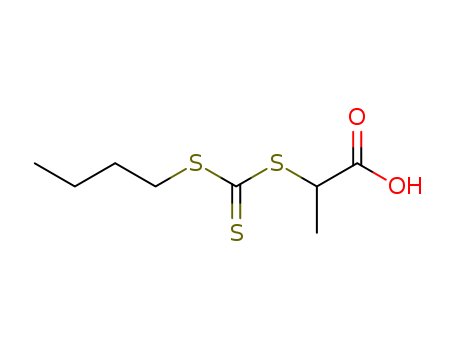
The research focuses on the controlled radical polymerization of styrene-based models of the active site of the [FeFe]-hydrogenase, an enzyme crucial for hydrogen metabolism in certain microorganisms. The purpose of this study was to synthesize and incorporate biomimetic models of the [FeFe]-hydrogenase into copolymers using controlled radical polymerization techniques, with the aim of creating polymer-bound organometallic catalysts for efficient hydrogen production. The researchers successfully synthesized three different styrene-based model complexes, including propanedithiolato-bridged, 2-azapropanedithiolato-bridged, and bifunctional styrene iron complexes. These were copolymerized with styrene using free radical and reversible addition-fragmentation chain transfer (RAFT) polymerization methods. The resulting copolymers exhibited narrow molar mass distributions and retained the electrocatalytic proton reduction ability of the [FeFe]-hydrogenase models at a low potential of –2.2 V. The study concluded that the [FeFe]-hydrogenase mimics could be successfully incorporated into copolymers without inhibiting their catalytic ability, contributing to the development of polymer-bound metallorganic catalysts for hydrogen production. Key chemicals used in the process included various styrene-based monomers, model complexes of the [FeFe]-hydrogenase, initiators like AIBN, and RAFT agents such as 2-(butylthiocarbonothioylthio)propanoic acid (CTA2), as well as solvents like toluene and reaction media like chloroform and triethylamine.