10.1016/j.bmcl.2015.09.047
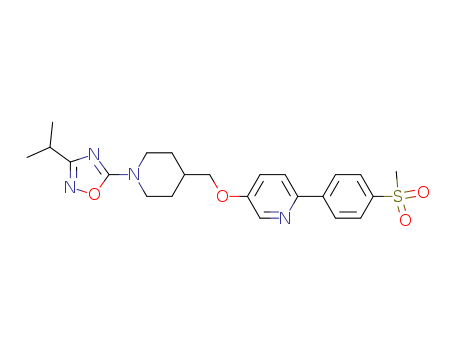
This study focused on the design, synthesis, and evaluation of oxazolidinone bicyclo[3.3.1]nonane derivatives as GPR119 agonists for their potential antidiabetic effects. GPR119 is a receptor expressed in pancreatic β cells and intestinal enteroendocrine cells, and its agonists promote glucose-dependent insulin secretion and incretin release. The researchers explored two conformationally constrained scaffolds, B and C, to improve the solubility and efficacy of the compounds. Scaffold C with a syn configuration showed the best overall properties. Compound 25a containing scaffold C exhibited extremely potent agonist activity and significantly reduced blood glucose levels in an oral glucose tolerance test in mice at a dose of 0.1 mg/kg. The study also involved modifications to the pyrimidine core, benzene ring, and linker to optimize the properties of the compound, resulting in improved solubility and sustained plasma exposure in a pharmacokinetic assay in rats.