10.1021/ja9936520
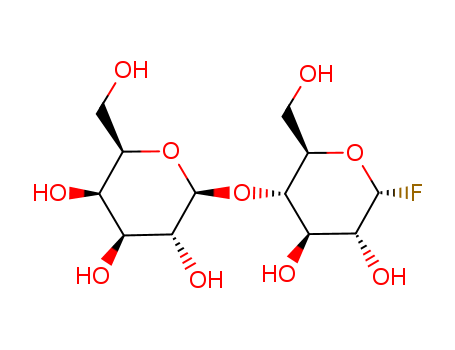
The research focuses on the efficient chemoenzymatic synthesis of various regioselectively modified β(1f4)-oligo- and -polysaccharides using a mutant cellulase. The experiments are based on the use of a "glycosynthase," which is a Glu-197-Ala nucleophile mutant of the retaining cellulase endoglucanase I (Cel7B) from Humicola insolens. The methodology involves the rational design of modified acceptor and donor molecules, informed by X-ray structures of wild type and mutated enzymes. Reactants include R-glycobiosyl fluorides, various mono- and disaccharide acceptors, and the polymerization of these donors through a single-step inverting mechanism. Lactosyl fluoride was used as a donor substrate in the synthesis of various oligosaccharides. The analyses used to characterize the synthesized oligo- and polysaccharides encompass techniques such as NMR spectroscopy, mass spectrometry, enzymatic hydrolysis, and in some cases, X-ray crystallography. The study demonstrates the mutant enzyme's ability to catalyze the regio- and stereoselective glycosylation of various acceptors with high yield, showcasing a highly efficient approach for the synthesis of β(1f4)-oligosaccharides and polysaccharides.