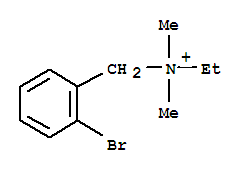
Chemical Property of Bretylium
Chemical Property:
- Boiling Point:°Cat760mmHg
- Flash Point:°C
- PSA:0.00000
- Density:g/cm3
- LogP:3.04540
- XLogP3:2.8
- Hydrogen Bond Donor Count:0
- Hydrogen Bond Acceptor Count:0
- Rotatable Bond Count:3
- Exact Mass:242.05444
- Heavy Atom Count:13
- Complexity:156
- Purity/Quality:
-
98%min *data from raw suppliers
BRETYLIUM 95.00% *data from reagent suppliers
Safty Information:
- Pictogram(s):
- Hazard Codes:
- MSDS Files:
-
SDS file from LookChem
Useful:
- Canonical SMILES:CC[N+](C)(C)CC1=CC=CC=C1Br
-
Uses
Anti-adrenergic; cardiac depressant (anti-arrhythmic). Bretylium possesses sympatholytic action, which is associated with blockage of norepinephrine
(noradrenaline) from presynaptic nerve endings. It also has a direct effect on
ischemic myocytes. Bretylium is an urgent treatment that is used in situations of ventricular
tachycardia and ventricular fibrillation, primarily in the severe phase of a myocardial
infarction, during which use of other medications or procedures have proven unsuccessful.
It requires great caution and should be used only in urgent situations.
-
Clinical Use
Bretylium (Bretylol) was introduced for the treatment
of essential hypertension but subsequently was shown
to suppress the ventricular fibrillation often associated
with acute myocardial infarction.
Bretylium is not to be considered a first-line antiarrhythmic
agent. However, because of its ability to prolong
the refractory period of Purkinje fibers and to elevate
the electrical threshold to ventricular fibrillation,
bretylium has been found useful in the treatment of lifethreatening
ventricular arrhythmias, especially when
conventional therapeutic agents, such as lidocaine or
procainamide, prove to be ineffective. In addition,
bretylium is known to facilitate the reversal of ventricular
fibrillation by precordial electrical shock. Its use
should be limited to no longer than 5 days.