10.1002/ejoc.200400213
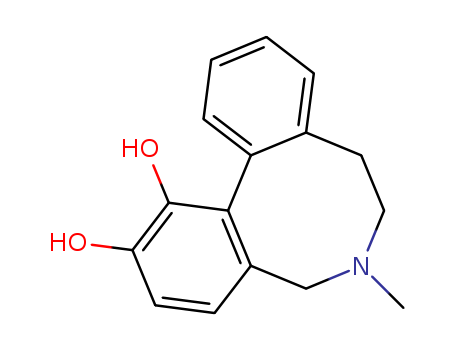
The research focuses on the synthesis of a small library of highly electron-rich 2-aryl and 2-heteroaryl phenethylamines (PEAs) using the Suzuki-Miyaura cross-coupling reaction, which is enhanced by microwave irradiation for improved reaction yield and speed. The study commenced with the synthesis of benzyl [2-(2-bromo-4,5-dimethoxyphenyl)ethyl]carbamate from 2-(3,4-dimethoxyphenyl)ethylamine, followed by its coupling with various boronic acids to generate the PEAs. The reactions were optimized using sodium hydrogencarbonate as the base and tetrakis(triphenylphosphane)palladium(0) as the catalyst, with the mixture of N,N-dimethylformamide and water as the solvent. The synthesized compounds were characterized by 1H and 13C NMR spectroscopy, and low-resolution mass spectrometry (LR-MS) to confirm their structures and purities. The research also successfully extended this methodology to synthesize an apogalanthamine analogue, a complex natural product with significant biological activities, showcasing the versatility and efficacy of the developed synthetic strategy.
10.1248/cpb.26.155
The research focuses on the photochemical syntheses of apogalanthamine analogs, specifically 10,11-methylenedioxy- and 10,11-dimethoxy-5,6,7,8-tetrahydrodibenz[e,e]azocines (1 and 2, respectively), which have α-adrenergic blocking activities. These compounds were synthesized by photolysis of N-benzyl-2-iodo-4,5-methylenedioxy- and N-benzyl-2-iodo-4,5-dimethoxy-β-phenethylamine (20 and 21, respectively). Other related compounds, such as 2,3-methylenedioxy- and 2,3-dimethoxy-5,6,7,8-tetrahydrodibenz[c,e]azocine (9 and 10, respectively), were also synthesized from similar precursors. The study found that the yields of 9 and 10, synthesized from iodo-amines with an iodine atom in the benzyl group, were better than those of 1 and 2, which were synthesized from iodides with a halogen atom in the phenethyl group.