Welcome to LookChem.com Sign In|Join Free
  • or

Encyclopedia

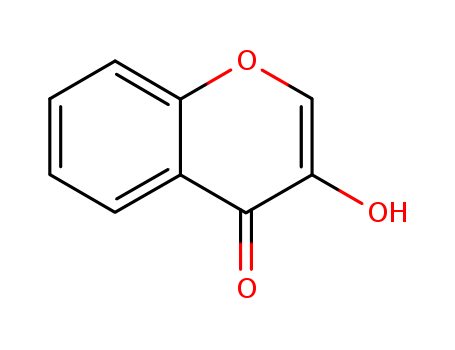
3-Hydroxychromen-4-one

Base Information
  • Chemical Name:3-Hydroxychromen-4-one
  • CAS No.:13400-26-5
  • Molecular Formula:C9H6O3
  • Molecular Weight:162.145
  • Hs Code.:
  • DSSTox Substance ID:DTXSID80409158
  • Nikkaji Number:J942.075D
  • Wikidata:Q82214872
  • Mol file:13400-26-5.mol
3-Hydroxychromen-4-one

Synonyms:3-HC cpd;3-hydroxychromone

Suppliers and Price of 3-Hydroxychromen-4-one
Supply Marketing:
Business phase:
The product has achieved commercial mass production*data from LookChem market partment
Manufacturers and distributors:
  • Manufacture/Brand
  • Chemicals and raw materials
  • Packaging
  • price
Total 4 raw suppliers
Chemical Property of 3-Hydroxychromen-4-one
Chemical Property:
  • XLogP3:1.4
  • Hydrogen Bond Donor Count:1
  • Hydrogen Bond Acceptor Count:3
  • Rotatable Bond Count:0
  • Exact Mass:162.031694049
  • Heavy Atom Count:12
  • Complexity:232
Purity/Quality:

98%min *data from raw suppliers

Safty Information:
  • Pictogram(s):  
  • Hazard Codes: 
MSDS Files:

SDS file from LookChem

Useful:
  • Canonical SMILES:C1=CC=C2C(=C1)C(=O)C(=CO2)O
Technology Process of 3-Hydroxychromen-4-one

There total 1 articles about 3-Hydroxychromen-4-one which guide to synthetic route it. The literature collected by LookChem mainly comes from the sharing of users and the free literature resources found by Internet computing technology. We keep the original model of the professional version of literature to make it easier and faster for users to retrieve and use. At the same time, we analyze and calculate the most feasible synthesis route with the highest yield for your reference as below:

synthetic route:
Guidance literature:
With hydrogenchloride; 3-chloro-benzenecarboperoxoic acid; Yield given. Multistep reaction. Yields of byproduct given; 1.) benzene, reflux, 3 h, 2.) reflux, 1 h;
Guidance literature:
With C30H29F6N3OS; In dichloromethane; at -20 ℃; for 40h; stereoselective reaction;
DOI:10.1039/c6ra17400k
Guidance literature:
With 18-crown-6 ether; potassium hydroxide; In water; toluene; at 20 ℃; for 0.166667h;
DOI:10.1055/s-0030-1260034
Refernces

Efficient Synthesis of Ratiometric Fluorescent Nucleosides Featuring 3-Hydroxychromone Nucleobases

10.1016/j.tet.2009.07.021

The study presents the synthesis and characterization of a new class of fluorescent nucleosides with 2-aryl-3-hydroxychromone (3-HC) as base analogues. These nucleosides, specifically 1a and 1b, were designed to incorporate into DNA oligonucleotides for sensitive fluorescence-based detection and imaging. The synthesis involved key steps like aryl-aldol condensation, cycloetherification, Friedel-Crafts glycosylation, and 1,3-dipolar cycloaddition. The resulting nucleosides exhibited dual emission sensitivity to polarity changes, with 1a showing high sensitivity, making it promising for nucleic acid labeling and tracking environmental changes within DNA structures. The study provides a foundation for developing more advanced fluorescent probes for biological applications.

A universal nucleoside with strong two-band switchable fluorescence and sensitivity to the environment for investigating DNA interactions

10.1021/ja3030388

The research focuses on the development of a novel nucleoside analogue, incorporating a 3-hydroxychromone (3HC) fluorophore as a mimic for nucleobases, designed to investigate DNA interactions. The study synthesized this nucleoside and incorporated it into oligonucleotide chains, demonstrating its exceptional environmental sensitivity, switching between two distinct fluorescence bands without altering the duplex conformation of DNA. The experiments involved synthesizing the phosphoramidite of the nucleoside and labeled oligonucleotides (ODNs), assessing their thermodynamic stability through thermal denaturation studies, and examining their secondary structure using circular dichroism (CD) spectroscopy. The UV absorbance and fluorescence properties of the labeled ODNs were characterized in both single-stranded (ss) and double-stranded (ds) states, revealing the dye's fluorescence quantum yield and its sensitivity to the polarity of the environment. The study also explored the photostability of the nucleoside and its ODNs, and validated its application as a probe for sensing biomolecular interactions by studying the interaction with the HIV-1 nucleocapsid protein (NC). The reactants included the 3HC dye, various ODN sequences, and the NC protein, with analyses utilizing UV-Vis spectroscopy, fluorescence spectroscopy, and CD spectroscopy to characterize the photophysical properties and environmental sensitivity of the new nucleoside analogue in DNA contexts.


Post a RFQ

Enter 15 to 2000 letters.Word count: 0 letters

Attach files(File Format: Jpeg, Jpg, Gif, Png, PDF, PPT, Zip, Rar,Word or Excel Maximum File Size: 3MB)

1 Customer Service

What can I do for you?
Get Best Price

Get Best Price for 13400-26-5