Welcome to LookChem.com Sign In|Join Free
  • or
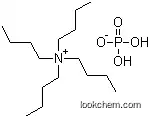
Tetrabutylammonium phosphate (TBAP) is a quaternary ammonium salt that is soluble in water and serves as a versatile reagent in various applications across different industries. It is known for its ability to form ion pairs and facilitate the analysis of compounds that are otherwise difficult to separate.

5574-97-0

Post Buying Request

5574-97-0 Suppliers

Recommended suppliers

  • Product
  • FOB Price
  • Min.Order
  • Supply Ability
  • Supplier
  • Contact Supplier

5574-97-0 Usage

Uses

Used in Pharmaceutical Industry:
Tetrabutylammonium phosphate is used as an anti-HIV-active nucleoside triphosphate prodrug, playing a crucial role in the development of treatments for HIV/AIDS.
Used in Analytical Chemistry:
Tetrabutylammonium phosphate monobasic serves as a suitable reagent for the resolution of disaccharides through reverse-phase ion-pairing high-performance liquid chromatography (RPIP-HPLC). It is also used for the disaccharide analysis of 35S-heparan sulfate (HS) and as a folding buffer for the dissolution of desalted oligonucleotides.
Used in Research:
Tetrabutylammonium phosphate is utilized in the analysis of tetrasaccharides and 35S-disaccharides by HPLC, as well as in the preparation of monobasic tetrabutylammonium phosphate (TBAP) imprinted polymers, which are useful for selective recognition and separation of target molecules.
Used in Supramolecular Chemistry:
TBAP acts as an anion to probe the structure, stability, and intramolecular flexibility of a series of azacrown ethers, contributing to the understanding of host-guest interactions and the development of new supramolecular systems.

Check Digit Verification of cas no

The CAS Registry Mumber 5574-97-0 includes 7 digits separated into 3 groups by hyphens. The first part of the number,starting from the left, has 4 digits, 5,5,7 and 4 respectively; the second part has 2 digits, 9 and 7 respectively.
Calculate Digit Verification of CAS Registry Number 5574-97:
(6*5)+(5*5)+(4*7)+(3*4)+(2*9)+(1*7)=120
120 % 10 = 0
So 5574-97-0 is a valid CAS Registry Number.
InChI:InChI=1/C16H36N.H3O4P/c1-5-9-13-17(14-10-6-2,15-11-7-3)16-12-8-4;1-5(2,3)4/h5-16H2,1-4H3;(H3,1,2,3,4)/q+1;/p-3

5574-97-0 Well-known Company Product Price

  • Brand
  • (Code)Product description
  • CAS number
  • Packaging
  • Price
  • Detail
  • Alfa Aesar

  • (46746)  Tetra-n-butylammonium phosphate, 98%, non-UV   

  • 5574-97-0

  • 2g

  • 508.0CNY

  • Detail
  • Alfa Aesar

  • (46746)  Tetra-n-butylammonium phosphate, 98%, non-UV   

  • 5574-97-0

  • 10g

  • 2030.0CNY

  • Detail
  • Alfa Aesar

  • (46746)  Tetra-n-butylammonium phosphate, 98%, non-UV   

  • 5574-97-0

  • 50g

  • 8014.0CNY

  • Detail
  • Alfa Aesar

  • (19261)  Tetra-n-butylammonium phosphate, 99+%   

  • 5574-97-0

  • 0.5g

  • 257.0CNY

  • Detail
  • Alfa Aesar

  • (19261)  Tetra-n-butylammonium phosphate, 99+%   

  • 5574-97-0

  • 2g

  • 711.0CNY

  • Detail
  • Alfa Aesar

  • (19261)  Tetra-n-butylammonium phosphate, 99+%   

  • 5574-97-0

  • 10g

  • 2360.0CNY

  • Detail
  • Alfa Aesar

  • (19261)  Tetra-n-butylammonium phosphate, 99+%   

  • 5574-97-0

  • 50g

  • 9067.0CNY

  • Detail
  • Sigma-Aldrich

  • (86899)  Tetrabutylammoniumphosphatemonobasicsolution  for ion pair chromatography, concentrate, ampule

  • 5574-97-0

  • 86899-6X1AMP-F

  • 6,569.55CNY

  • Detail
  • Sigma-Aldrich

  • (86833)  Tetrabutylammoniumphosphatemonobasic  puriss., ≥99.0% (T)

  • 5574-97-0

  • 86833-1G

  • 876.33CNY

  • Detail
  • Sigma-Aldrich

  • (86833)  Tetrabutylammoniumphosphatemonobasic  puriss., ≥99.0% (T)

  • 5574-97-0

  • 86833-5G

  • 2,104.83CNY

  • Detail
  • Sigma-Aldrich

  • (86833)  Tetrabutylammoniumphosphatemonobasic  puriss., ≥99.0% (T)

  • 5574-97-0

  • 86833-25G

  • 7,417.80CNY

  • Detail
  • Sigma-Aldrich

  • (86867)  Tetrabutylammoniumphosphatemonobasic  purum, ≥97.0% (T)

  • 5574-97-0

  • 86867-100G

  • 26,020.80CNY

  • Detail

5574-97-0SDS

SAFETY DATA SHEETS

According to Globally Harmonized System of Classification and Labelling of Chemicals (GHS) - Sixth revised edition

Version: 1.0

Creation Date: Aug 12, 2017

Revision Date: Aug 12, 2017

1.Identification

1.1 GHS Product identifier

Product name Tetrabutylammonium phosphate monobasic

1.2 Other means of identification

Product number -
Other names dihydrogen phosphate,tetrabutylazanium

1.3 Recommended use of the chemical and restrictions on use

Identified uses For industry use only.
Uses advised against no data available

1.4 Supplier's details

1.5 Emergency phone number

Emergency phone number -
Service hours Monday to Friday, 9am-5pm (Standard time zone: UTC/GMT +8 hours).

More Details:5574-97-0 SDS

5574-97-0Relevant academic research and scientific papers

Palladium-catalyzed heck reaction of aryl chlorides under mild conditions promoted by organic ionic bases

Xu, Hua-Jian,Zhao, Yong-Qiang,Zhou, Xin-Feng

experimental part, p. 8036 - 8041 (2011/12/02)

An efficient Pd-catalyzed Heck reaction of aryl chlorides with olefins under mild conditions is described. High yields of products were achieved with n-Bu4N+OAc- as base. Significantly, the temperature of the Heck reaction of diverse nonactivated aryl chlorides can be lowered to 80 °C. The new reaction system can also tolerate a wider range of olefins.

Encapsulated binding sites - Synthetically simple receptors for the binding and transport of HCl

Winstanley, Keith J.,Allen, Sarah J.,Smith, David K.

scheme or table, p. 4299 - 4301 (2011/03/19)

We report a receptor with an encapsulated amine/amide binding site, which binds HCl with high affinity in organic media - the rate of HCl transport through an apolar phase is controlled by the degree of encapsulation of the HCl binding site.

Effect of spacer geometry on oxoanion binding by bis- and tetrakis-thiourea hosts

Leung, Annie N.,Degenhardt, Dave A.,Bühlmann, Philippe

, p. 2530 - 2536 (2008/09/18)

Hosts with thiourea groups bind anions by formation of multiple hydrogen bonds. This contribution discusses how spacers linking two or four thiourea groups affect the host affinity and selectivity. While most of the bis-thioureas bind H2PO4- preferentially, the extent of selectivity over chloride, acetate, and H2AsO4- is determined by the size of the binding cavity. A tetrakis-thiourea is shown to exhibit a unique H2AsO4- selectivity, and the discrimination of chloride is enhanced by specific solvation in dimethyl sulfoxide.

Kinetics and mechanism of phosphate-catalyzed hydrolysis of benzoate esters: Comparison with nucleophilic catalysis by imidazole and o-iodosobenzoate

El Seoud, Omar A.,Ruasse, Marie-Francoise,Rodrigues, Wagner A.

, p. 1053 - 1058 (2007/10/03)

Phosphate-catalyzed hydrolysis of 2,4-dinitrophenyl 4-X-benzoate, and 3- or 4-Y-phenyl 3,5-dinitrobenzoates, where X and Y are substituents, has been studied spectrophotometrically. The following conclusions are based on catalytic rate constants, solvent

A novel phosphate chemosensor utilizing anion-induced fluorescence change

Liao, Jen-Hai,Chen, Chao-Tsen,Fang, Jim-Min

, p. 561 - 564 (2007/10/03)

(figure presented) The neutral receptor N,N′-bis{3,5-di[(1-pyrenylmethyl)carbamoyl]benzyl} pyridine-2,6-dicarbamide (2) provides a pseudo-tetrahedron cleft and multiple hydrogen bondings to form a 1:1 complex with phosphate ion in a highly selective manne

An azophenol-based chromogenic anion sensor

Lee, Dong Hoon,Lee, Kwan Hee,Hong, Jong-In

, p. 5 - 7 (2007/10/03)

(equation presented) A new chromogenic azophenol-thiourea based anion sensor, 2, has been developed. This system allows for the selective colorimetric detection of F-, H2PO4-, and AcO-. Selectivity trends turned out to be dependent upon guest basicity and conformational complementarity between 2 and the guest.

UNE METHODE SIMPLE DE SYNTHESE DES PHOSPHATES TERPENIQUES ALLYLIQUES PRIMAIRES ET TERTIAIRES.

Julia, M,Mestdagh, H.,Rolando, C.

, p. 3841 - 3850 (2007/10/02)

Alkylation of tetrabutylammonium dihydrogenophosphate by terpenic allylic sulphonium salts give the corresponding primary terpenic allylic phosphates in fair to moderate yields, without complex procedures of purification.The catalysis of the reaction by cuprous ion leads to the isolation of tertiary allylic phosphates.

Post a RFQ

Enter 15 to 2000 letters.Word count: 0 letters

Attach files(File Format: Jpeg, Jpg, Gif, Png, PDF, PPT, Zip, Rar,Word or Excel Maximum File Size: 3MB)

1 Customer Service

What can I do for you?
Get Best Price

Get Best Price for 5574-97-0