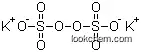
7727-21-1 Usage
Uses
Used in Textile Industry:
Potassium persulfate is used as a bleaching agent for fabrics and soaps, enhancing the brightness and cleanliness of textiles.
Used in Photography:
In photography, potassium persulfate operates under the name Anthion to remove last traces of thiosulfate from plates and paper, ensuring high-quality image development.
Used in Analytical Chemistry:
Potassium persulfate serves as a laboratory oxidant, aiding in various analytical processes and chemical reactions.
Used in Chemical Synthesis:
Potassium persulfate is used as an industrial oxidant in the production of dyes and inorganic salts, contributing to the synthesis of a wide range of chemical compounds.
Used in Synthetic Rubber Industry:
As an emulsion polymerization initiator, potassium persulfate plays a crucial role in the synthetic rubber industry, promoting the formation of polymers with desired properties.
Used in Synthetic Resin Production:
Potassium persulfate functions as a polymerization accelerator in the production of synthetic resins, speeding up the process and improving manufacturing efficiency.
Used in Steel Industry:
In the steel industry, potassium persulfate is utilized for various applications, including the purification of ammonium sulfate, contributing to the production of high-quality steel.
Used in Photographic Industry:
Potassium persulfate is employed in the photographic industry as a chemical agent, playing a role in the development and processing of photographic films and images.
Used in Medicine:
Potassium persulfate is used in the medical field as an antiseptic, helping to prevent infection and promote healing.
Used in Food Industry:
As a food additive, potassium persulfate is utilized in the processing and preservation of certain food products, ensuring their quality and safety.
Used in Film Photofinishing:
Potassium persulfate is employed in film photofinishing to improve the quality and appearance of photographic films.
Used in Antioxidant Activity Measurement:
Potassium persulfate is used as an oxidant to generate 2,2-azinobis(3-ethylbenzothiazoline-6-sulfonic acid) (ABTS) radical cation, which is essential for measuring the antioxidant activities of natural compounds.
Used in Polymerization of Styrene:
Potassium persulfate initiates the polymerization of styrene to form monodispersed, surfactant-free polystyrene spheres, which have various applications in materials science and engineering.
Outline
Potassium persulfate (Formula is K2S2O8) is also known as potassium peroxydisulfate, molecular weight is 270.32, decomposition temperature is 50-60℃, it is white, odorless crystal, it is soluble in water, insoluble in alcohol, it has strong oxidizing, it is commonly used as bleaching agents, oxidizing agents, it can be used as the polymerization initiator, it almost does not absorb moisture, it has good stability at room temperature, it is easy to be stored, and it has the advantages of convenience and safety, etc. . Applications involves polymerization initiator, circuit board cleaning and etching, copper and aluminum surface activation, modified starch, pulp and textile bleaching and desizing low temperature, circulating water purification treatment systems, oxidative degradation of harmful gases, low formaldehyde adhesive stick together accelerated oxidation of ethanol and aromatic hydrocarbons, disinfectants, hair dye decolorization.
The above information is edited by the lookchem of Wang Xiaodong.
Half-life
80℃-1.5 hours; 70℃-7.7 hours; 60℃-33 hours; 45℃-292 hours; 35℃-1600 hours.
Recrystallization
Potassium persulfate dissolves in 30℃ water, cools, then the recrystallized product can be obtained, it is filtered and dried under reduced pressure in the presence of calcium chloride.
Solubility in water(g/100ml)
Grams which dissolves in per 100 ml of water: 4.7g/20 ℃.
The main application areas
Potassium persulfate is mainly used as initiator and strong oxidizing agents.
Initiator:
Potassium persulfate is the initiator of latex or solution polymerization of acrylic monomers, vinyl acetate, vinyl chloride and other product, and it is also the initiator of styrene, acrylonitrile, butadiene and the like emulsion for copolymerisation.
Strong oxidizing agent:
1. It is used as desizing agent and bleach activator.
2. It is used for oxidative degradation of harmful substances in pool and closed circular loop in water.
3. It can be applied in the production of starch modifier and applied in the production of adhesive and coating agent.
4. It can be applied in the branched-chain oxidation, alcohol and aromatic hydroxy oxidation.
5. It is one of the basic constituent of hair dyes, it plays the role of decolorization.
Toxicity
The amount is not specified (FAO/WHO, 2001).
Potassium persulfate powder has stimulating effect on nasal mucosa, packaging should be ventilated to prevent dust. Labour protection appliance should be dressed at work.
Storage precautions
Potassium persulfate is non-flammable, it is combustion-supporting which due to it can release of oxygen, storage environment must be dry and clean, well-ventilated. Pay attention to moisture and rain, it should not be transported in rain. Keep away from fire, heat and direct sunlight. It should be kept sealed packaging, labels should be intact and clear. It should be stored separately with flammable or combustible materials, organic compounds, as well as rust, small amount of metal, and other reducing substance, it should avoid mix to prevent causing decomposition of potassium persulfate and explosion.
Production method
Potassium sulfate method
Ammonium sulfate and sulfuric acid formulates to form liquid electrolyte, it is decontaminated by electrolysis, HSO4-can discharge and generate peroxydisulfate acidat in the anode, and then reacts with ammonium sulfate to generate ammonium persulfate, Then replacement reaction can happen when potassium is added . The finished product of potassium persulfate can be obtained after cooling, separation, crystallization, drying.
Anode reaction: 2HSO4-2e → H2S2O8
Cathodic reaction: 2H ++ 2e → H2 ↑
(NH4) 2SO4 + H2S2O8 → (NH4) 2S2O8 + H2SO4
(NH4) 2S2O8 + K2SO4 + H2SO4 → K2S2O8 + 2NH4HSO4
It can be derived by replacement reaction with ammonium persulfate potassium sulfate, then it goes through cooling, separation, crystallization, drying.
Acute toxicity
Oral-rat LD50: 802 mg/kg.
Explosive hazardous characteristics
It can explode when mixes with reductant, sulfur, phosphorus; It can explode when be heated, impacted, and meets fire.
Flammability hazard characteristic
Thermal decomposition can get oxygen; toxic fumes of nitrogen oxides can generate after combustion.
Storage characteristics
Treasury should have ventilation and be low-temperature drying; loading and unloading should be light; it should be stored separately with organic matter, reducing agents, sulfur, phosphorus combustibles.
Extinguishing agent
Mist of water, sand, foam.
Professional standards
TWA 2 mg/m.
Preparation
Potassium persulfate can be prepared by electrolysis of a mixture of potassium sulfate and potassium hydrogen sulfate at a high current density:2KHSO4→K2S2O8+ H2Also, the compound can be prepared by adding potassium hydrogen sulfate,KHSOto an electrolyzed solution of ammonium hydrogen sulfate, NH4HSO4.
Air & Water Reactions
Water soluble. Slowly decomposed by water. The salt rapidly liberates oxygen when heated, and especially so when wet.
Reactivity Profile
Potassium persulfate is an oxidizing agent. Noncombustible but accelerates the burning of combustible material. Potassium persulfate plus a little potassium hydroxide and water released sufficient heat and oxygen to ignite a polythene (polyethylene) liner in a container. [MCA Case History 1155. 1955].
Hazard
Strong irritant and oxidizing agent. Fire risk
in contact with organic materials.
Health Hazard
Inhalation, ingestion or contact (skin, eyes) with vapors or substance may cause severe injury, burns or death. Fire may produce irritating, corrosive and/or toxic gases. Runoff from fire control or dilution water may cause pollution.
Fire Hazard
These substances will accelerate burning when involved in a fire. Some may decompose explosively when heated or involved in a fire. May explode from heat or contamination. Some will react explosively with hydrocarbons (fuels). May ignite combustibles (wood, paper, oil, clothing, etc.). Containers may explode when heated. Runoff may create fire or explosion hazard.
Flammability and Explosibility
Nonflammable
Safety Profile
Moderately toxic by
ingestion. An irritant and allergen. A
powerful oxidtzer. Flammable when
exposed to heat or by chemical reaction.
Can react with reducing materials. It
liberates oxygen above 100' when dry or @
about 50' when in solution. When heated to
decomposition it emits highly toxic fumes of
SOx,, S2O8, and K2O.
Potential Exposure
Potassium persulfate is used as a
bleaching and oxidizing agent; it is used in redox polymeri-
zation catalysts; in the defiberizing of wet strength paper
and in the desizing of textiles. Soluble in water.
Shipping
UN1492 Potassium persulfate, Hazard Class:
5.1; Labels: 5.1-Oxidizer.
Purification Methods
Crystallise the persulfate twice from distilled water (10mL/g) and dry it at 50o in a vacuum desiccator. Its solubility in H2O is 1.6% at 0o, 4.5% at 20o, and 7.2% at 30o. An aqueous solution decomposes on long standing with evolution of O2 and formation of KHSO4. It is a powerful oxidising agent. Store it at ~10o. [Fehér in Handbook of Preparative Inorganic Chemistry (Ed. Brauer) Academic Press Vol I p 390 1963.]
Incompatibilities
A strong oxidizer. Incompatible with
combustible, organic or other readily oxidizable materials;
sulfur, metallic dusts, such as aluminum dust; chlorates and
perchlorates. Attacks chemically active metals. Keep away
from moisture.
Waste Disposal
Use large volumes of
reducing agents (bisulfites, e.g.). Neutralize with soda ash
and drain into sewer with abundant water.
Check Digit Verification of cas no
The CAS Registry Mumber 7727-21-1 includes 7 digits separated into 3 groups by hyphens. The first part of the number,starting from the left, has 4 digits, 7,7,2 and 7 respectively; the second part has 2 digits, 2 and 1 respectively.
Calculate Digit Verification of CAS Registry Number 7727-21:
(6*7)+(5*7)+(4*2)+(3*7)+(2*2)+(1*1)=111
111 % 10 = 1
So 7727-21-1 is a valid CAS Registry Number.
InChI:InChI=1/2K.H2O8S2/c;;1-7-10(5,6)8-9(2,3)4/h;;1H,(H,2,3,4)/q2*+1;/p-2