1.Identification
1.1 GHS Product identifier
| Product name | 2,3,4-Trichlorophenol |
|---|
1.2 Other means of identification
| Product number | - |
|---|---|
| Other names | Phenol, 2,3,4-trichloro- |
1.3 Recommended use of the chemical and restrictions on use
| Identified uses | For industry use only. |
|---|---|
| Uses advised against | no data available |
1.4 Supplier's details
1.5 Emergency phone number
| Emergency phone number | - |
|---|---|
| Service hours | Monday to Friday, 9am-5pm (Standard time zone: UTC/GMT +8 hours). |
2.Hazard identification
2.1 Classification of the substance or mixture
Acute toxicity - Oral, Category 4
Skin irritation, Category 2
Serious eye damage, Category 1
Specific target organ toxicity – single exposure, Category 3
2.2 GHS label elements, including precautionary statements
| Pictogram(s) | 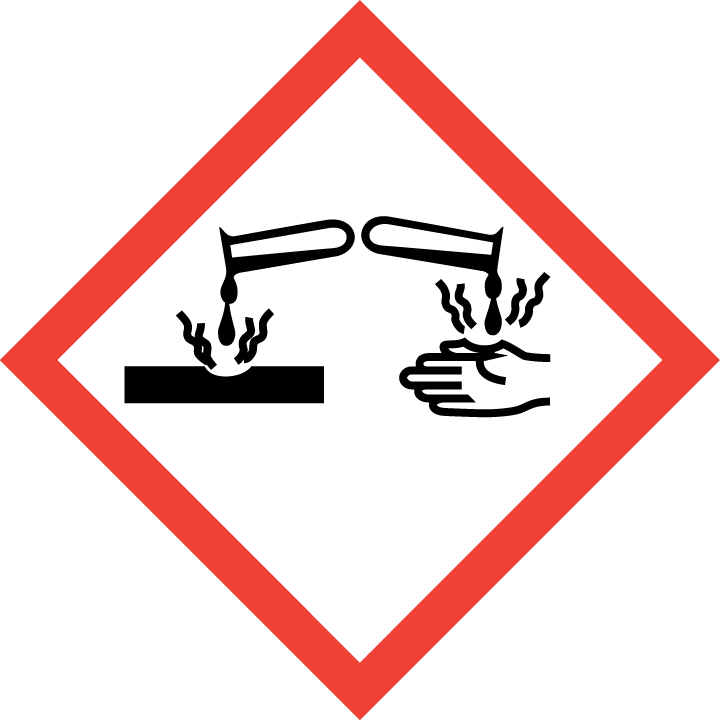 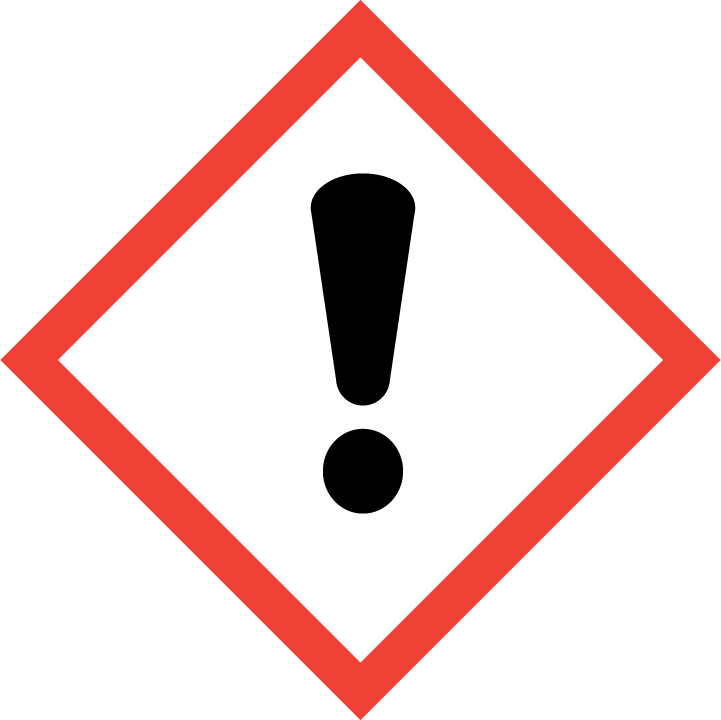 |
|---|---|
| Signal word | Danger |
| Hazard statement(s) | H302 Harmful if swallowed H315 Causes skin irritation H318 Causes serious eye damage H335 May cause respiratory irritation |
| Precautionary statement(s) | |
| Prevention | P264 Wash ... thoroughly after handling. P270 Do not eat, drink or smoke when using this product. P280 Wear protective gloves/protective clothing/eye protection/face protection. P261 Avoid breathing dust/fume/gas/mist/vapours/spray. P271 Use only outdoors or in a well-ventilated area. |
| Response | P301+P312 IF SWALLOWED: Call a POISON CENTER/doctor/…if you feel unwell. P330 Rinse mouth. P302+P352 IF ON SKIN: Wash with plenty of water/... P321 Specific treatment (see ... on this label). P332+P313 If skin irritation occurs: Get medical advice/attention. P362+P364 Take off contaminated clothing and wash it before reuse. P305+P351+P338 IF IN EYES: Rinse cautiously with water for several minutes. Remove contact lenses, if present and easy to do. Continue rinsing. P310 Immediately call a POISON CENTER/doctor/… P304+P340 IF INHALED: Remove person to fresh air and keep comfortable for breathing. P312 Call a POISON CENTER/doctor/…if you feel unwell. |
| Storage | P403+P233 Store in a well-ventilated place. Keep container tightly closed. P405 Store locked up. |
| Disposal | P501 Dispose of contents/container to ... |
2.3 Other hazards which do not result in classification
none
3.Composition/information on ingredients
3.1 Substances
| Chemical name | Common names and synonyms | CAS number | EC number | Concentration |
|---|---|---|---|---|
| 2,3,4-Trichlorophenol | 2,3,4-Trichlorophenol | 15950-66-0 | none | 100% |
4.First-aid measures
4.1 Description of necessary first-aid measures
General advice
Consult a physician. Show this safety data sheet to the doctor in attendance.
If inhaled
Fresh air, rest. Refer for medical attention.
In case of skin contact
Remove contaminated clothes. Rinse and then wash skin with water and soap.
In case of eye contact
Rinse with plenty of water (remove contact lenses if easily possible).
If swallowed
Refer for medical attention .
4.2 Most important symptoms/effects, acute and delayed
Dust may cause swelling of eyes and eye injury, irritation of nose and throat. Solid irritates skin on prolonged contact. (USCG, 1999)
SYMPTOMS: Symptoms of exposure to this type of compound include irritation of the nose and pharynx. It can produce redness, edema and chemical burns on skin contact. In the eyes it induces conjunctival irritation, corneal injury and iritis. Symptoms of exposure to a related compound may include respiratory system irritation, eye irritation, softening and whitening of the skin followed by the development of painful burns, headache, dizziness, rapid and difficult breathing, weakness, collapse, abdominal pain, nausea, vomiting, internal damage, digestive disturbances, nervous disorders, skin eruptions, liver and kidney damage and dermatitis. Other symptoms may include coma, painless blanching or erythema, corrosion, profuse sweating, intense thirst, diarrhea, cyanosis from methemoglobinemia, hyperactivity, stupor, decrease in blood pressure, hyperpnea, hemolysis, convulsions, pulmonary edema followed by pneumonia, jaundice, oliguria, anuria and skin sensitivity reactions. Skin contact may result in central nervous system damage, cerebral edema and muscle contractions. ACUTE/CHRONIC HAZARDS: A related compound may be absorbed through the skin.
4.3 Indication of immediate medical attention and special treatment needed, if necessary
For advanced treatment: Consider orotracheal or nasotracheal intubation for airway control in the patient who is unconscious or in respiratory arrest. Positive-pressure ventilation techniques with a bag-valve-mask device may be beneficial. Monitor cardiac rhythm and treat arrhythmias if necessary ... . Start an IV with D5W TKO /SRP: To keep open, "minimal flow rate"/. Use lactated Ringer's if signs of hypovolemia are present. Watch for signs of fluid overload. Consider drug therapy for pulmonary edema ... . For hypotension with signs of hypovolemia, administer fluid cautiously. Consider vasopressors for hypotension with a normal fluid volume. Watch for signs of fluid overload ... . Administer 1% solution methylene blue if patient is symptomatic with severe hypoxia, cyanosis, and cardiac compromise not responding to oxygen. ... . Treat seizures with diazepam (Valium). ... Use proparacaine hydrochloride to assist eye irrigation ... . Phenols and related compounds/
5.Fire-fighting measures
5.1 Extinguishing media
Suitable extinguishing media
Extinguish fire using agent suitable for type of surrounding fire. Material itself does not burn or burns with difficulty.
5.2 Specific hazards arising from the chemical
Excerpt from ERG Guide 153 [Substances - Toxic and/or Corrosive (Combustible)]: Combustible material: may burn but does not ignite readily. When heated, vapors may form explosive mixtures with air: indoors, outdoors and sewers explosion hazards. Those substances designated with a (P) may polymerize explosively when heated or involved in a fire. Contact with metals may evolve flammable hydrogen gas. Containers may explode when heated. Runoff may pollute waterways. Substance may be transported in a molten form. (ERG, 2016)
Flash point data for this chemical are not available; however, it is probably combustible.
5.3 Special protective actions for fire-fighters
Wear self-contained breathing apparatus for firefighting if necessary.
6.Accidental release measures
6.1 Personal precautions, protective equipment and emergency procedures
Use personal protective equipment. Avoid dust formation. Avoid breathing vapours, mist or gas. Ensure adequate ventilation. Evacuate personnel to safe areas. Avoid breathing dust. For personal protection see section 8.
6.2 Environmental precautions
Personal protection: filter respirator for organic gases and particulates adapted to the airborne concentration of the substance. Do NOT let this chemical enter the environment. Sweep spilled substance into covered containers. If appropriate, moisten first to prevent dusting. Carefully collect remainder. Then store and dispose of according to local regulations.
6.3 Methods and materials for containment and cleaning up
Land Spill: Dig a pit, pond, lagoon, or holding area /SRP: If time permits, pits, ponds, lagoons, soa holes, or holding areas should be sealed with an impermeable flexible membrane liner./ to contain liquid or solid material. Cover solids with plastic sheet to prevent dissolving in rain or fire fighting water.
7.Handling and storage
7.1 Precautions for safe handling
Avoid contact with skin and eyes. Avoid formation of dust and aerosols. Avoid exposure - obtain special instructions before use.Provide appropriate exhaust ventilation at places where dust is formed. For precautions see section 2.2.
7.2 Conditions for safe storage, including any incompatibilities
Store in an area without drain or sewer access. Provision to contain effluent from fire extinguishing. Separated from strong oxidants and food and feedstuffs.
8.Exposure controls/personal protection
8.1 Control parameters
Occupational Exposure limit values
no data available
Biological limit values
no data available
8.2 Appropriate engineering controls
Handle in accordance with good industrial hygiene and safety practice. Wash hands before breaks and at the end of workday.
8.3 Individual protection measures, such as personal protective equipment (PPE)
Eye/face protection
Safety glasses with side-shields conforming to EN166. Use equipment for eye protection tested and approved under appropriate government standards such as NIOSH (US) or EN 166(EU).
Skin protection
Wear impervious clothing. The type of protective equipment must be selected according to the concentration and amount of the dangerous substance at the specific workplace. Handle with gloves. Gloves must be inspected prior to use. Use proper glove removal technique(without touching glove's outer surface) to avoid skin contact with this product. Dispose of contaminated gloves after use in accordance with applicable laws and good laboratory practices. Wash and dry hands. The selected protective gloves have to satisfy the specifications of EU Directive 89/686/EEC and the standard EN 374 derived from it.
Respiratory protection
Wear dust mask when handling large quantities.
Thermal hazards
no data available
9.Physical and chemical properties
| Physical state | WHITE POWDER OR NEEDLES. |
|---|---|
| Colour | Solid crystals or flakes |
| Odour | Strong disinfectant odor |
| Melting point/ freezing point | 75-79oC(lit.) |
| Boiling point or initial boiling point and boiling range | 260.3oC at 760 mmHg |
| Flammability | Combustible. Gives off irritating or toxic fumes (or gases) in a fire. |
| Lower and upper explosion limit / flammability limit | no data available |
| Flash point | 111.2oC |
| Auto-ignition temperature | Not flammable (USCG, 1999) |
| Decomposition temperature | no data available |
| pH | no data available |
| Kinematic viscosity | no data available |
| Solubility | less than 1 mg/mL at 20°C |
| Partition coefficient n-octanol/water (log value) | 3.6 |
| Vapour pressure | 0.00763mmHg at 25°C |
| Density and/or relative density | 1.596 g/cm3 |
| Relative vapour density | (air = 1): 6.8 |
| Particle characteristics | no data available |
10.Stability and reactivity
10.1 Reactivity
no data available
10.2 Chemical stability
Stable under recommended storage conditions.
10.3 Possibility of hazardous reactions
Non-combustiblePhenols, such as TRICHLOROPHENOL, do not behave as organic alcohols, as one might guess from the presence of a hydroxyl (-OH) group in their structure. Instead, they react as weak organic acids. Phenols and cresols are much weaker as acids than common carboxylic acids (phenol has pKa = 9.88). These materials are incompatible with strong reducing substances such as hydrides, nitrides, alkali metals, and sulfides. Flammable gas (H2) is often generated, and the heat of the reaction may ignite the gas. Heat is also generated by the acid-base reaction between phenols and bases. Such heating may initiate polymerization of the organic compound. Phenols are sulfonated very readily (for example, by concentrated sulfuric acid at room temperature). The reactions generate heat. Phenols are also nitrated very rapidly, even by dilute nitric acid.
10.4 Conditions to avoid
no data available
10.5 Incompatible materials
no data available
10.6 Hazardous decomposition products
no data available
11.Toxicological information
Acute toxicity
- Oral: LD50 Guinea pig oral 1000-3000 mg/kg
- Inhalation: no data available
- Dermal: no data available
Skin corrosion/irritation
no data available
Serious eye damage/irritation
no data available
Respiratory or skin sensitization
no data available
Germ cell mutagenicity
no data available
Carcinogenicity
no data available
Reproductive toxicity
no data available
STOT-single exposure
no data available
STOT-repeated exposure
no data available
Aspiration hazard
no data available
12.Ecological information
12.1 Toxicity
- Toxicity to fish: no data available
- Toxicity to daphnia and other aquatic invertebrates: no data available
- Toxicity to algae: no data available
- Toxicity to microorganisms: no data available
12.2 Persistence and degradability
Terrestrial Fate: Studies on the aerobic and anaerobic degradation of phenol and selected chlorophenols were carried out using clay loam soil containing no added nutrients. The phenolic cmpd were added to flasks containing soil to give an initial concn of 100 ug/g wet wt soil. Under aerobic conditions, ... 2,4,5-trichlorophenol was ... degraded by microorganisms. Under anaerobic conditions, none of the cmpd studied were degraded by microorganisms. The cmpd appeared to stimulate microbial growth in the soil. /Phenol and selected chlorophenols/
12.3 Bioaccumulative potential
no data available
12.4 Mobility in soil
no data available
12.5 Other adverse effects
no data available
13.Disposal considerations
13.1 Disposal methods
Product
The material can be disposed of by removal to a licensed chemical destruction plant or by controlled incineration with flue gas scrubbing. Do not contaminate water, foodstuffs, feed or seed by storage or disposal. Do not discharge to sewer systems.
Contaminated packaging
Containers can be triply rinsed (or equivalent) and offered for recycling or reconditioning. Alternatively, the packaging can be punctured to make it unusable for other purposes and then be disposed of in a sanitary landfill. Controlled incineration with flue gas scrubbing is possible for combustible packaging materials.
14.Transport information
14.1 UN Number
| ADR/RID: UN2020 | IMDG: UN2020 | IATA: UN2020 |
14.2 UN Proper Shipping Name
| ADR/RID: CHLOROPHENOLS, SOLID |
| IMDG: CHLOROPHENOLS, SOLID |
| IATA: CHLOROPHENOLS, SOLID |
14.3 Transport hazard class(es)
| ADR/RID: 6 | IMDG: 6 | IATA: 6 |
14.4 Packing group, if applicable
| ADR/RID: III | IMDG: III | IATA: III |
14.5 Environmental hazards
| ADR/RID: no | IMDG: no | IATA: no |
14.6 Special precautions for user
no data available
14.7 Transport in bulk according to Annex II of MARPOL 73/78 and the IBC Code
no data available
15.Regulatory information
15.1 Safety, health and environmental regulations specific for the product in question
| Chemical name | Common names and synonyms | CAS number | EC number |
|---|---|---|---|
| 2,3,4-Trichlorophenol | 2,3,4-Trichlorophenol | 15950-66-0 | none |
| European Inventory of Existing Commercial Chemical Substances (EINECS) | Listed. | ||
| EC Inventory | Listed. | ||
| United States Toxic Substances Control Act (TSCA) Inventory | Not Listed. | ||
| China Catalog of Hazardous chemicals 2015 | Not Listed. | ||
| New Zealand Inventory of Chemicals (NZIoC) | Listed. | ||
| Philippines Inventory of Chemicals and Chemical Substances (PICCS) | Not Listed. | ||
| Vietnam National Chemical Inventory | Not Listed. | ||
| Chinese Chemical Inventory of Existing Chemical Substances (China IECSC) | Not Listed. | ||
16.Other information
Information on revision
| Creation Date | Aug 15, 2017 |
|---|---|
| Revision Date | Aug 15, 2017 |
Abbreviations and acronyms
- CAS: Chemical Abstracts Service
- ADR: European Agreement concerning the International Carriage of Dangerous Goods by Road
- RID: Regulation concerning the International Carriage of Dangerous Goods by Rail
- IMDG: International Maritime Dangerous Goods
- IATA: International Air Transportation Association
- TWA: Time Weighted Average
- STEL: Short term exposure limit
- LC50: Lethal Concentration 50%
- LD50: Lethal Dose 50%
- EC50: Effective Concentration 50%
References
- IPCS - The International Chemical Safety Cards (ICSC), website: http://www.ilo.org/dyn/icsc/showcard.home
- HSDB - Hazardous Substances Data Bank, website: https://toxnet.nlm.nih.gov/newtoxnet/hsdb.htm
- IARC - International Agency for Research on Cancer, website: http://www.iarc.fr/
- eChemPortal - The Global Portal to Information on Chemical Substances by OECD, website: http://www.echemportal.org/echemportal/index?pageID=0&request_locale=en
- CAMEO Chemicals, website: http://cameochemicals.noaa.gov/search/simple
- ChemIDplus, website: http://chem.sis.nlm.nih.gov/chemidplus/chemidlite.jsp
- ERG - Emergency Response Guidebook by U.S. Department of Transportation, website: http://www.phmsa.dot.gov/hazmat/library/erg
- Germany GESTIS-database on hazard substance, website: http://www.dguv.de/ifa/gestis/gestis-stoffdatenbank/index-2.jsp
- ECHA - European Chemicals Agency, website: https://echa.europa.eu/


