




Relevant articles and documents
Antimicrobial volatile glucosinolate autolysis products from Hornungia petraea (L.) Rchb. (Brassicaceae)
Radulovi?, Niko S. Deki?, Milan S. Stojanovi?-Radi?, Zorica Z.
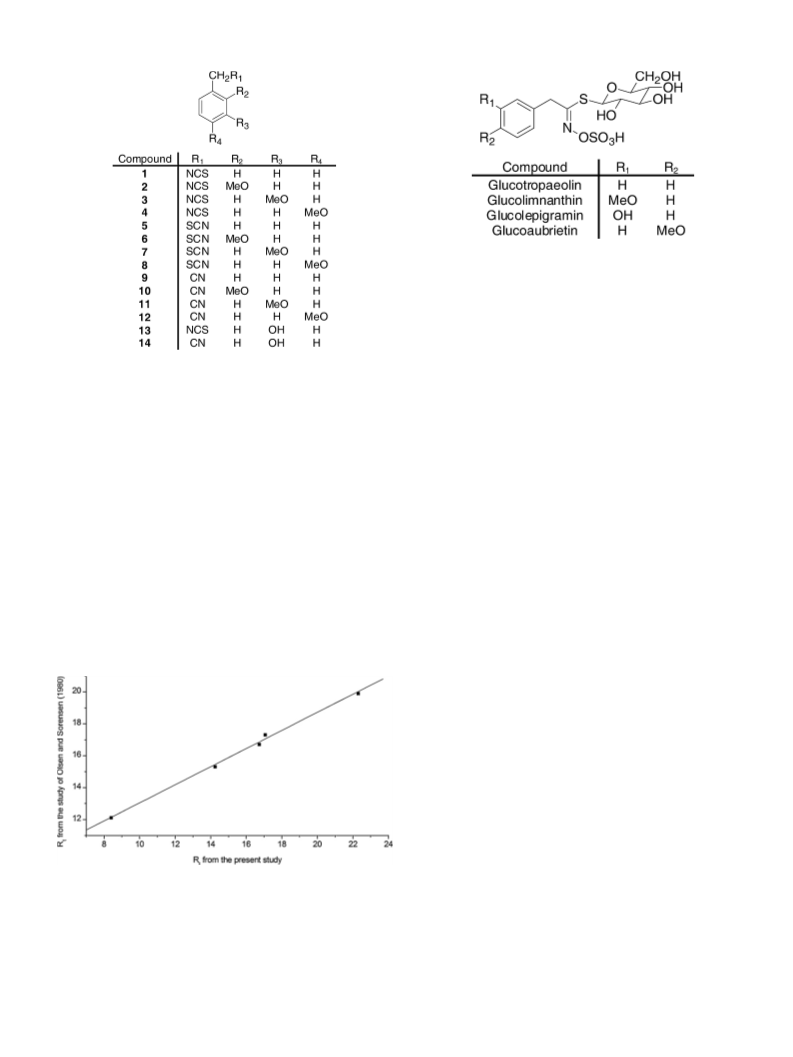
Plant samples of Hornungia petraea were analyzed for glucosinolate (GLS) autolysis metabolites for the first time. GC-MS analysis of the autolysate and the synthesis of a series (12 compounds) of possible glucosinolate breakdown products revealed/corroborated the presence of glucoaubrietin, glucolimnanthin, glucolepigramin and glucotropaeolin in this species as the most likely "mustard oil" precursors. GLS degradation products identified in the autolysate of H. petraea, benzyl isothiocyanate, 3- and 4-methoxybenzyl isothiocyanate, along with several other structurally related compounds were evaluated for antimicrobial activity in order to possibly pinpoint the role of the latter secondary metabolites in the plant tissues. The assays showed a very high antibacterial activity of the tested isothiocyanates against Sarcina lutea and an antifungal effect against Aspergillus fumigatus and Candida albicans with MIC values in the order of 1 μg/ml value.


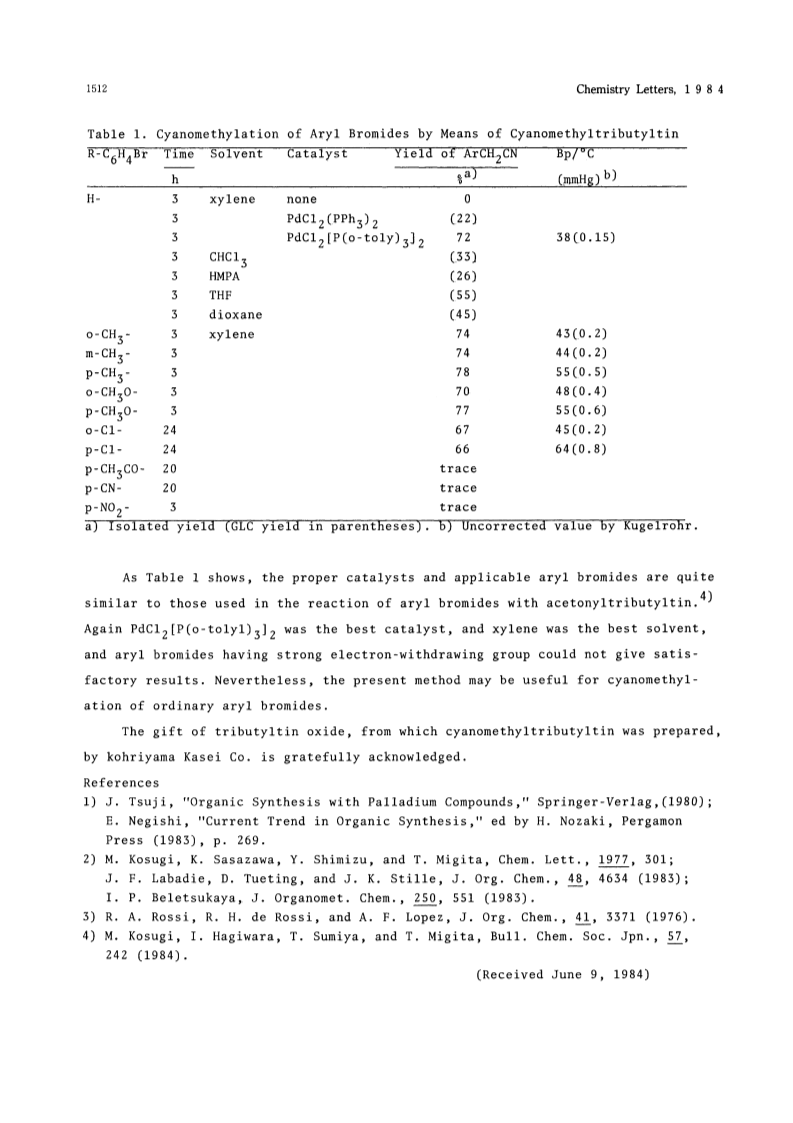
PALLADIUM CATALYZED REACTION OF ARYL BROMIDES WITH CYANOMETHYLTRIBUTYLTIN. AROMATIC CYANOMETHYLATION
Kosugi, Masanori Ishiguro, Masahiro Negishi, Yoshikazu Sano, Hiroshi Migita, Toshihiko
Palladium catalyzed reaction of aryl bromides with cyanomethyltributyltin gave arylacetonitriles in moderate yields.Aryl bromides having strong electron-withdrawing groups (such as acyl, cyano, nitro, etc.) cannot be applied to the reaction.

 Switzerland | Contact:sir
 South Africa | Contact:AAron Thomas
 Japan | Contact:Junsei
 Italy | Contact:Davide Garavaglia
 India | Contact:otcchem