



Relevant articles and documents
Stereoselective synthesis, natural occurrence and CB2 receptor binding affinities of alkylamides from herbal medicines such as Echinacea sp.
Matovic Matthias Gertsch, Juerg Raduner, Stefan Bone Lehmann DeVoss
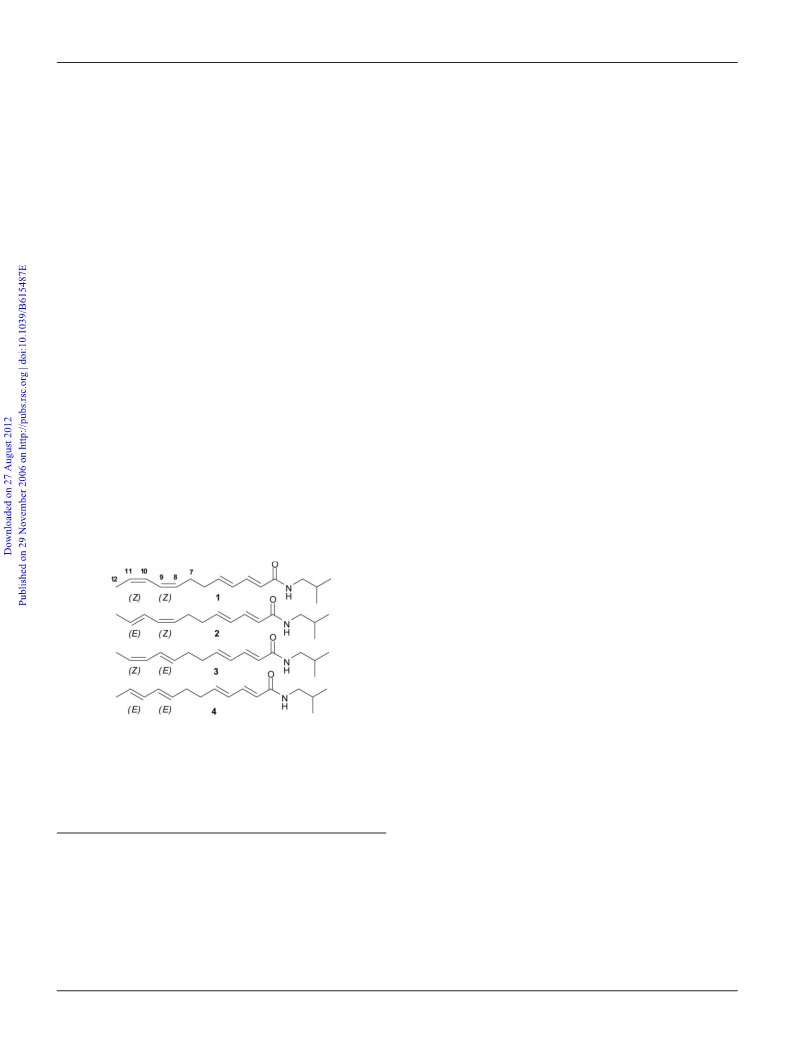
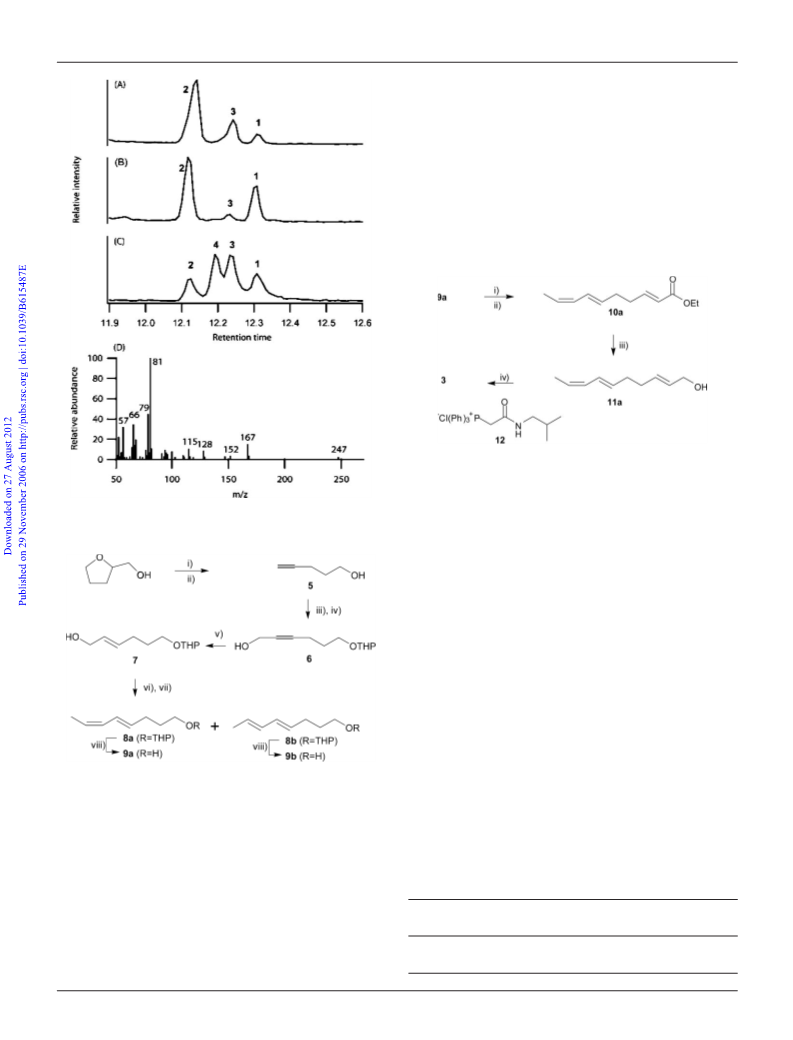
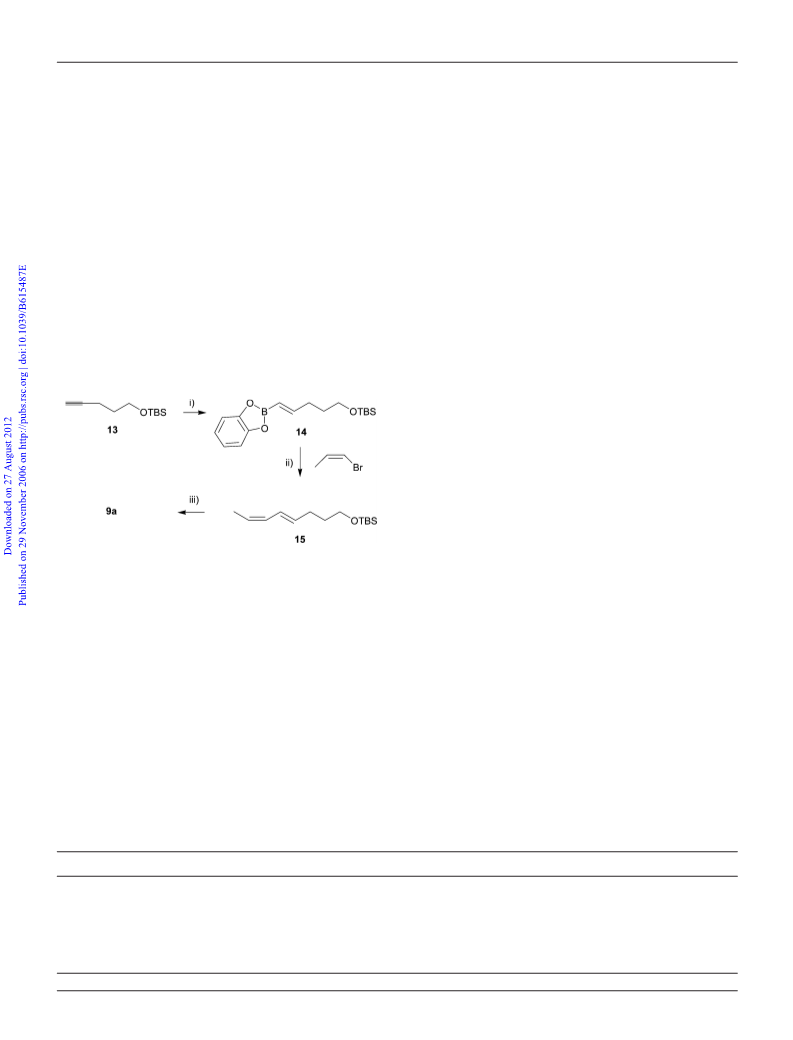
A divergent synthesis of (2E,4E,8E,10E)- and (2E,4E,8E,10Z)-N- isobutyldodeca-2,4,8,10-tetraenamides from pent-4-yn-1-ol allowed identification of the (2E,4E,8E,10Z)-isomer for the first time in Echinacea species. A short, stereoselective synthesis of the (2E,4E,8E,10Z)-isomer is also described which allowed further biological evaluation of this material, and the demonstration that this isomer does not occur in Spilanthes mauritiana as previously reported. This journal is The Royal Society of Chemistry.
Supported Ultrafine NiCo Bimetallic Alloy Nanoparticles Derived from Bimetal-Organic Frameworks: A Highly Active Catalyst for Furfuryl Alcohol Hydrogenation
Wang, Huanjun Li, Xiaodan Lan, Xiaocheng Wang, Tiefeng
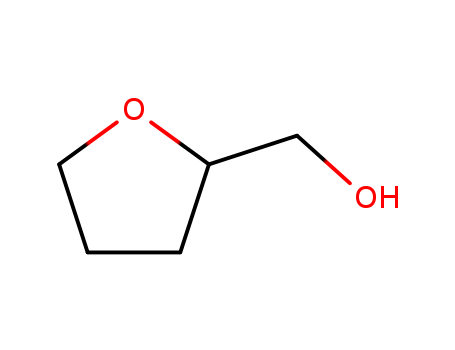
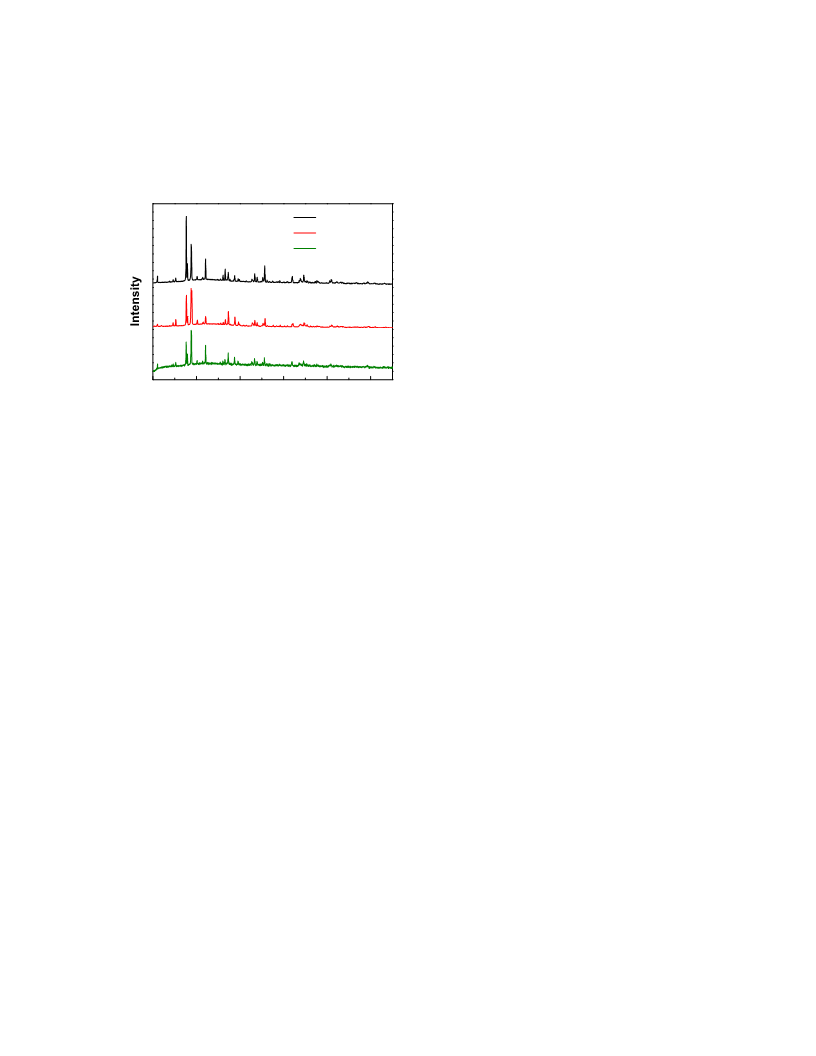
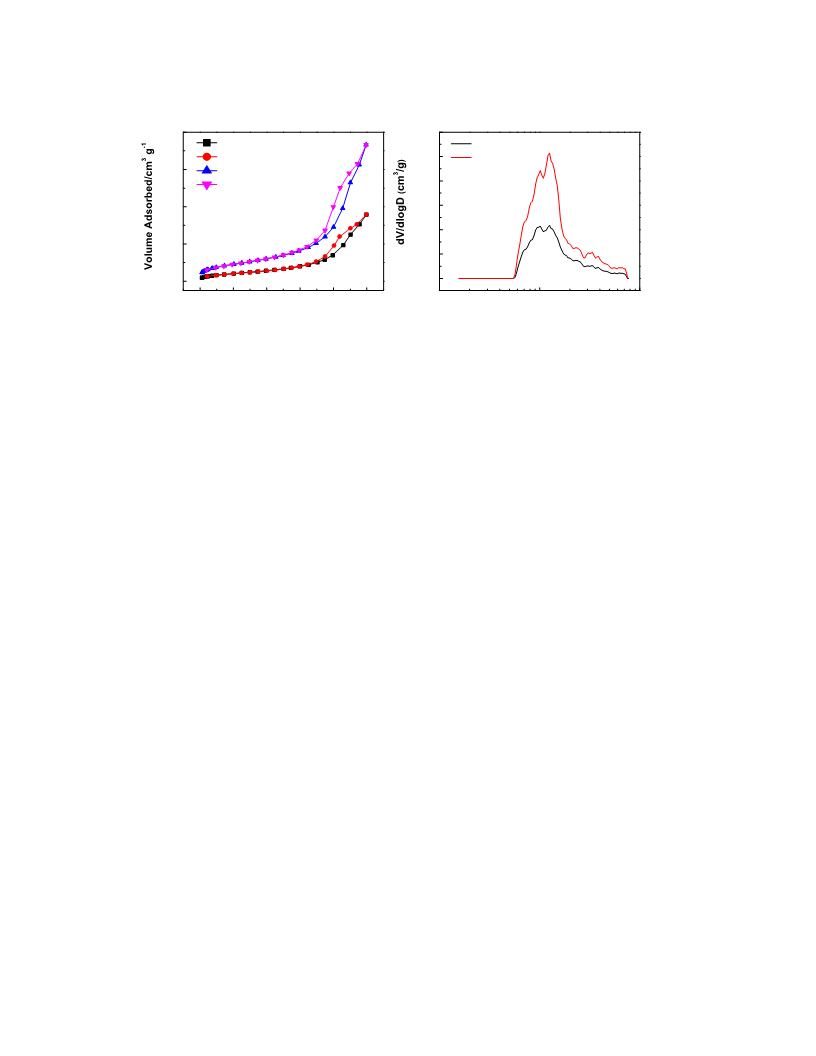
Highly dispersed NiCo bimetallic alloy nanoparticles have been successfully immobilized on the SiO2 frameworks by using heteronuclear metal-organic frameworks (MOFs) as metal alloy precursors. Catalyst characterizations revealed that the average size of NiCo alloy particles was less than 1 nm, with a total metal loading of about 20 wt %. As compared to individual Ni or Co MOF-derived catalysts and the catalysts prepared by the conventional impregnation method, the ultrafine NiCo/SiO2-MOF catalyst showed a much better catalytic performance in the catalytic hydrogenation of furfuryl alcohol (FA) to tetrahydrofurfuryl alcohol (THFA) under mild conditions, giving 99.8% conversion of FA and 99.1% selectivity to THFA. It was found that a significant synergistic effect existed between Co and Ni within the subnanometer NiCo/SiO2-MOF catalyst, which was 2 and 20 times more active than Ni/SiO2-MOF and Co/SiO2-MOF, respectively.

 Mexico | Contact:sir
 India | Contact:SRINIDHI
 Germany | Contact:sir
 France | Contact:Noor RAMANANTSOA
 United States | Contact:PENN