



Relevant articles and documents
Enhancing effect of macroporous adsorption resin on gamma-aminobutyric acid production by Enterococcus faecium in whole-cell biotransformation system
Yang, Sheng-Yuan Liu, Shu-Min Jiang, Min Wang, Biao-Shi Peng, Luo-Hui Zeng, Chan
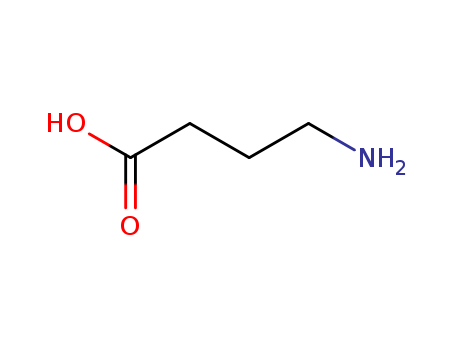
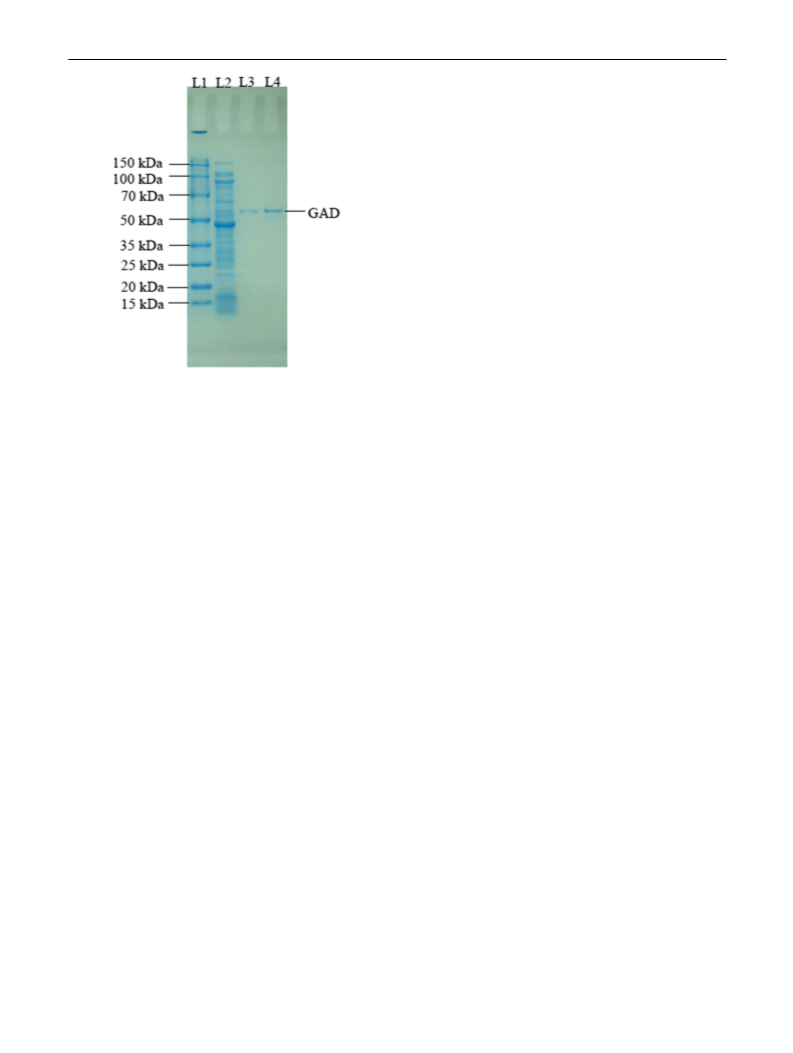
Gamma-aminobutyric acid (GABA) biosynthesis depended to a great extent on the biotransformation characterization of glutamate decarboxylase (GAD) and process conditions. In this paper, the enhancing effect of D101 macroporous adsorption resin (MAR) on the GABA production was investigated based on the whole-cell biotransformation characterization of Enterococcus faecium and adsorption characteristics of D101 MAR. The results indicated that the optimal pH for reaction activity of whole-cell GAD and pure GAD was 4.4 and 5.0, respectively, and the pH range retained at least 50% of GAD activity was from 4.8 to 5.6 and 4.0–4.8, respectively. No substrate inhibition effect was observed on both pure GAD and whole-cell GAD, and the maximum activity could be obtained when the initial L-glutamic acid (L-Glu) concentration exceeded 57.6?mmol/L and 96.0?mmol/L, respectively. Besides, GABA could significantly inhibit the activity of whole-cell GAD rather than pure GAD. When the initial GABA concentration of the reaction solution remained 100?mmol/L, 33.51 ± 9.11% of the whole-cell GAD activity was inhibited. D101 MAR exhibited excellent properties in stabilizing the pH of the conversion reaction system, supplementing free L-Glu and removing excess GABA. Comparison of the biotransformation only in acetate buffer, the GABA production, with 50?g/100?mL of D101 MAR, was significantly increased by 138.71 ± 5.73%. D101 MAR with pre-adsorbed L-Glu could significantly enhance the production of GABA by gradual replenishment of free L-Glu, removing GABA and maintaining the pH of the reaction system, which would eventually make the GABA production more economical and eco-friendly.

Synthesis of the neurotransmitter 4-aminobutanoic acid (GABA) from diethyl cyanomalonate
Cook, Matthew C. Witherell, Ross D. White, Robert L.
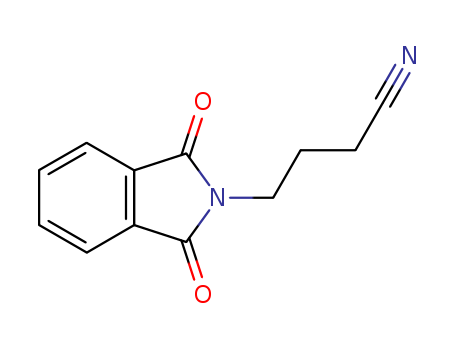
GABA was synthesized by deethoxycarbonylation, ester hydrolysis and nitrile reduction of a highly functionalized intermediate obtained by alkylation of diethyl cyanomalonate with ethyl bromoacetate. By judicious employment of D 2O or NaBD4 in one of the three functional group transformation steps, deuterium was selectively introduced into each of the three possible sites in GABA.


 Switzerland | Contact:Sir
 India | Contact:sir
 Germany | Contact:sir
 France | Contact:sir