
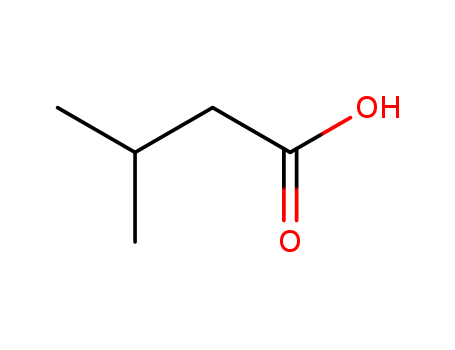

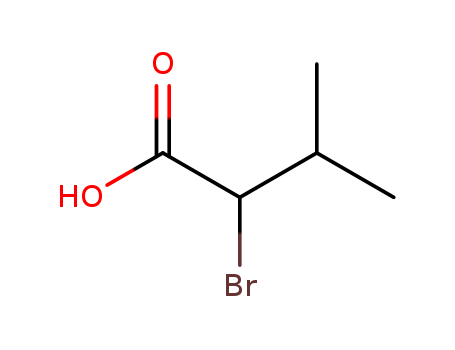


Relevant articles and documents
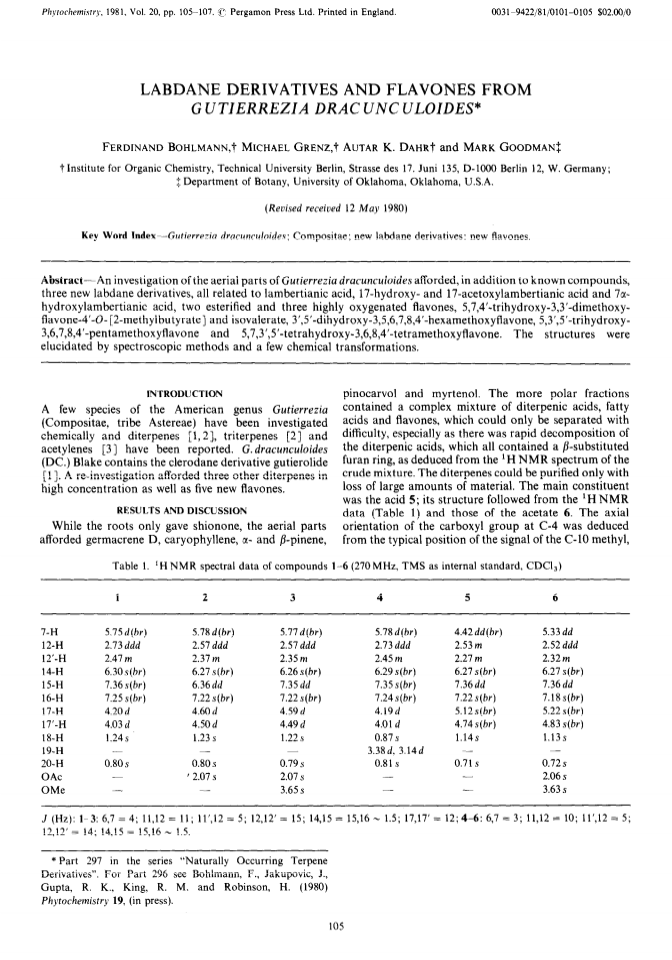
LABDANE DERIVATIVES AND FLAVONES FROM GUTIERREZIA DRACUNCULOIDES
Bohlmann, Ferdinand Grenz, Michael Dahr, Autar K. Goodman, Mark
Key Word Index - Guiterrezia dracunculoids; Compositae; new labdane derivatives; new flavones. An investigation of the aerial parts of Gutierrezia dracunculoides afforded, in addition to known compounds, three new labdan derivatives, all related to lambertianic acid, 17-hydroxy- and 17-acetoxylambertianic acid and 7α-hydroxylambertianic acid, two esterifid and tree highly oxygnated flavones, 5,7,4'-trihydroxy-3,3'-dimethoxy-flavone-4'-O-<2-methylbutyrate> and isovalerate, 3',5'-dihydroxy-3,5,6,7,8,4'hexamethoxyflavone, 5,3',5'-trihydroxy-3,6,7,8,4'-pentamethoxyflavone and 5,7,3'5'-tetrahydroxy-3,6,8,4-tetramethoxyflavone.The structures were elucidated by spectroscopic methods and a few chemical transformations.

The degradation mechanism of toxic atractyloside in herbal medicines by decoction
Chen, Liang-Yu Hu, Anren Chang, Chih-Jui
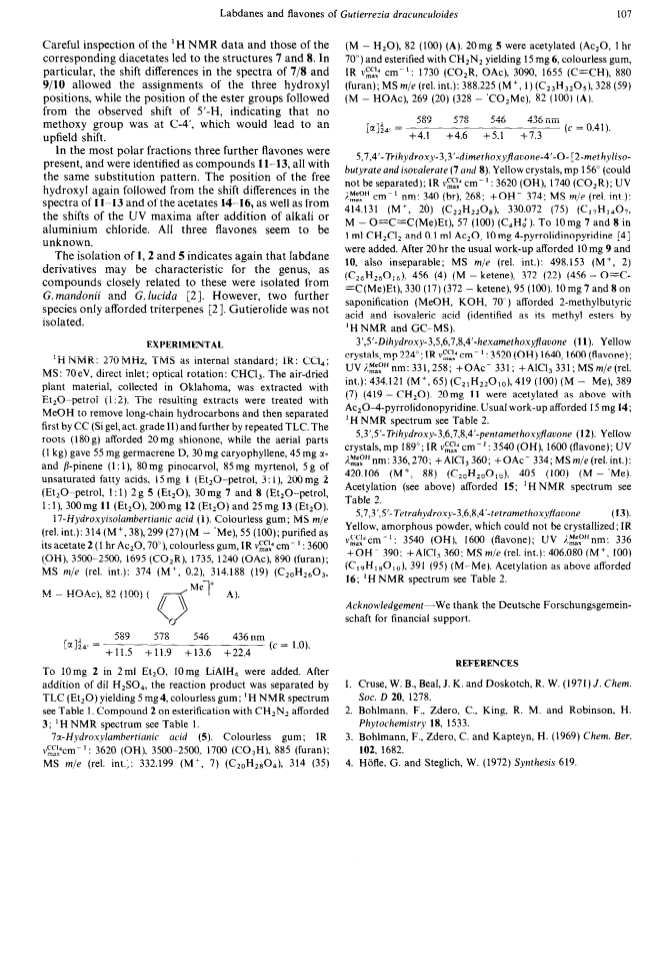
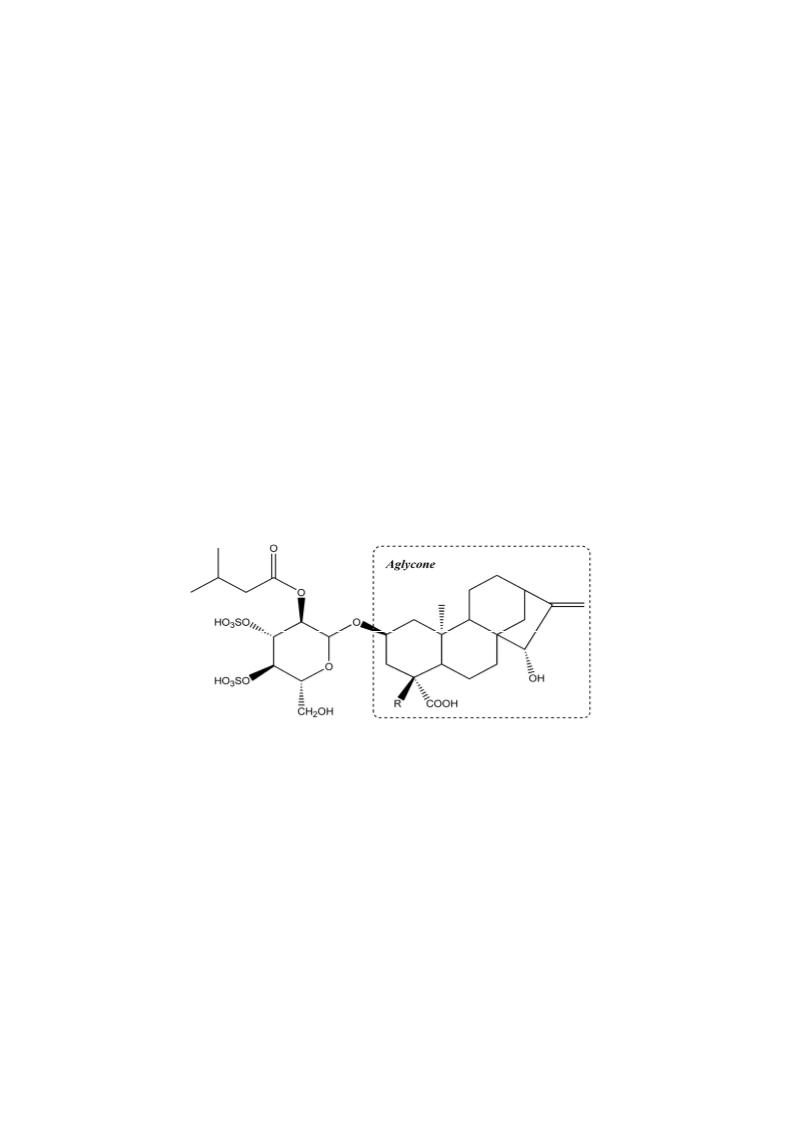
Atractyloside (ATR) is found in many Asteraceae plants that are commonly used as medicinal herbs in China and other eastern Asian countries. ATR binds specifically to the adenine nucleotide translocator in the inner mitochondrial membrane and competitively inhibits ADP and ATP transport. The toxicity of ATR in medical herbs can be reduced by hydrothermal processing, but the mechanisms of ATR degradation are not well understood. In this study, GC-MS coupled with SPE and TMS derivatisation was used to detect ATR levels in traditional Chinese medicinal herbs. Our results suggest that ATR molecules were disrupted by decomposition, hydrolysis and saponification after heating with water (decoction) for a long period of time. Hydrothermal processing could decompose the endogenous toxic compounds and also facilitate the detoxification of raw materials used in the Chinese medicine industry.


 Israel | Contact:Chemada
 India | Contact:Laxmikant
 Germany | Contact:Jochen Allenstein
 United States | Contact:SRS