



Relevant articles and documents
Mechanism of the hydrolysis of the sulfamate EMATE-an irreversible steroid sulfatase inhibitor
Spillane, William J. Malaubier, Jean-Baptiste
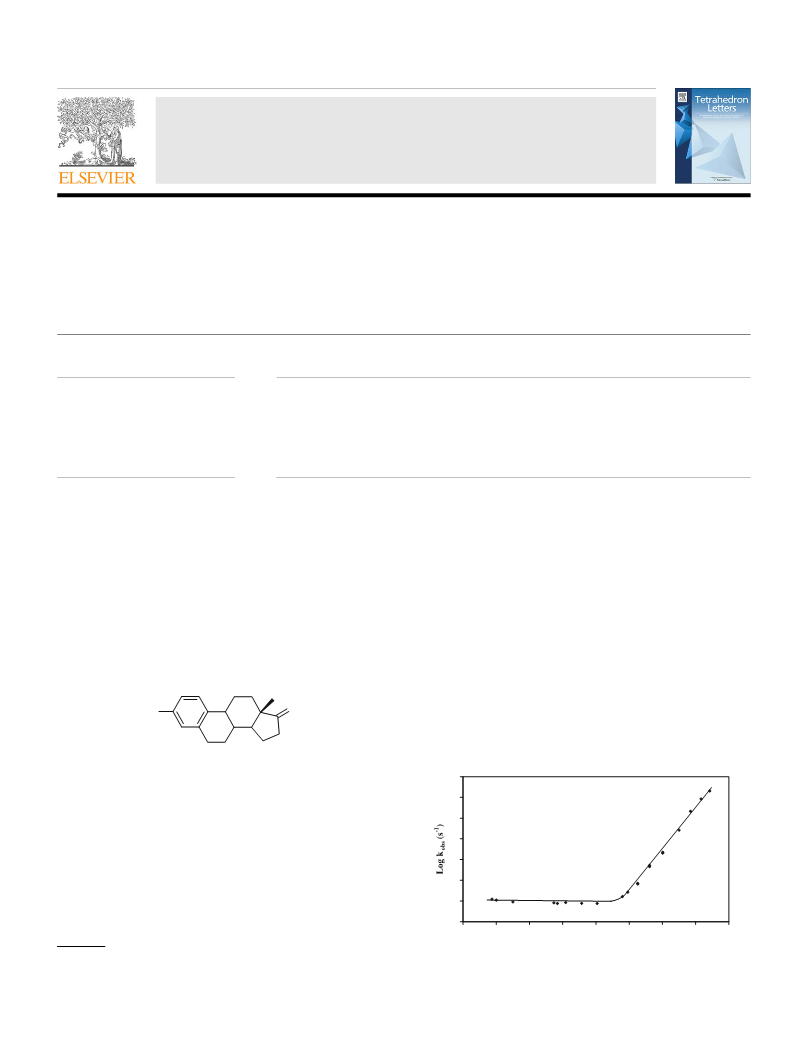
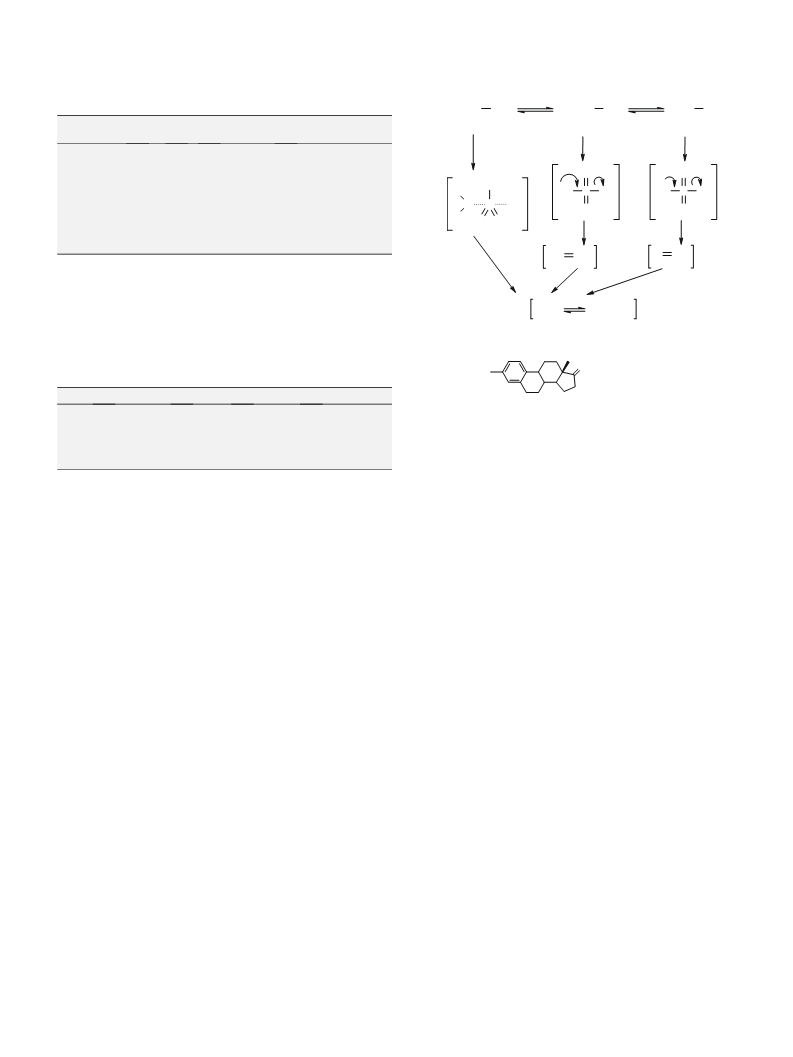
The kinetics of hydrolysis of the medicinally important sulfamate ester EMATE have been probed over a wide pH range and into moderately strong base (H_ region). Analysis of the pH/H_-rate profile, measurements of pKas, solvent-reactivity, kinetic isotope effects and determination of activation data reveal that in the pH range from ~1 to ~8 an SN2 (S) solvolytic mechanism is followed and after the pKa of EMATE (pKa ~9) is passed, a second pathway showing a first-order dependence on base operates and an E1cB mechanism is supported.

Characterization of 17β-hydroxysteroid dehydrogenase and regulators involved in estrogen degradation in Pseudomonas putida SJTE-1
Wang, Pingping Zheng, Daning Peng, Wanli Wang, Yanqiu Wang, Xiuli Xiong, Weiliang Liang, Rubing
In bacteria, the enzyme catalyzing the transformation of 17β-estradiol is considered the key enzyme for its metabolism, whose enzymatic activity and regulatory network influence the biodegradation efficiency of this typical estrogen. In this work, a novel 17β-hydroxysteroid dehydrogenase (17β-HSD) was characterized from the estrogen-degrading strain Pseudomonas putida SJTE-1, and two regulators were identified. This 17β-HSD, a member of the short-chain dehydrogenase/reductase (SDR) superfamily, could be induced by 17β-estradiol and catalyzed the oxidization reaction at the C17 site of 17β-estradiol efficiently. Its Km value was 0.068?mM, and its Vmax value was 56.26?μmol/min/mg; over 98% of 17β-estradiol was oxidized into estrone in 5?min, indicating higher efficiency than other reported bacterial 17β-HSDs. Furthermore, two genes (crgA and oxyR) adjacent to 17β-hsd were studied which encoded the potential CrgA and OxyR regulators. Overexpression of crgA could enhance the transcription of 17β-hsd, while that of oxyR resulted in the opposite effect. They could bind to the specific and different sites in the promoter region of 17β-hsd gene directly, and binding of OxyR could be released by 17β-estradiol. OxyR repressed the expression of 17β-hsd by its specific binding to the conserved motif of GATA-N9-TATC, while CrgA activated the expression of this gene through its binding to the motif of T-N11-A. Therefore, this 17β-HSD transformed 17β-estradiol efficiently and the two regulators regulated its expression directly. This work could promote the study of the enzymatic mechanism and regulatory network of the estrogen biodegradation pathway in bacteria.



 Sweden | Contact:August von Eisenbeck
 Spain | Contact:Sir
 South Africa | Contact:AAron Thomas
 Slovakia (Slovak Republic) | Contact:Sir
 Poland | Contact:Sklodowski
 Macao | Contact:Sue
 Latvia | Contact:Sir
 Japan | Contact:Junsei