



Relevant articles and documents
Chlorine-nickel interactions in gas phase catalytic hydrodechlorination: Catalyst deactivation and the nature of reactive hydrogen
Shin, Eun-Jae Spiller, Andreas Tavoularis, George Keane, Mark A.
The gas phase hydrodechlorination of chlorobenzene and 3-chlorophenol (where 473 K ≤ T ≤ 573 K) has been studied using a 1.5% w/w Ni/SiO2 catalyst which was also employed to promote the hydrogenation of benzene, cyclohexene and phenol. In the former two instances the catalyst was 100% selective in removing the chlorine substituent, leaving the aromatic ring intact. While the dechlorination of chlorobenzene readily attained steady state with no appreciable deactivation, the turnover of 3-chlorophenol to phenol was characterised by both a short and a long term loss of activity. Chlorine coverage of the catalyst surface under reaction conditions was probed indirectly by monitoring, via pH changes in an aqueous NaOH trap, HCI desorption after completion of the catalytic step. Contacting the catalyst with the chlorinated reactants was found to severely limit and, depending on the degree of contact, completely inhibit aromatic ring reduction although a high level of hydrodechlorination activity was maintained. Hydrogen temperature programmed desorption (TPD) reveals the existence of three forms of surface hydrogen which are tentatively assigned as: (i) hydrogen bound to the surface nickel; (ii) hydrogen at the nickel/silica interface; (iii) spillover hydrogen on the silica support. The effect of chlorine-nickel interactions on the resultant TPD profiles is presented and discussed. The (assigned) spillover hydrogen appears to be hydrogenolytic in nature and is responsible for promoting hydrodechlorination while the hydrogen that is taken to be chemisorbed on, and remains associated with, the surface nickel metal participates in aromatic hydrogenation. Hydrodechlorination proceeds via an electrophilic mechanism, possibly involving spillover hydronium ions. The experimental catalytic data are adequately represented by a kinetic model involving non-competitive adsorption between hydrogen and the chloroaromatic, where incoming chloroaromatic must displace the HCI that remains on the surface after the dechlorination step. Kinetic parameters extracted from the model reveal that chlorophenol has a higher affinity than chlorobenzene for the catalyst surface but the stronger interaction leads to a greater displacement of electron density at the metal site and this ultimately leads to catalyst deactivation.


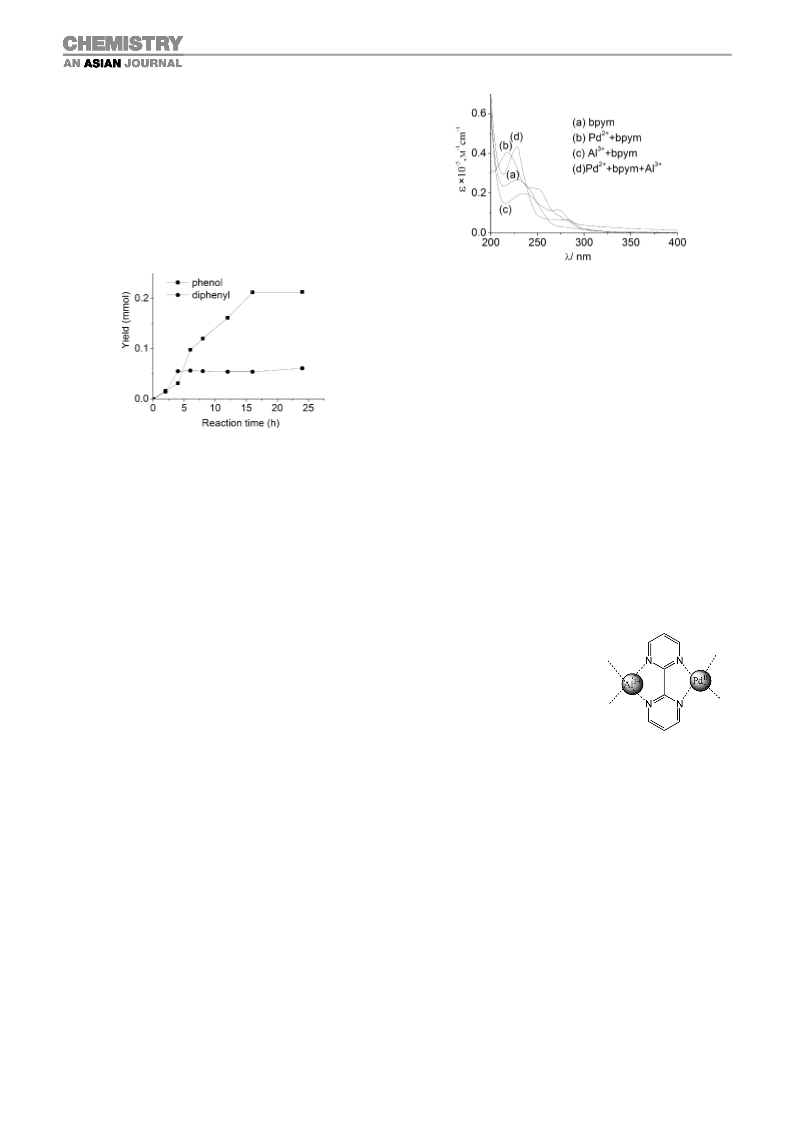
Redox inactive metal ion promoted C-H activation of benzene to phenol with PdII(bpym): Demonstrating new strategies in catalyst designs
Guo, Huajun Chen, Zhuqi Mei, Fuming Zhu, Dajian Xiong, Hui Yin, Guochuan


 South Africa | Contact:AAron Thomas
 Poland | Contact:sir
 India | Contact:BHARAVI
 Germany | Contact:sir