



Relevant articles and documents
Production of dicarboxylic acids from novel unsaturated fatty acids by laccase-catalyzed oxidative cleavage
Takeuchi, Michiki Kishino, Shigenobu Park, Si-Bum Kitamura, Nahoko Watanabe, Hiroko Saika, Azusa Hibi, Makoto Yokozeki, Kenzo Ogawa, Jun
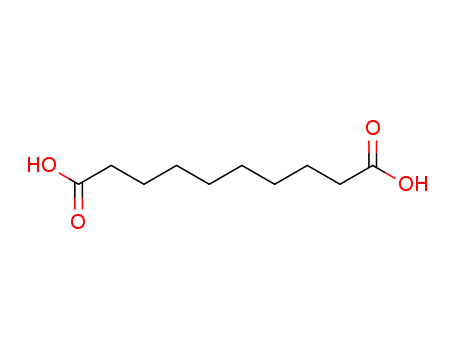
The establishment of renewable biofuel and chemical production is desirable because of global warming and the exhaustion of petroleum reserves. Sebacic acid (decanedioic acid), the material of 6,10-nylon, is produced from ricinoleic acid, a carbonneutral material, but the process is not eco-friendly because of its energy requirements. Laccase-catalyzing oxidative cleavage of fatty acid was applied to the production of dicarboxylic acids using hydroxy and oxo fatty acids involved in the saturation metabolism of unsaturated fatty acids in Lactobacillus plantarum as substrates. Hydroxy or oxo fatty acids with a functional group near the carbon-carbon double bond were cleaved at the carbon-carbon double bond, hydroxy group, or carbonyl group by laccase and transformed into dicarboxylic acids. After 8 h, 0.58 mM of sebacic acid was produced from 1.6 mM of 10-oxo-cis-12,cis-15-octadecadienoic acid (αKetoA) with a conversion rate of 35% (mol/mol). This laccase-catalyzed enzymatic process is a promising method to produce dicarboxylic acids from biomass-derived fatty acids.



A direct synthesis of carboxylic acidsviaplatinum-catalysed hydroxycarbonylation of olefins
Schneider, Carolin Franke, Robert Jackstell, Ralf Beller, Matthias
The platinum-catalysed hydroxycarbonylation of olefins is reported for the first time. Using a combination of PtCl2/2,2′-bis(tert-butyl(pyridin-2-yl)phosphanyl)-1,1′-binaphthalene (Neolephos) in the presence of sulfuric acid [0.6 M] in acetic acid selective carbonylation of terminal aliphatic olefins proceeds to good yields and selectivities to the corresponding carboxylic acids. Comparing the reactivity of different butenes (iso- andn-butenes), the terminal olefin can be selectively carbonylated.


 Switzerland | Contact:SYNPHABASE
 United Kingdom | Contact:Elsa Young
 China (Mainland) | Contact:Chen