



Relevant articles and documents
Mixed metal acetylides: The Pt(II) aryl acetylide '[PtC6H2(CH2NMe2)2-2,6-(C≡C)-4]' as a connective fragment
Back Gossage Lang Van Koten
Using Me3SiC≡C{Pt}Cl (1; Me3SiC≡C{Pt} = [Pt(C6H2- {CH2NMe2}2-2,6-{C≡CSiMe3}-4]+) a series of platinum monoacetylides of the type XC≡C{Pt}C≡CR [X = SiMe3: 2, R = Ph; 3, R = (η5- C5H4)Fe(η5-C5H5) (abbreviated as Fc); 4, R = C6H4CN-4; 5, R = C6H4(C≡CSnMe3)-4; X = H: 7, R = Ph; 8, R = Fc; 9, R = C6H4CN-4] have been prepared. Studies directed towards the coordinative properties of the C2 unit of 1 have been carried out and heterotrimetallic [μ(Me3SiC≡C{Pt}Cl][Co2(CO)6] (10) could be synthesised. The successful attachment of 1 to a Ph3PAu unit leads to linear PhaPAuC≡C{Pt}Cl (11). Treatment of 11 with FcC≡CSnMe3 produces the heterotrimetallic rigid-rod shaped complex Ph3PAuC≡C{Pt}C≡CFc (13). Cyclic voltammetric studies carried out on these Ph3PAu-capped molecules show that the attachment of an organometallic entity on either side of the C≡C{Pt} fragment leads to a facilitation of the Pt(II)/Pt(IV) oxidation.
Alkyl- and acyl-substituted vinylstannanes: Synthesis and reactivity in electrophilic substitution reactions
Cochran, John C. Prindle, Vicki Young, Heather A. Kumar, Mark H. Tom, Samson Petraco, Nicholas D. K. Mohoro, Clare Kelley, Brendan
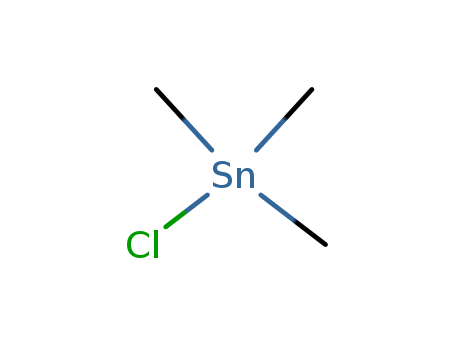
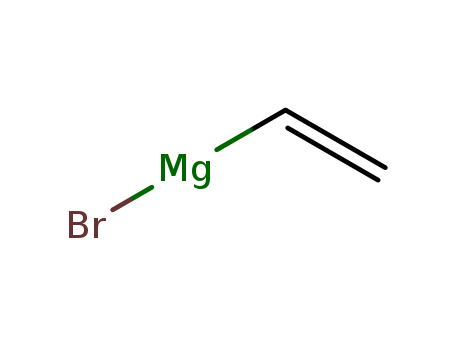
Six substituted vinylstannanes have been prepared. (E)- and (Z)-2-trimethylstannyl-2-butene, (1) and (2), respectively, 2-methyl-1-(trimethylstannyl) propene, (3), and 3-methyl-2-trimethylstannyl-2-butene, (4), were prepared by coupling the appropriate lithium or Grignard reagent with chlorotrimethylstannane. 3-Trimethylstannyl-3-butene-2-one, (5), and (Z)-3-trimethylstannyl-3-hexene-2-one, (6), were prepared by palladium(O) catalyzed hydrostannation of the appropriate ynone. This reaction was regiospecific such that the trimethylstannyl and carbonyl groups were bonded at the same vinyl carbon. The reaction was also stereospecific giving syn addition in each case. However, isomerization to a mixture of isomers was observed for the reaction of (5) with Me3SnD and complete isomerization of E-(6) to Z-(6). Each compound was characterized by 1H, 13C, and 119Sn NMR. The reactivity to protodestannylation was determined for each compound by spectrophotometric measurement of second order rate constants. The reactivity of the multimethyl-substituted vinylstannanes was consistent with the reactivity determined previously for monomethyl-substituted vinylstannanes. However, two methyl groups at the remote vinyl carbon exhibited a synergistic activating effect on the protodestannylation reactivity. The acyl group was found to be deactivating for protodestannylation. The stereochemistry of the reaction was round to take place with retention of configuration.



 South Africa | Contact:AAron Thomas
 Russian Federation | Contact:alex
 India | Contact:H. T. Kanani