




Relevant articles and documents
Ligand properties of aromatic azines: C-H activation, metal induced disproportionation and catalytic C-C coupling reactions
D?nnecke, Daniel Wunderle, Joachim Imhof, Wolfgang
The reaction of aromatic azines with Fe2(CO)9 yields dinuclear iron carbonyl cluster compounds as the main products. The formation of these compounds may be rationalized by a C-H activation reaction at the aromatic substituent in ortho position with respect to the exocyclic C-N double bond followed by an intramolecular shift of the corresponding hydrogen atom toward the former imine carbon atom. The second imine function of the ligand does not react. Additional products arise from the metal induced disproportionation of the azine into a primary imine and a nitrile. So also one of the imine C-H bonds may be activated during the reaction. Depending on the aromatic substituent of the azine ligands iron carbonyl complexes of the disproportionation products are isolated and characterized by X-ray crystallography. C-C coupling reactions catalyzed by Ru3(CO)12 result in the formation of ortho-substituted azines. In addition, ortho-substituted nitriles are identified as side-products showing that the metal induced disproportionation reaction also takes place under catalytic conditions.


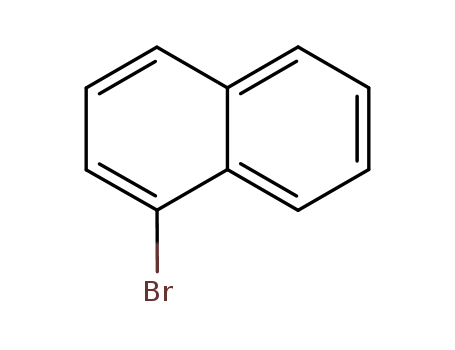
1,2-Silyl migration in 1-halonaphthalenes catalyzed by I2
Shimizu, Tomomi Morisako, Shogo Yamamoto, Yohsuke Kawachi, Atsushi
1-Halo-8-hydrosilylnaphthalenes undergo 1,2-silyl migration to form 1-halo-7-silylnaphthalenes. The influence of the substituents on the silicon atom, the solvent effect, and the D-labeling experiments are investigated. The migration process may include four steps: (a) generation of acid (HI) by the reaction of the hydrosilane with I2, (b) protonation of the naphthalene ring, (c) silyl group migration in the protonated intermediate, and (d) deprotonation of the naphthalene ring.


 Ukraine | Contact:sir
 South Africa | Contact:AAron Thomas
 Poland | Contact:Edyta
  Japan | Contact:Sir
 India | Contact:sir
 Germany | Contact:sir
 United States | Contact:sir