



Relevant articles and documents
Deoxygenation of polyhydroxybenzenes: An alternative strategy for the benzene-free synthesis of aromatic chemicals
Hansen, Chad A. Frost
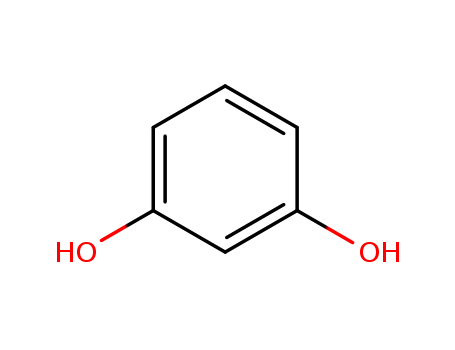
New synthetic connections have been established between glucose and aromatic chemicals such as pyrogallol, hydroquinone, and resorcinol. The centerpiece of this approach is the removal of one oxygen atom from 1,2,3,4-tetrahydroxybenzene, hydroxyhydroquinone, and phloroglucinol methyl ether to form pyrogallol, hydroquinone, and resorcinol, respectively. Deoxygenations are accomplished by Rh-catalyzed hydrogenation of the starting polyhydroxybenzenes followed by acid-catalyzed dehydration of putative dihydro intermediates. Pyrogallol synthesis consists of converting glucose into myo-inositol, oxidation to myo-2-inosose, dehydration to 1,2,3,4-tetrahydroxybenzene, and deoxygenation to form pyrogallol. Synthesis of pyrogallol via myo-2-inosose requires 4 enzyme-catalyzed and 2 chemical steps. For comparison, synthesis of pyrogallol from glucose via gallic acid intermediacy and the shikimate pathway requires at least 20 enzyme-catalyzed steps. A new benzene-free synthesis of hydroquinone employs conversion of glucose into 2-deoxy-scyllo-inosose, dehydration of this inosose to hydroxyhydroquinone, and subsequent deoxygenation to form hydroquinone. Synthesis of hydroquinone via 2-deoxy-scyllo-inosose requires 2 enzyme-catalyzed and 2 chemical steps. By contrast, synthesis of hydroquinone using the shikimate pathway and intermediacy of quinic acid requires 18 enzyme-catalyzed steps and 1 chemical step. Methylation of triacetic acid lactone, cyclization, and regioselective deoxygenation of phloroglucinol methyl ether affords resorcinol. Given the ability to synthesize triacetic acid lactone from glucose, this constitutes the first benzene-free route for the synthesis of resorcinol. Copyright


Mechanism and Structure of γ-Resorcylate Decarboxylase
Sheng, Xiang Patskovsky, Yury Vladimirova, Anna Bonanno, Jeffrey B. Almo, Steven C. Himo, Fahmi Raushel, Frank M.
γ-Resorcylate decarboxylase (γ-RSD) has evolved to catalyze the reversible decarboxylation of 2,6-dihydroxybenzoate to resorcinol in a nonoxidative fashion. This enzyme is of significant interest because of its potential for the production of γ-resorcylate and other benzoic acid derivatives under environmentally sustainable conditions. Kinetic constants for the decarboxylation of 2,6-dihydroxybenzoate catalyzed by γ-RSD from Polaromonas sp. JS666 are reported, and the enzyme is shown to be active with 2,3-dihydroxybenzoate, 2,4,6-trihydroxybenzoate, and 2,6-dihydroxy-4-methylbenzoate. The three-dimensional structure of γ-RSD with the inhibitor 2-nitroresorcinol (2-NR) bound in the active site is reported. 2-NR is directly ligated to a Mn2+ bound in the active site, and the nitro substituent of the inhibitor is tilted significantly from the plane of the phenyl ring. The inhibitor exhibits a binding mode different from that of the substrate bound in the previously determined structure of γ-RSD from Rhizobium sp. MTP-10005. On the basis of the crystal structure of the enzyme from Polaromonas sp. JS666, complementary density functional calculations were performed to investigate the reaction mechanism. In the proposed reaction mechanism, γ-RSD binds 2,6-dihydroxybenzoate by direct coordination of the active site manganese ion to the carboxylate anion of the substrate and one of the adjacent phenolic oxygens. The enzyme subsequently catalyzes the transfer of a proton to C1 of γ-resorcylate prior to the actual decarboxylation step. The reaction mechanism proposed previously, based on the structure of γ-RSD from Rhizobium sp. MTP-10005, is shown to be associated with high energies and thus less likely to be correct.


 Switzerland | Contact:sir
 South Africa | Contact:AAron Thomas
 India | Contact:nihar
 Germany | Contact:Marco Neddermann