Welcome to LookChem.com Sign In|Join Free
  • or

Encyclopedia

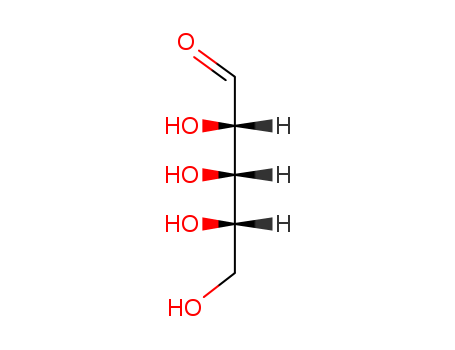
DL-Xylose

Base Information
  • Chemical Name:DL-Xylose
  • CAS No.:25990-60-7
  • Deprecated CAS:133-56-2,141492-19-5,41247-05-6,141492-19-5
  • Molecular Formula:C5H10O5
  • Molecular Weight:150.131
  • Hs Code.:
  • European Community (EC) Number:200-400-7,255-277-2,247-395-8
  • NSC Number:760130
  • UNII:A1TA934AKO
  • DSSTox Substance ID:DTXSID0023745
  • Nikkaji Number:J2.806A
  • Wikidata:Q27077130
  • Metabolomics Workbench ID:50315
  • ChEMBL ID:CHEMBL1236821
  • Mol file:25990-60-7.mol
DL-Xylose

Synonyms:D Xylose;D-Xylose;Xylose

Suppliers and Price of DL-Xylose
Supply Marketing:
Business phase:
The product has achieved commercial mass production*data from LookChem market partment
Manufacturers and distributors:
  • Manufacture/Brand
  • Chemicals and raw materials
  • Packaging
  • price
  • Usbiological
  • DL-Xylose
  • 1g
  • $ 409.00
  • TCI Chemical
  • DL-Xylose >98.0%(GC)
  • 1g
  • $ 28.00
  • Sigma-Aldrich
  • DL-Xylose ≥99%
  • 5g
  • $ 120.00
  • Sigma-Aldrich
  • DL-Xylose ≥99%
  • 25g
  • $ 385.00
  • Medical Isotopes, Inc.
  • DL-Xylose
  • 5 g
  • $ 663.00
  • Medical Isotopes, Inc.
  • DL-Xylose
  • 1 g
  • $ 390.00
  • ChemScene
  • DL-Xylose >98.0%
  • 100mg
  • $ 60.00
  • Biosynth Carbosynth
  • DL-Xylose
  • 500 g
  • $ 790.00
  • Biosynth Carbosynth
  • DL-Xylose
  • 250 g
  • $ 425.00
  • Biosynth Carbosynth
  • DL-Xylose
  • 50 g
  • $ 110.00
Total 37 raw suppliers
Chemical Property of DL-Xylose
Chemical Property:
  • Melting Point:133-136 °C
     
  • Boiling Point:333.2°Cat760mmHg 
  • PKA:12.46±0.20(Predicted) 
  • Flash Point:155.3°C 
  • PSA:97.99000 
  • Density:1.757g/cm3 
  • LogP:-2.73970 
  • Storage Temp.:Inert atmosphere,Room Temperature 
  • Solubility.:H2O: 0.1 g/mL, clear, colorless 
  • XLogP3:-2.3
  • Hydrogen Bond Donor Count:4
  • Hydrogen Bond Acceptor Count:5
  • Rotatable Bond Count:4
  • Exact Mass:150.05282342
  • Heavy Atom Count:10
  • Complexity:104
Purity/Quality:

99% *data from raw suppliers

DL-Xylose *data from reagent suppliers

Safty Information:
  • Pictogram(s):  
  • Hazard Codes: 
  • Safety Statements: 24/25 
MSDS Files:

SDS file from LookChem

Total 1 MSDS from other Authors

Useful:
  • Chemical Classes:Biological Agents -> Monosaccharides and Derivatives
  • Canonical SMILES:C(C(C(C(C=O)O)O)O)O
  • Isomeric SMILES:C([C@H]([C@@H]([C@H](C=O)O)O)O)O
  • Uses Xylose is a sugar first isolated from wood. Xylose is classified as a monosaccharide of the aldopentose type, which means that it contains five carbon atoms and includes an aldehyde functional group. It is the precursor to hemicellulose, one of the main c
Technology Process of DL-Xylose

There total 21 articles about DL-Xylose which guide to synthetic route it. The literature collected by LookChem mainly comes from the sharing of users and the free literature resources found by Internet computing technology. We keep the original model of the professional version of literature to make it easier and faster for users to retrieve and use. At the same time, we analyze and calculate the most feasible synthesis route with the highest yield for your reference as below:

synthetic route:
Refernces

A total synthesis of OSW-1

10.1021/jo7018812

The research focuses on the total synthesis of OSW-1, a natural saponin with significant antitumor activities, which was synthesized from (+)-dehydroisoandrosterone, L-arabinose, and D-xylose on a gram scale. The study aimed to develop a new, efficient, and practical method for synthesizing OSW-1, a promising lead compound for the development of novel antitumor drugs, due to its potent cytotoxicity against various malignant tumor cells. The synthesis was achieved in 10 linear steps with an overall yield of 6.4%, starting from (+)-dehydroisoandrosterone. The research concluded that the developed synthetic strategy was reliable, with simple workup procedures, enabling large-scale synthesis and providing a foundation for the preparation of various OSW-1 derivatives for further studies on structure-activity relationships and potential anticancer therapeutics. Key chemicals used in the process included propanenitrile, 3-methylbutylmagnesium bromide, NaOH, TBS chloride, ethylene glycol, and a variety of other reagents and solvents employed in the multi-step synthesis procedure.

Synthesis of seven-membered ring glycals via endo-selective alkynol cycloisomerization

10.1021/ol0483495

The study investigates the synthesis of seven-membered ring glycals through endo-selective alkynol cycloisomerization catalyzed by tungsten carbonyl. The researchers used alkynyldiols as substrates, which undergo cycloisomerization to form the corresponding seven-membered cyclic enol ethers with good yields and virtually complete regioselectivity favoring endo-mode cyclization. The study began with the conversion of D-ribose into alkynyl alcohol precursors, which were then used to produce alkynyldiols. The unexpected regioselectivity for seven-membered ring formation is likely due to the presence of the dioxolane structure tethering the terminal alkyne and diol functional groups. The study demonstrated that this transformation is general for various diastereomers of acetonide-protected alkynyldiols derived from different sugars, including D-lyxose, D-xylose, and L-arabinose. The availability of these septanose glycals could significantly advance the synthesis of structurally unusual hexoseptanose glycosides.


Post a RFQ

Enter 15 to 2000 letters.Word count: 0 letters

Attach files(File Format: Jpeg, Jpg, Gif, Png, PDF, PPT, Zip, Rar,Word or Excel Maximum File Size: 3MB)

1 Customer Service

What can I do for you?
Get Best Price

Get Best Price for 25990-60-7