10.1016/j.tet.2011.12.050
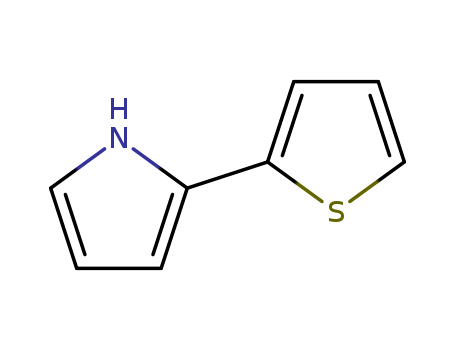
The research aims to develop a straightforward and efficient method for synthesizing nitrogen stilbene analogs, specifically 1-styrylpyrroles, without the use of transition metals. The study utilizes a superbasic KOH/DMSO system to facilitate the hydroamination of arylacetylenes with various substituted pyrroles at moderate temperatures (90–120 °C). The purpose of this research is to provide a general and atom-economic route for the synthesis of these compounds, which have potential applications in drug design, optoelectronic materials, and as precursors for molecular optical switches. The key chemicals used include pyrroles (both unsubstituted and substituted), arylacetylenes (such as 2-Phenylpyrrole and 2-(2-Thienyl)pyrrole), and ethynylpyridine. The results show that the reaction proceeds readily, yielding 1-styrylpyrroles in good to excellent yields (up to 94%) with high stereoselectivity, depending on the structure of the reactants and reaction conditions. The study concludes that this transition metal-free approach is a promising method for synthesizing nitrogen stilbene analogs, offering a general and efficient route that can be tailored to produce specific E- or Z-stereoisomers, thus expanding the toolkit for chemists working on the development of new materials and pharmaceuticals.