10.1021/ac050438n
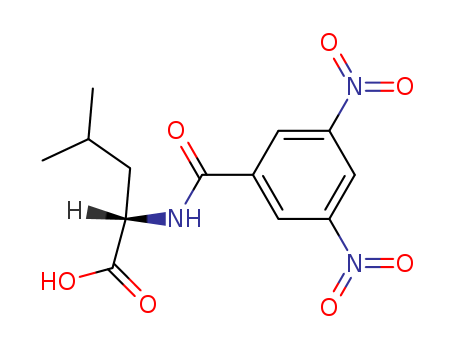
The research focuses on the development and application of tertiary amine appended derivatives of N-(3,5-dinitrobenzoyl)leucine as chiral selectors for enantiomer assays using electrospray ionization mass spectrometry (ESI-MS). The purpose of this study was to design chiral selectors that separate the ionization site from the sites required for chiral recognition, thereby enhancing the effectiveness of enantiomeric discrimination. The researchers synthesized chiral selectors (S)-8 and (R)-9 and utilized them in ESI-MS experiments with various chiral analytes. The results demonstrated that the complex intensity fraction in the mass spectra varied linearly with the enantiomeric composition of the analytes, allowing for the quantitative determination of enantiomeric composition. The method proved to be independent of analyte concentration, rapid, and potentially suitable for high-throughput analysis. The chemicals used in this process included the chiral selectors (S)-8 and (R)-9, ammonium chloride as a protonation source, and a range of solvents, primarily methanol and water mixtures, to assess the impact of solvent composition on enantioselectivity. The study concluded that this mass spectrometric method could expand the scope of chiral analytes that can be assayed, complementing the set of analytes that can be enantioresolved on corresponding chiral stationary phases, and could be a valuable tool for discovering new chiral selectors.