10.1021/tx950065t
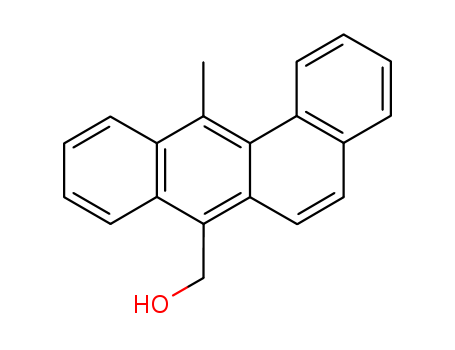
The research investigates the quantitative relationships between substrate structure and the catalytic activity of sulfotransferase a (STa), an enzyme that catalyzes the formation of sulfuric acid esters from alcohols. The study aims to understand the specificity of STa for various alcohols, including both endogenous and xenobiotic compounds. Key chemicals involved in the research include benzyl alcohol and a series of benzylic alcohols substituted with n-alkyl groups (CnH2n+1, where n ranges from 1 to 8), primary n-alkanols (CnH2n+1OH, where n ranges from 3 to 16), and various other alcohols such as cholesterol, dehydroepiandrosterone (DHEA), and several phenols. The researchers also used 7-(hydroxymethyl)-12-methylbenz[a]anthracene (HMBA) to study the enzyme's activity with a carcinogenic compound. The study employed methods such as purification of STa, determination of kinetic constants (kcat/Km values), and molecular modeling to analyze the influence of substrate hydrophobicity and steric effects on the catalytic efficiency of STa. The findings revealed that hydrophobicity of the substrate is a major factor contributing to the catalytic efficiency, with optimal catalytic efficiency observed for certain chain lengths of aliphatic alcohols and benzylic alcohols. The study also highlighted limitations in substrate size and the importance of steric effects, providing insights into the enzyme's specificity for different alcohols.