Welcome to LookChem.com Sign In|Join Free
  • or

Encyclopedia

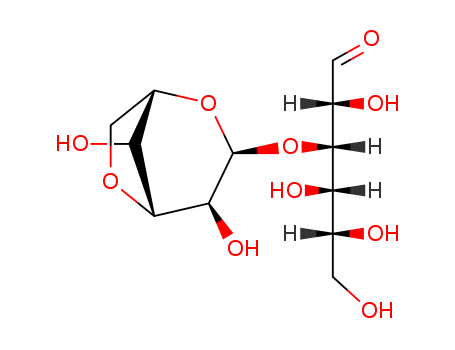
neoagarobiose

Base Information
  • Chemical Name:neoagarobiose
  • CAS No.:484-58-2
  • Molecular Formula:C12H20O10
  • Molecular Weight:324.285
  • Hs Code.:
  • Mol file:484-58-2.mol
neoagarobiose

Synonyms:Neoagarobiose(6CI,8CI); 2,6-Dioxabicyclo[3.2.1]octane, D-galactose deriv.; O-3,6-Anhydro-a-L-galactopyranosyl(1®3)-D-galactose

Suppliers and Price of neoagarobiose
Supply Marketing:
Business phase:
The product has achieved commercial mass production*data from LookChem market partment
Manufacturers and distributors:
  • Manufacture/Brand
  • Chemicals and raw materials
  • Packaging
  • price
  • Usbiological
  • Neoagarobiose
  • 1mg
  • $ 363.00
  • Biosynth Carbosynth
  • Neoagarobiose
  • 10 mg
  • $ 295.00
  • Biosynth Carbosynth
  • Neoagarobiose
  • 5 mg
  • $ 200.00
  • Biosynth Carbosynth
  • Neoagarobiose
  • 2 mg
  • $ 124.00
  • Biosynth Carbosynth
  • Neoagarobiose
  • 1 mg
  • $ 82.00
  • Biosynth Carbosynth
  • Neoagarobiose
  • 25 mg
  • $ 475.00
  • American Custom Chemicals Corporation
  • NEOAGAROBIOSE 95.00%
  • 5MG
  • $ 504.58
Total 18 raw suppliers
Chemical Property of neoagarobiose
Chemical Property:
  • Vapor Pressure:1.08E-24mmHg at 25°C 
  • Melting Point:207-208 °C 
  • Boiling Point:731.3°Cat760mmHg 
  • PKA:12.25±0.20(Predicted) 
  • Flash Point:277.3°C 
  • PSA:166.14000 
  • Density:1.65g/cm3 
  • LogP:-4.50900 
  • Storage Temp.:2-8°C 
Purity/Quality:

99% *data from raw suppliers

Neoagarobiose *data from reagent suppliers

Safty Information:
  • Pictogram(s):  
  • Hazard Codes: 
MSDS Files:
Useful:
  • Description Many kinds of skin moisturizers classifiable as polyhydric alcohols containing glycerol and propyrenglycol, natural moisturizing factor (NMF)2) and polysaccharides such as hyaluronic acid3 ) have been developed in the dermatological field. Neoagarobiose, a disaccharide, showed a higher hygroscopic ability than glycerol or hyaluronic acid, typical moisturizing reagents. Beside, neoagarobiose whitened B16 murine melanoma cells, and showed low cytotoxicity. Therefore neoagarobiose was a rare reagent showing both moisturizing and whitening effects. Commonly added to food and personal care products as a thickening agent, agar is a seaweed-derived product comprised of numerous agarose polymers. Neoagarobiose is the base unit of agarose that functions as a moisturizer for skin care as well as having mild skin lightening properties. Unfortunately, it is not commercially available due to the difficulties in breaking agar and agarose down into neoagarobiose. Innovative Technology Researchers at the University of Maryland have identified the genes used to encode marine bacterial enzymes that effectively degrade agar into neoagarobiose. The researchers have cloned the genes into a common vector with a C-terminal His tag for easy purification. The simple production of these enzymes allows for the simple conversion of agar into neoagarobiose allowing for its use in consumer products for the first time. Agar is a complex water-soluble polysaccharide composed of gelatin agarose (agarose, also known as agarin) and gelatin free agar pectin (agaropectin, agaric ester) two parts. Agarose is a disaccharide composed of two galactose. Agar can be hydrolyzed by acid to obtain agar disaccharide, agar tetrasaccharide and other oligosaccharides; Oligosaccharides such as neoqiongdisaccharide and neoqiongtetrasaccharide were obtained by enzymatic hydrolysis. Neutral neoqiongdisaccharide with low molecular weight has good hygroscopic and whitening effects.
Technology Process of neoagarobiose

There total 2 articles about neoagarobiose which guide to synthetic route it. The literature collected by LookChem mainly comes from the sharing of users and the free literature resources found by Internet computing technology. We keep the original model of the professional version of literature to make it easier and faster for users to retrieve and use. At the same time, we analyze and calculate the most feasible synthesis route with the highest yield for your reference as below:

synthetic route:
Guidance literature:
With enzyme-substance from pseudomonas kyotoensis;
DOI:10.1246/bcsj.29.339
Guidance literature:
With enzyme-substance from pseudomonas kyotoensis;
DOI:10.1246/bcsj.30.287
Downstream raw materials:

D-Galactose

3,6-anhydro-L-galactose

Post a RFQ

Enter 15 to 2000 letters.Word count: 0 letters

Attach files(File Format: Jpeg, Jpg, Gif, Png, PDF, PPT, Zip, Rar,Word or Excel Maximum File Size: 3MB)

1 Customer Service

What can I do for you?
Get Best Price

Get Best Price for 484-58-2