Welcome to LookChem.com Sign In|Join Free
  • or

Encyclopedia

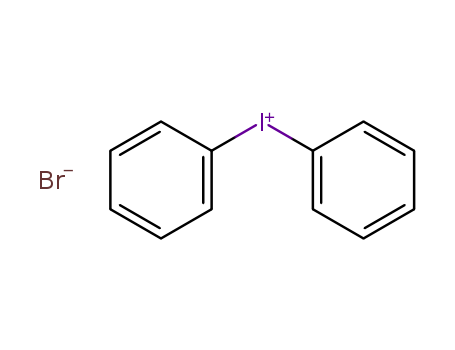
Diphenyliodanium;hydrobromide

Base Information
  • Chemical Name:Diphenyliodanium;hydrobromide
  • CAS No.:1483-73-4
  • Molecular Formula:C12H10 I . Br
  • Molecular Weight:361.02
  • Hs Code.:29319090
  • NSC Number:8980
  • Mol file:1483-73-4.mol
Diphenyliodanium;hydrobromide

Synonyms:diphenyliodanium;hydrobromide;SCHEMBL3169505;NSC8980;NSC-8980

Suppliers and Price of Diphenyliodanium;hydrobromide
Supply Marketing:
Business phase:
The product has achieved commercial mass production*data from LookChem market partment
Manufacturers and distributors:
  • Manufacture/Brand
  • Chemicals and raw materials
  • Packaging
  • price
  • TRC
  • Diphenyliodonium Bromide
  • 50mg
  • $ 45.00
  • TCI Chemical
  • Diphenyliodonium Bromide >98.0%(HPLC)(T)
  • 5g
  • $ 319.00
  • SynQuest Laboratories
  • Diphenyliodonium Bromide 98.0%
  • 5 g
  • $ 232.00
  • Crysdot
  • Diphenyliodonium Bromide 97%
  • 5g
  • $ 32.00
  • Biosynth Carbosynth
  • Diphenyliodonium bromide
  • 10 g
  • $ 160.00
  • Biosynth Carbosynth
  • Diphenyliodonium bromide
  • 5 g
  • $ 100.00
  • Biosynth Carbosynth
  • Diphenyliodonium bromide
  • 25 g
  • $ 300.00
  • Biosynth Carbosynth
  • Diphenyliodonium bromide
  • 50 g
  • $ 500.00
  • Biosynth Carbosynth
  • Diphenyliodonium bromide
  • 2 g
  • $ 65.00
  • American Custom Chemicals Corporation
  • DIPHENYLIODONIUM BROMIDE 95.00%
  • 5G
  • $ 880.88
Total 41 raw suppliers
Chemical Property of Diphenyliodanium;hydrobromide
Chemical Property:
  • Appearance/Colour:LIGHT YELLOW POWDER 
  • Melting Point:222.5-227.5 °C(lit.)
     
  • Refractive Index:1.6500 (estimate) 
  • Boiling Point:°Cat760mmHg 
  • Flash Point:°C 
  • PSA:0.00000 
  • Density:g/cm3 
  • LogP:-3.18100 
  • Storage Temp.:Inert atmosphere,Room Temperature 
  • Sensitive.:Light Sensitive 
  • Hydrogen Bond Donor Count:1
  • Hydrogen Bond Acceptor Count:0
  • Rotatable Bond Count:2
  • Exact Mass:360.90889
  • Heavy Atom Count:14
  • Complexity:116
Purity/Quality:

99%, *data from raw suppliers

Diphenyliodonium Bromide *data from reagent suppliers

Safty Information:
  • Pictogram(s):  
  • Hazard Codes:
  • Statements: 34-25-36/37/38 
  • Safety Statements: 26-36-45-36/37 
MSDS Files:

SDS file from LookChem

Useful:
  • Canonical SMILES:C1=CC=C(C=C1)[I+]C2=CC=CC=C2.Br
Technology Process of Diphenyliodanium;hydrobromide

There total 9 articles about Diphenyliodanium;hydrobromide which guide to synthetic route it. The literature collected by LookChem mainly comes from the sharing of users and the free literature resources found by Internet computing technology. We keep the original model of the professional version of literature to make it easier and faster for users to retrieve and use. At the same time, we analyze and calculate the most feasible synthesis route with the highest yield for your reference as below:

synthetic route:
Guidance literature:
With potassium bromide; In methanol; water; for 0.25h;
DOI:10.1002/adsc.202100426
Guidance literature:
With hydrogen bromide; dihydrogen peroxide; In methanol; water; Heating;
DOI:10.1246/bcsj.70.219
Guidance literature:
benzene; With sodium periodate; sulfuric acid; iodine; In acetic anhydride; at 20 - 55 ℃; for 3h;
With potassium bromide; In water; for 1h;
DOI:10.1002/chem.201502995
Refernces

Use of diphenyliodonium bromide in the synthesis of some N-phenyl-amino acids

10.1080/00397910903051259

The research explores the synthesis of N-phenyl methyl esters of various amino acids using diphenyliodonium bromide as a key reagent. The study focuses on the efficient and selective N-phenylation of α-amino acids, including glycine, alanine, valine, leucine, isoleucine, phenylalanine, methionine, proline, serine, threonine, tyrosine, aspartic acid, and glutamic acid. The process involves converting the amino acids into their methyl ester hydrochloride salts, followed by neutralization to obtain free amines. These amines are then subjected to N-phenylation in the presence of diphenyliodonium bromide, silver nitrate, and a catalytic amount of copper bromide. The chiral integrity of the amino acids is maintained throughout the reactions, as confirmed by the synthesis of dipeptides for each N-phenyl amino acid. The structures of the new compounds are characterized using IR, 1H, and 13C NMR spectroscopy, as well as CHN microanalysis or high-resolution mass spectrometry. The study highlights the utility of diphenyliodonium bromide in the synthesis of N-phenylated amino acids, demonstrating good to excellent yields and maintaining the chirality of the starting amino acids.


Post a RFQ

Enter 15 to 2000 letters.Word count: 0 letters

Attach files(File Format: Jpeg, Jpg, Gif, Png, PDF, PPT, Zip, Rar,Word or Excel Maximum File Size: 3MB)

1 Customer Service

What can I do for you?
Get Best Price

Get Best Price for 1483-73-4