Welcome to LookChem.com Sign In|Join Free
  • or

Encyclopedia

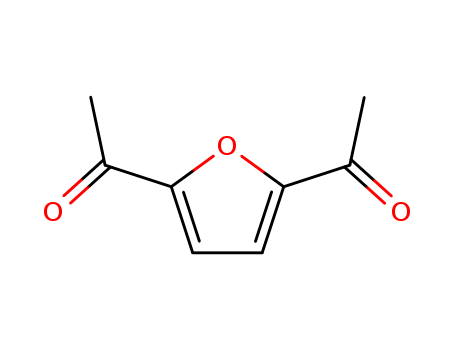
2,5-Diacetylfuran

Base Information
  • Chemical Name:2,5-Diacetylfuran
  • CAS No.:38071-72-6
  • Molecular Formula:
  • Molecular Weight:
  • Hs Code.:
  • DSSTox Substance ID:DTXSID10407546
  • Nikkaji Number:J895.303A
  • Wikidata:Q72462559
  • Mol file:38071-72-6.mol
2,5-Diacetylfuran

Synonyms:2,5-Diacetylfuran;38071-72-6;1-(5-acetylfuran-2-yl)ethan-1-one;1-(5-acetylfuran-2-yl)ethanone;SCHEMBL54682;DTXSID10407546;AKOS024338459;AS-77721;D97255

Suppliers and Price of 2,5-Diacetylfuran
Supply Marketing:
Business phase:
The product has achieved commercial mass production*data from LookChem market partment
Manufacturers and distributors:
  • Manufacture/Brand
  • Chemicals and raw materials
  • Packaging
  • price
Total 5 raw suppliers
Chemical Property of 2,5-Diacetylfuran
Chemical Property:
  • XLogP3:1
  • Hydrogen Bond Donor Count:0
  • Hydrogen Bond Acceptor Count:3
  • Rotatable Bond Count:2
  • Exact Mass:152.047344113
  • Heavy Atom Count:11
  • Complexity:166
Purity/Quality:

98%Min *data from raw suppliers

Safty Information:
  • Pictogram(s):  
  • Hazard Codes: 
MSDS Files:

SDS file from LookChem

Useful:
  • Canonical SMILES:CC(=O)C1=CC=C(O1)C(=O)C
Refernces

Highly enantioselective reduction of symmetrical diacetylaromatics with baker's yeast

10.1016/S0957-4166(97)00462-X

The research investigates the asymmetric reduction of various symmetrical diacetylaromatic compounds using baker's yeast (Saccharomyces cerevisiae) to obtain optically active secondary alcohols with high enantiomeric purity. The study explores the reduction of compounds such as 2,6-diacetylpyridine (la), 2,6-diacetylpyridine 1-oxide (lb), 1,2-diacetylb°enzene (lc), 1,3-diacetylbenzene (ld), 1,4-diacetylbenzene (le), 2,5-diacetylfuran (If), 2,5-diacetylthiophene (lg), and 2,5-diacetylpyrrole (lh). The researchers optimized reaction conditions to selectively produce monoalcohols over diols, achieving excellent yields and enantiomeric purities. Key chemicals involved in the research include the diacetylaromatic substrates, baker's yeast, sucrose, and various reagents used in the synthesis and analysis of the compounds, such as methoxymethoxyethyl groups, maleic acid, hydrogen peroxide, oxalyl chloride, dimethyl sulfoxide, and triethylamine. The study highlights the effectiveness of baker's yeast as a biocatalyst for enantioselective reductions under mild conditions, offering a valuable alternative to traditional chemical methods.


Post a RFQ

Enter 15 to 2000 letters.Word count: 0 letters

Attach files(File Format: Jpeg, Jpg, Gif, Png, PDF, PPT, Zip, Rar,Word or Excel Maximum File Size: 3MB)

1 Customer Service

What can I do for you?
Get Best Price

Get Best Price for 38071-72-6