Welcome to LookChem.com Sign In|Join Free
  • or
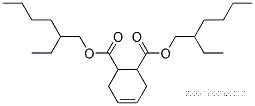
1,2,3,6-TETRAHYDROPHTHALIC ACID DI(2-ETHYLHEXYL) ESTER is a chemical compound that serves as a plasticizer, enhancing the flexibility and durability of various plastic and resin-based products. It is known for its ability to reduce the brittleness and cracking of plastics, thereby improving their overall performance and longevity.

2915-49-3

Post Buying Request

2915-49-3 Suppliers

Recommended suppliers

  • Product
  • FOB Price
  • Min.Order
  • Supply Ability
  • Supplier
  • Contact Supplier

2915-49-3 Usage

Uses

Used in Plastics and Resin-based Products Industry:
1,2,3,6-TETRAHYDROPHTHALIC ACID DI(2-ETHYLHEXYL) ESTER is used as a plasticizer for improving the flexibility and durability of products such as PVC pipes, flooring, and wire coatings. Its incorporation into these materials helps to prevent cracking and brittleness, ensuring a longer lifespan and better performance.
Used in Adhesives and Sealants Industry:
In the manufacturing of adhesives and sealants, 1,2,3,6-TETRAHYDROPHTHALIC ACID DI(2-ETHYLHEXYL) ESTER is used as a plasticizer to enhance the flexibility and workability of these formulations. This allows for easier application and improved adhesion to various surfaces.
Used in Paint Industry:
1,2,3,6-TETRAHYDROPHTHALIC ACID DI(2-ETHYLHEXYL) ESTER is utilized as a plasticizer in certain types of paint to improve their flow and application properties. This results in a smoother finish and better adhesion to surfaces.
However, it is important to note that 1,2,3,6-TETRAHYDROPHTHALIC ACID DI(2-ETHYLHEXYL) ESTER has been associated with potential health risks, such as irritation to the respiratory system and skin. Additionally, it may have adverse effects on aquatic life when released into the environment. Therefore, proper handling, use, and disposal of this chemical are crucial to minimize any negative impacts and ensure compliance with relevant safety regulations.

Check Digit Verification of cas no

The CAS Registry Mumber 2915-49-3 includes 7 digits separated into 3 groups by hyphens. The first part of the number,starting from the left, has 4 digits, 2,9,1 and 5 respectively; the second part has 2 digits, 4 and 9 respectively.
Calculate Digit Verification of CAS Registry Number 2915-49:
(6*2)+(5*9)+(4*1)+(3*5)+(2*4)+(1*9)=93
93 % 10 = 3
So 2915-49-3 is a valid CAS Registry Number.
InChI:InChI=1/C24H42O4/c1-5-9-13-19(7-3)17-27-23(25)21-15-11-12-16-22(21)24(26)28-18-20(8-4)14-10-6-2/h11-12,19-22H,5-10,13-18H2,1-4H3

2915-49-3SDS

SAFETY DATA SHEETS

According to Globally Harmonized System of Classification and Labelling of Chemicals (GHS) - Sixth revised edition

Version: 1.0

Creation Date: Aug 18, 2017

Revision Date: Aug 18, 2017

1.Identification

1.1 GHS Product identifier

Product name bis(2-ethylhexyl) cyclohex-4-ene-1,2-dicarboxylate

1.2 Other means of identification

Product number -
Other names 4-Cyclohexene-1,2-dicarboxylic acid,di(2-ethylhexyl) ester

1.3 Recommended use of the chemical and restrictions on use

Identified uses For industry use only.
Uses advised against no data available

1.4 Supplier's details

1.5 Emergency phone number

Emergency phone number -
Service hours Monday to Friday, 9am-5pm (Standard time zone: UTC/GMT +8 hours).

More Details:2915-49-3 SDS

2915-49-3Downstream Products

2915-49-3Relevant academic research and scientific papers

Synthesis of 1,4-Cyclohexanedimethanol, 1,4-Cyclohexanedicarboxylic Acid and 1,2-Cyclohexanedicarboxylates from Formaldehyde, Crotonaldehyde and Acrylate/Fumarate

Hu, Yancheng,Zhao, Zhitong,Liu, Yanting,Li, Guangyi,Wang, Aiqin,Cong, Yu,Zhang, Tao,Wang, Feng,Li, Ning

supporting information, p. 6901 - 6905 (2018/06/04)

Valuable polyester monomers and plasticizers—1,4-cyclohexanedimethanol (CHDM), 1,4-cyclohexanedicarboxylic acid (CHDA), and 1,2-cyclohexanedicarboxylates—have been prepared by a new strategy. The synthetic processes involve a proline-catalyzed formal [3+1+2] cycloaddition of formaldehyde, crotonaldehyde, and acrylate (or fumarate). CHDM is produced after a subsequent hydrogenation step over a commercially available Cu/Zn/Al catalyst and a one-pot hydrogenation/oxidation/hydrolysis process yields CHDA, whereas 1,2-cyclohexanedicarboxylate is obtained by a Pd/C-catalyzed tandem decarbonylation/hydrogenation step.

Dicarboxylic diester, process for producing the same, and refrigerating machine lubricating oil comprising the ester

-

Page/Page column 30;, (2010/02/10)

A diester represented by the formula wherein A represents a cyclohexane ring, cyclohexene ring or benzene ring, X is H or methyl group, RX and RY are the same or different and each is C3-C18 branched-chain alkyl group, C1-C18 straight-chain alkyl group, C2-C18 straight-chain alkenyl or C3-C18 cycloalkyl, provided that when A is a benzene ring, RX and RY are different from each other and —COORX and —COORY are attached to two adjacent carbon atoms of the benzene ring, and having the following properties: 1) a total acid number of 0.05 mgKOH/g or less, 2) a sulfated ash content of 10 ppm or less, 3) a sulfur content of 20 ppm or less, 4) a phosphorus content of 20 ppm or less, 5) a peroxide value of 1.0 meq/kg or less, 6) a carbonyl value of 10 or less; 7) a volume resistivity of 1×10¹¹ Ω·cm or more, 8) a hydroxyl value of 3 mgKOH/g or less, and 9) a water content of 100 ppm or less, a process for preparing the same and a refrigerator lubricating oil comprising the diester.

Post a RFQ

Enter 15 to 2000 letters.Word count: 0 letters

Attach files(File Format: Jpeg, Jpg, Gif, Png, PDF, PPT, Zip, Rar,Word or Excel Maximum File Size: 3MB)

1 Customer Service

What can I do for you?
Get Best Price

Get Best Price for 2915-49-3