Efficient aryl-(hetero)aryl coupling by activation of C-Cl and C-F bonds using nickel complexes of air-stable phosphine oxides
Ackermann, Lutz Born, Robert Spatz, Julia H. Meyer, Daniel
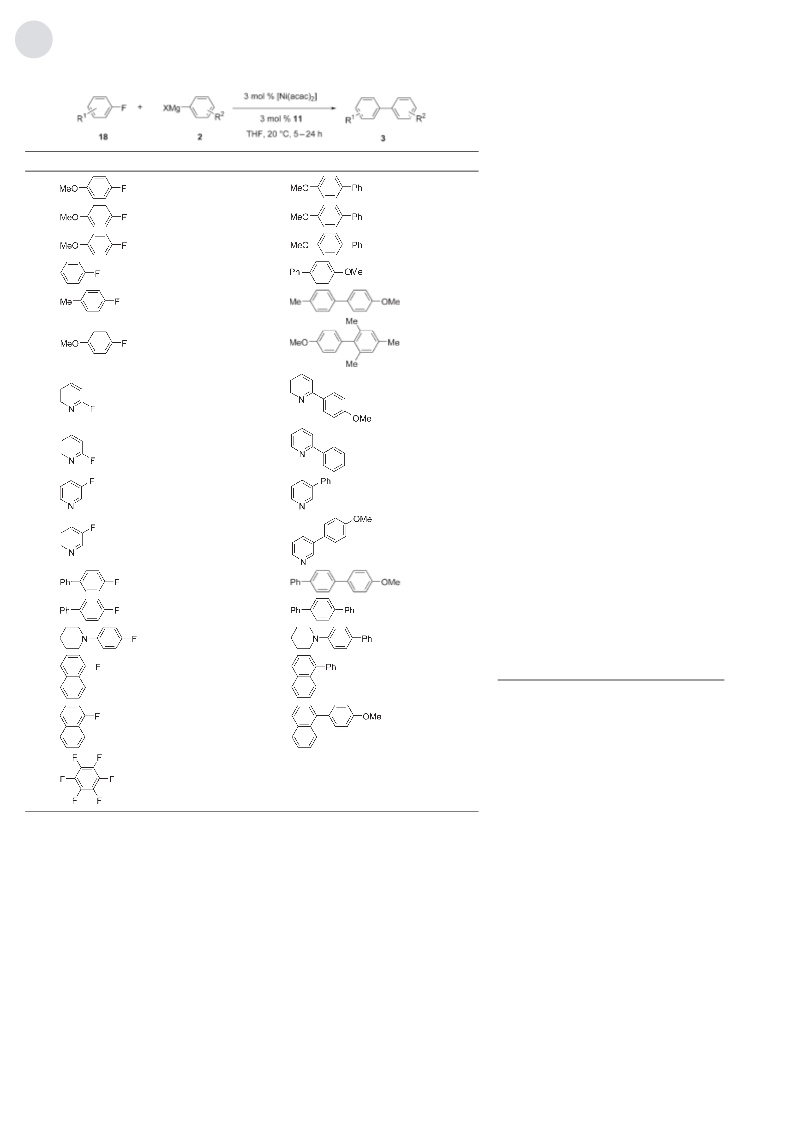
(Chemical Equation Presented) A couple of couplings: Air-stable diamino-and dioxophosphine oxides are used as preligands in the nickel-catalyzed Kumada cross-coupling reactions of aryl Grignard reagents. A sterically hindered preligand allows for highly efficient cross-coupling of aryl fluorides at ambient temperature (acac = acetylacetonate).
Association Reactions of Trimethylsilyl Ions
Lin, Yi Ridge, D. P. Munson, Burnaby
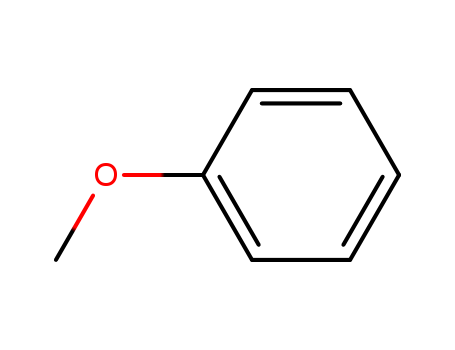
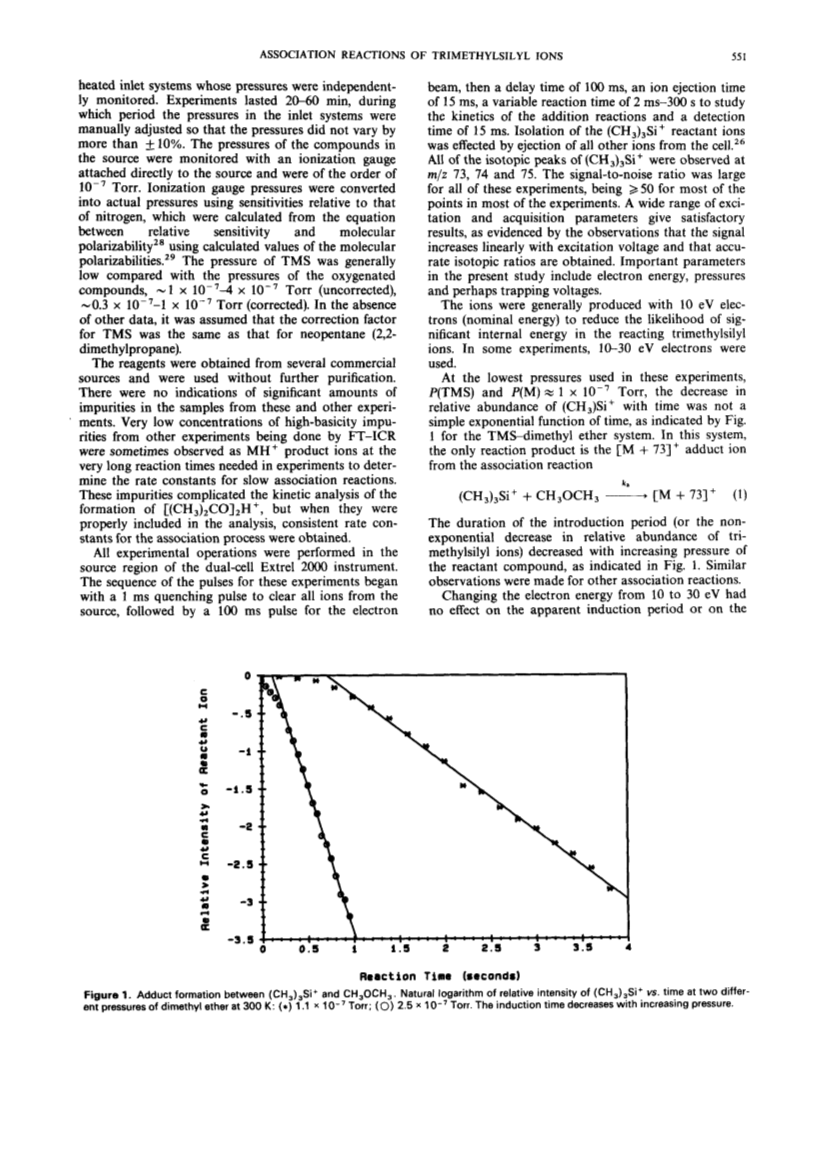
Adduct ions, (1+), were produced by bimolecular association reactions of trimethylsilyl ions, (CH3)3Si(1+), with acetone, cyclohexanone, anisole, dimethyl ether, 2,5-dimethylfuran, 2-methylfuran and furan in ion cyclotron resonance experiments at 300 K and at pressures of ca. 10-7 Torr (1 Torr = 133,3 Pa).The rate constants, ka, for the association reactions varied from 100percent to 2 percent of the collision rate constants, kc.The rate constants were independent of pressure, except for furan.Measurements were also made of bond dissociation energies for these adduct ions, D<(CH3)3Si(1+)-X>, from equilibrium measurements.The a ssociation efficiency, ka/kc, increased with increasing bond dissociation energy and with increasing numbers of degrees of freedom, in qualitative aggreement with theoretical predictions.Observations pertinent to the dependence of ka on reactant temperature and relative kinetic energy are discussed.The possibility of determining ion-neutral complex binding energies from radiative association rate constants is considered.





 India | Contact:N. Dhayalan
 Germany | Contact:Romesh
  United States | Contact:City Chemicals
 United Kingdom | Contact:sheila