



Relevant articles and documents
Enhanced catalytic activity of natural hematite-supported ppm levels of Pd in nitroarenes reduction
Gholinejad, Mohammad Shojafar, Mohammad Sansano, José M.
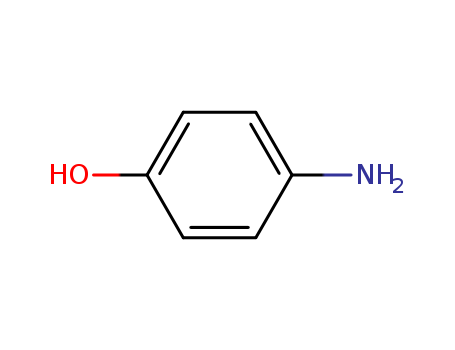
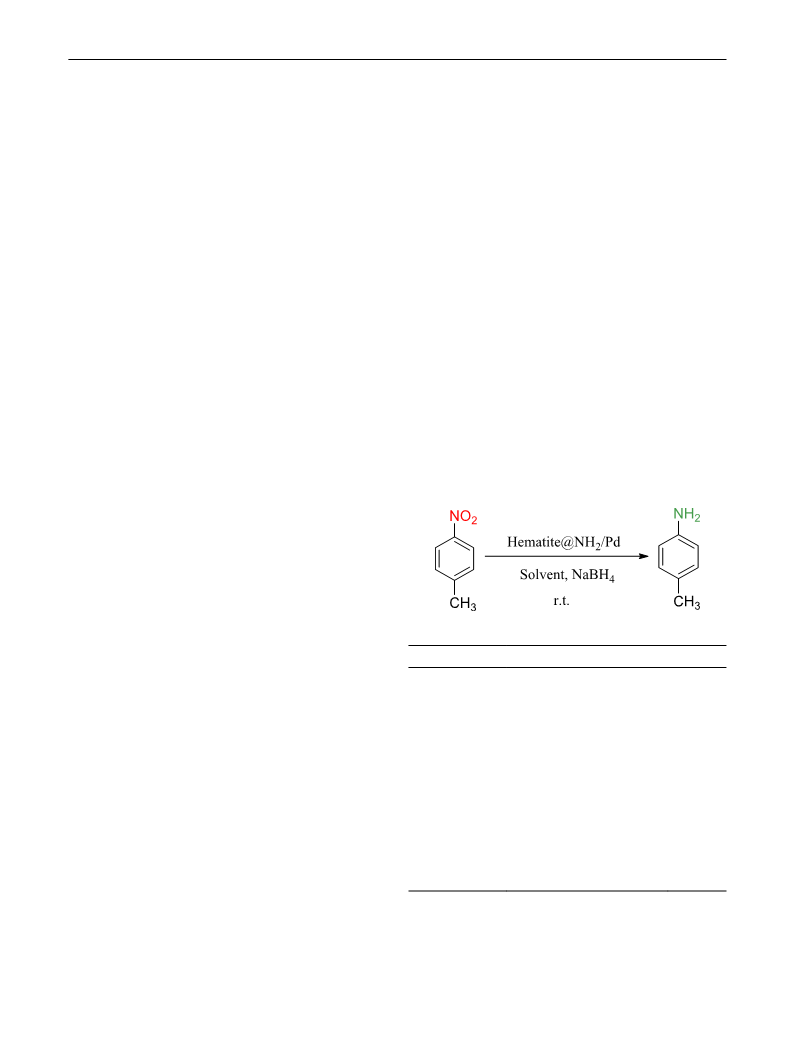
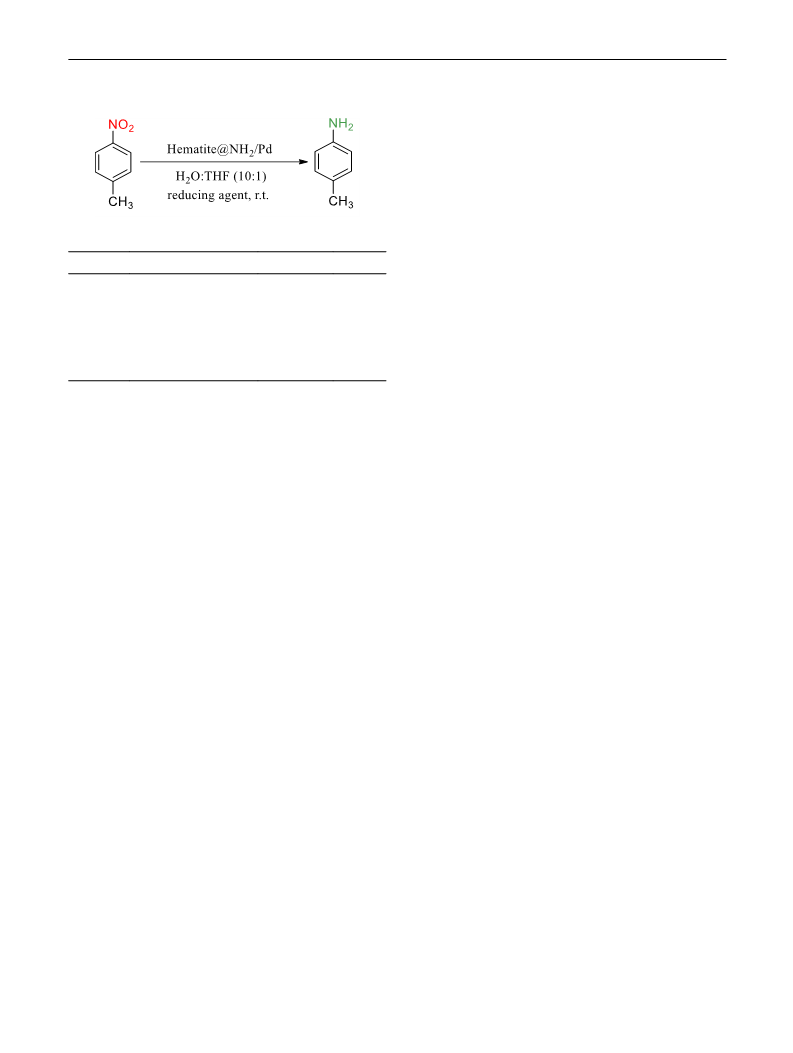
In this work, Pd NPs supported on amine-modified natural hematite have been prepared and characterized. Using this simple catalyst, nitroaromatic compounds as a major cause of industrial pollution were reduced to corresponding amines with ppm levels of Pd in the presence of designer surfactant TPGS-750-M and NaBH4 at room temperature in aqueous media. Synergistic effect between hematite and Pd is responsible for the observed enhanced catalytic activity. This catalyst was recycled for at least four times with a small decrease in the activity.
Influence of medium and temperature on the hydrolysis kinetics of propacetamol hydrochloride: Determination using derivative spectrophotometry
Barcia, Emilia Martin, Alicia Azuara, Ma. Luz Negro, Sofia
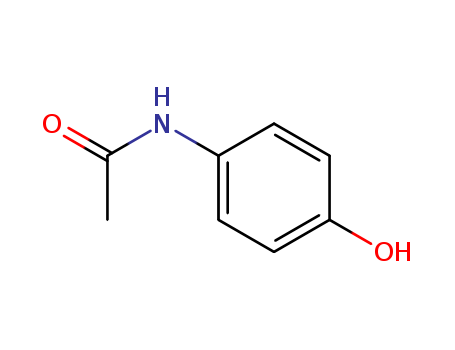
Propacetamol hydrochloride (PRO) is a water-soluble prodrug of paracetamol (PA) which can be parenterally administered as analgesic for the treatment of postoperative pain, acute trauma, and gastric and/or intestinal disorders where oral administration is not possible. In these circumstances, PRO can be administered in physiologic or glucose solutions since it is rapidly and quantitatively hydrolyzed into PA by plasma estearases. We have studied the degradation kinetics of PRO in 5% glucose and 0.9% saline solutions at 4 °C and 25 °C (storage and room temperatures, respectively). The analytic technique used to determine PRO and PA quantitatively was first-derivative spectrophotometry. The degradation process of PRO can be best fitted to a second-order kinetics with independence of the medium used (saline or glucose solution). The hydrolysis kinetics of PRO conversion into PA depends on the temperature but not on the assay medium (saline or glucose solution). The degradation rate constants obtained for PRO were approximately 4.5 times higher at 25 °C than at 4 °C. The values of t90% for PRO were 3.17 h and 3.61 h at 25 °C, and 13.42 h and 12.36 h at 4 °C when the tests were performed in 5% glucose and 0.9% saline solutions, respectively.


 Ukraine | Contact:mika treh
 Turkey | Contact:Sir