



Relevant articles and documents
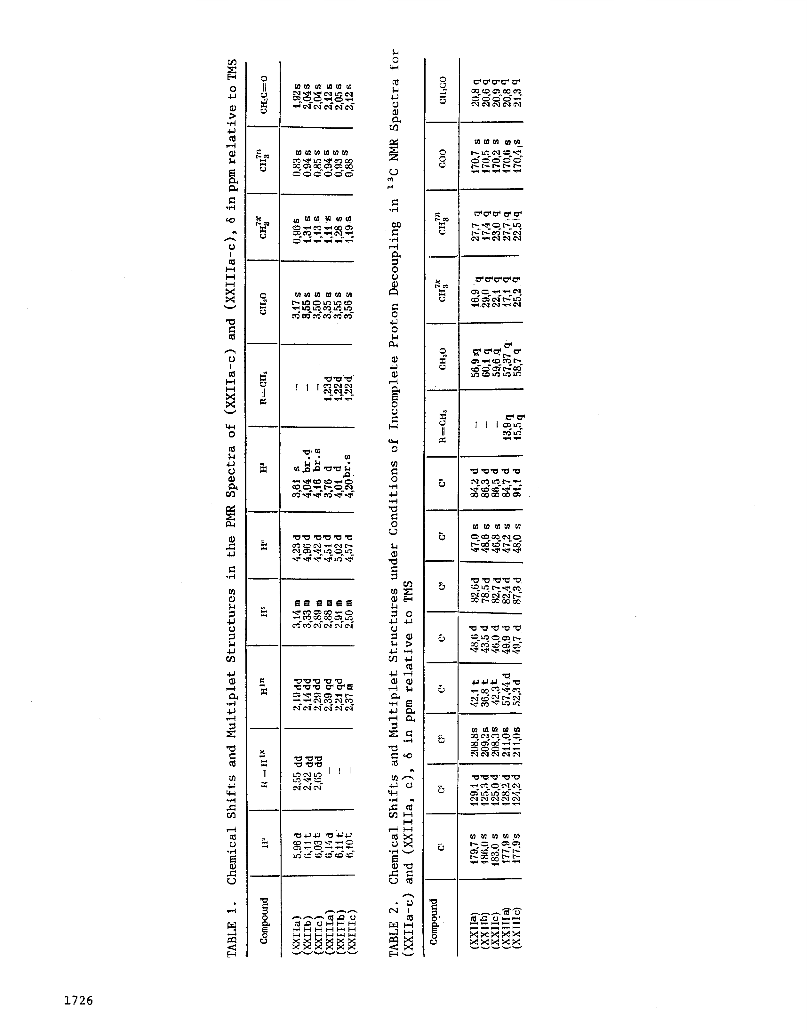
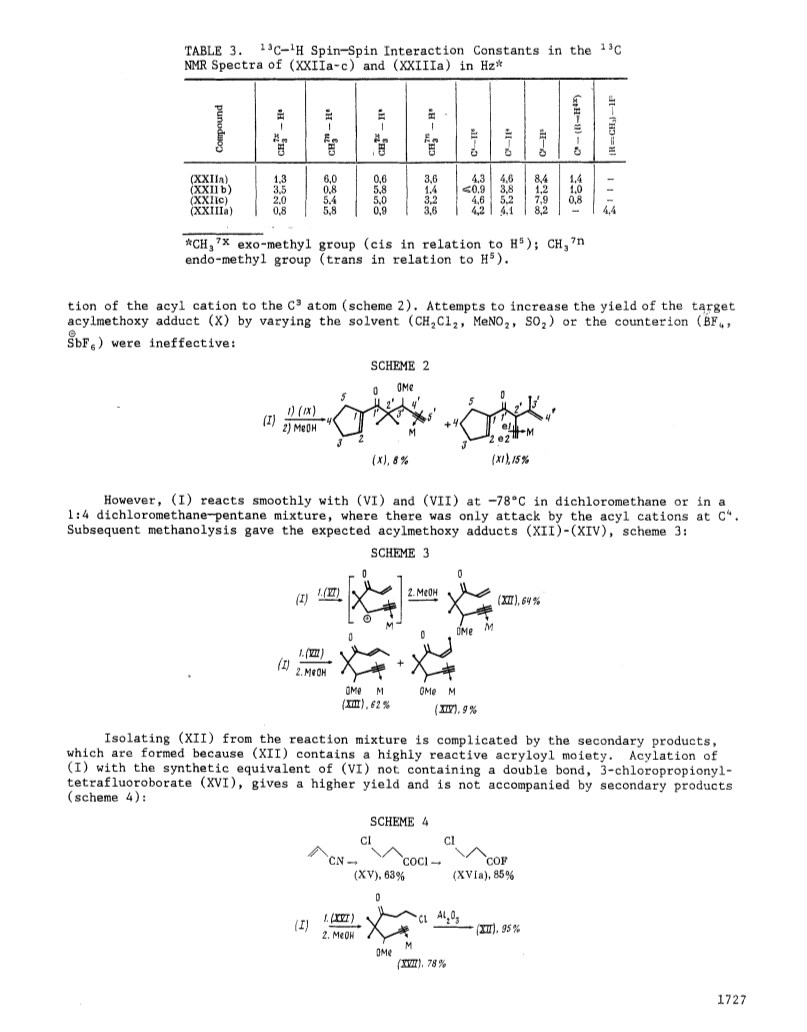
SYNTHESIS OF 7,7-DIMETHYLBICYCLO-<3.3.0>OCTANE BY ACETYLATING A DICOBALTOHEXACARBONYL 4-METHYLPENT-3-EN-1-YNE-1 COMPLEX
Veretenov, A. L. Gybin, A. S. Smit, V. A. Chertkov, V. A. Shashkov, A. S.
Dicobaltohexacarbonyl 4-methyl-pent-3-en-1-yne complexes have been acylated with acryloyl and crotonoyl tetrafluoroborates followed by methanolysis to make acylmethoxy adducts containing hem-dimethyl moieties.Conditions have been defined under which such adducts containing enone systems are selectively reduced to allyl alcohols with retention of the cobaltocarbonyl moieties.The latter can be converted by Quand-Poson reaction to the inaccessible polyfunctional derivatives of 7,7-dimethylbicyclo<3.3.0>octane.

Subnanometer Bimetallic Platinum–Zinc Clusters in Zeolites for Propane Dehydrogenation
Cheng, Jun Fan, Qiyuan Jia, Ran Jiang, Zheng Li, Lin Mayoral, Alvaro Miao, Shu Sun, Qiming Terasaki, Osamu Wang, Ning Wang, Ye Xu, Jun Yang, Dong-Chun Yang, Ruoou Yu, Jihong Zeng, Lei Zhang, Jichao Zhang, Peng Zhang, Qinghong Zhang, Tianjun Zhou, Wei
Propane dehydrogenation (PDH) has great potential to meet the increasing global demand for propylene, but the widely used Pt-based catalysts usually suffer from short-term stability and unsatisfactory propylene selectivity. Herein, we develop a ligand-protected direct hydrogen reduction method for encapsulating subnanometer bimetallic Pt–Zn clusters inside silicalite-1 (S-1) zeolite. The introduction of Zn species significantly improved the stability of the Pt clusters and gave a superhigh propylene selectivity of 99.3 % with a weight hourly space velocity (WHSV) of 3.6–54 h?1 and specific activity of propylene formation of 65.5 mol (Formula presented.) gPt?1 h?1 (WHSV=108 h?1) at 550 °C. Moreover, no obvious deactivation was observed over PtZn4?S-1-H catalyst even after 13000 min on stream (WHSV=3.6 h?1), affording an extremely low deactivation constant of 0.001 h?1, which is 200 times lower than that of the PtZn4/Al2O3 counterpart under the same conditions. We also show that the introduction of Cs+ ions into the zeolite can improve the regeneration stability of catalysts, and the catalytic activity kept unchanged after four continuous cycles.


 Switzerland | Contact:sir
 India | Contact:Sir
 Germany | Contact:Romesh
  United States | Contact:Phillip Schoenwetter
 United Kingdom | Contact:Andrew Freer
 China(Hongkong) | Contact:Bosco