



Relevant articles and documents
Mesoporous tantalum phosphates: Preparation, acidity and catalytic performance for xylose dehydration to produce furfural
Xing, Yanran Yan, Bo Yuan, Zifei Sun, Keqiang
Mesoporous tantalum phosphates (TaOPO4-m) with varying P/Ta molar ratios (m = 0.41-0.89) were prepared, comprehensively characterized by ICP-AES, N2 physisorption, small-angle XRD, TEM, Raman, FT-IR, NH3-TPD and IR of pyridine adsorption and employed to catalyze the dehydration of xylose to produce furfural in a biphasic batch reactor. The physicochemical properties of these TaOPO4-m samples were affected significantly by variation of m. More ordered mesopores were formed in the sample with a higher m. On the other hand, the density of acidity decreased but the ratio of Br?nsted acidity to Lewis acidity (B/L) increased with the increase in m. TaOPO4-0.84, which showed adequate mesoporosity and a high B/L ratio, was identified as the best performing catalyst among these TaOPO4-m catalysts in terms of high furfural selectivity (ca. 72 mol%). Correlating the catalyst performance with its acid property showed that the xylose consumption rate decreased with the increasing B/L ratio, while furfural selectivity showed a volcano-type dependence on the B/L ratio. Besides, the huge decrease in the furfural selectivity after poisoning the Br?nsted acid sites by adding 2,6-dimethyl pyridine revealed a kind of Br?nsted acid catalysis for selective furfural production.


Improving Biocatalytic Synthesis of Furfuryl Alcohol by Effective Conversion of D-Xylose into Furfural with Tin-Loaded Sulfonated Carbon Nanotube in Cyclopentylmethyl Ether-Water Media
Li, Qi Hu, Yun Tao, Yong-You Zhang, Peng-Qi Ma, Cui-Luan Zhou, Yu-Jie He, Yu-Cai
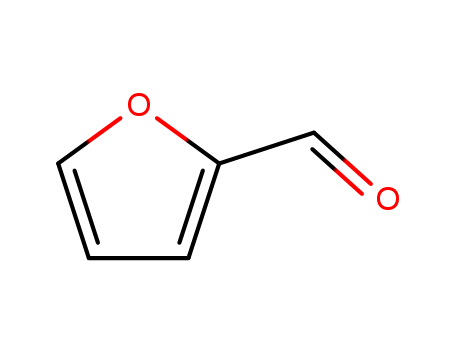
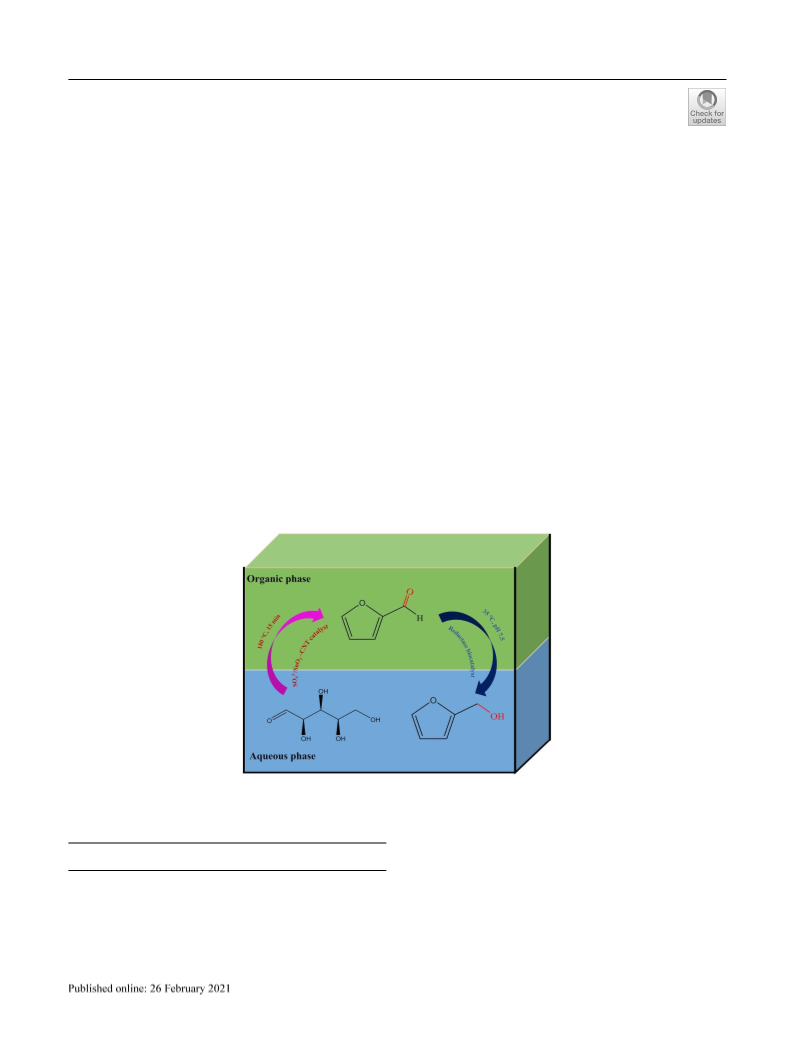
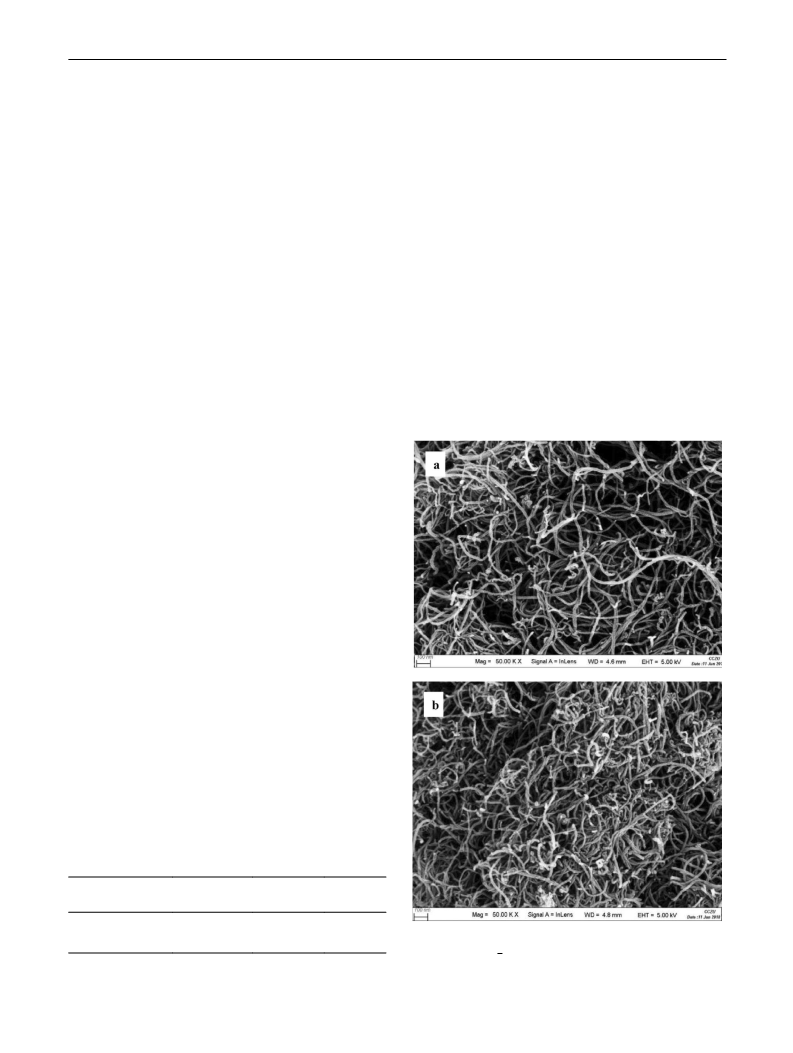
Carbon nanotube (CNT) was utilized as as the precursor to synthesize solid acid (tin-loaded sulfonated carbon nanotube, SO42?/SnO2-CNT) for catalyzing D-xylose into furfural. Fourier transform infrared spectroscopy, Roman spectroscopy, X-ray diffraction analysis, and scanning electron microscope techniques were used for characterizing SO42?/SnO2-CNT. Different loading of D-xylose (20–100?g/L) were converted into furfural (81.6–299.1?mM) at 41.9–61.2% yield by SO42?/SnO2-CNT (3.5 wt%) within 15?min at 180 °C in cyclopentylmethyl ether-water (1:2, v:v) biphasic media. Subsequently, whole-cells of recombinant Escherichia coli CG-19 cells expressing reductase catalyzed D-xylose-derived furfural at 35 ℃ and pH 7.5. Within 3?h, the prepared D-xylose (81.6–299.1?mM) could be converted into furfuryl alcohol at 32.7–61.2% yield (based on the D-xylose loading). Sequential conversion of D-xylose with SO42?/SnO2-CNT and reductase catalysts was established for the effective production of furfuryl alcohol. Graphic Abstract: [Figure not available: see fulltext.]

 United States | Contact:Tracey Gatti
 China (Mainland) | Contact:amanda cui