




Relevant articles and documents
Role of platinum deposits on titanium(IV) oxide particles: Structural and kinetic analyses of photocatalytic reaction in aqueous alcohol and amino acid solutions
Ohtani, Bunsho Iwai, Kunihiro Nishimoto, Sei-Ichi Sato, Shinri
Photocatalytic reaction at 298 K by platinum-loaded titanium(IV) oxide (TiO2-Pt) particles suspended in deaerated aqueous solutions of 2-propanol or (S)-lysine (Lys) was investigated. The TiO2 catalysts with various amounts of Pt loadings were prepared by impregnation from aqueous chloroplatinic acid solution onto a commercial TiO2 (Degussa P-25) followed by hydrogen reduction at 753 K. The physical properties of deposited Pt, e.g., particle size, surface area, and electronic state, were studied respectively by transmission electron microscopy, volumetric gas adsorption measurement, and X-ray photoelectron spectroscopy as well as infrared spectroscopy of adsorbed carbon monoxide. The increase in Pt amount mainly resulted in an increase of the number of Pt deposits, not of their size. The catalysts were suspended in the aqueous solutions and photoirradiated at a wavelength >300 nm under an argon (Ar) atmosphere. The overall rate of photocatalytic reactions for both 2-propanol and Lys, corresponding to the rate of consumption of these substrates, was negligible without Pt loading, increased drastically with the loading up to ca. 0.3%, and was almost constant or a little decreased by the further loadings. However, the rate of formation of pipecolinic acid (PCA) from Lys was improved gradually with a increase of Pt loading up to ca. 2 wt %. These dependences were discussed as a function of Pt surface area, which is employed as a measure that includes the properties of both number and size of Pt deposits. For the photocatalytic dehydrogenation of 2-propanol, the rate dependence could be interpreted semiquantitatively with the model that only the TiO2 particles loaded with at least one Pt deposit can photocatalyze, but the reaction rate is independent of the number of Pt deposits. Therefore, the overall rate is proportional to the number of Pt-loaded TiO2 particles. On the other hand, for the interpretation of the rate of PCA and H2 productions, the number of Pt deposits on each TiO2 particle had to be taken into account. The efficient production of PCA at higher Pt loadings was attributed to the reduction of a Schiff base intermediate produced via oxidation of Lys with positive holes and subsequent intramolecular condensation at the Pt deposit that is close to the site for the oxidation. Otherwise, photoexcited electrons are consumed for H2 production and the intermediate remains unreduced or undergoes further oxidation. It was suggested that the intermediate produced at the TiO2 surface sites within a distance of several nanometers from the Pt deposit undergoes efficient reduction to PCA. Thus, the importance of the distribution of Pt deposits for the preparation of highly active and selective TiO2-Pt photocatalyst has been clearly demonstrated.


Nucleophilic Addition to Olefins. 21. Substituent and Solvent Effects on the Reaction of Benzylidene Meldrum's Acids with Piperidine and Morpholine
Bernasconi, Claude F. Panda, Markandeswar
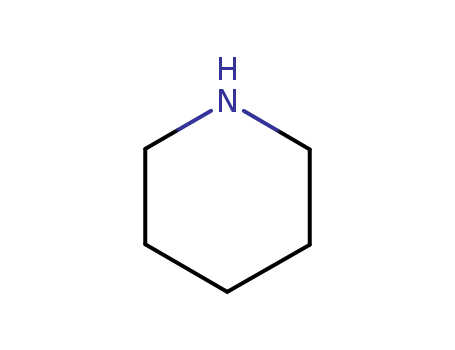
Rate (k1) and equilibrium constants (K1) for piperidine and morpholine addition to benzylidene Meldrum's acid (BMA) and substituted BMA's (Z=4-NO2, 3-Cl, 4-CN, 4-OMe, 4-NMe2, 4-NEt2) were determined in water and in 50percent, 70percent, and 90percent aqueous Me2SO.The equilibrium for addition is highly favorable, with K1 values (piperidine) as high as 7.8*107M-1, which is the highest value measured in a series of olefins of the type PhCH=CXY.The rates are also quite high (k1 up to 2.1*106M-1s-1), indicating a relatively high intrinsic rate constant (k0=k1 for K1=1) which ranks BMA second among seven PhCH=CXY-type olefins with respect to kinetic reactivity.This ranking is "reasonable" based on a correlation between k0 for nucleophilic addition to PhCH=CXY and k0 for deprotonation of carbon acids of the type CH2XY.βnucn (d log k1/ d log K1, variation of amine) is very amall, particularly in aqueous solution.This result appears to be part of a trend toward lower βnucn values with increasing thermodynamic stability of the adducts of PhCH=CXY. αnucn (d log k1/ d log K1, variation of Z) is significantly larger than βnucn, implying a substantial imbalance in these reactions.However, after correction of αnucn for the effect of the developing positive charge on the amine nitrogen the remaining "true" imbalance is quite small.The small imbalance as well as the high k0 value are consistent with the Meldrum's acid anion deriving most of its exceptional stability from its bislactone structure rather than from resonance.Strong ?-donor substituents (4-NMe2, 4-NEt2) have a strong stabilizing effect on the olefin, leading to a large reduction in K1.Contrary to expectations based on the principle of nonperfect synchronization (PNS), this resonance effect does not lead to a strong reduction of the intrinsic rate constant, probably because the polarization in the olefin (Me2N+=C6H4+CHC(COO)2-C(CH3)2) helps in partially offsetting the PNS effect caused by delayed development of resonance on the carbanionic side of the adduct


 India | Contact:sir
 United States | Contact:sir
 United Kingdom | Contact:Elsa Young
 China (Mainland) | Contact:Alice