

Relevant articles and documents
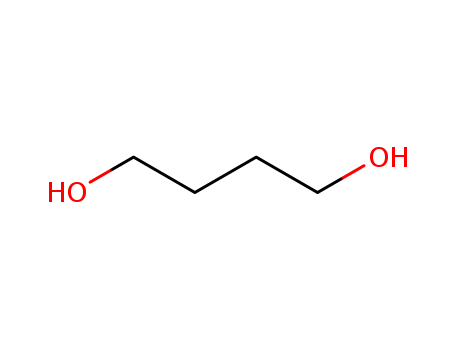
Effect of boron content on 1,4-butanediol production by hydrogenation of succinic acid over Re-Ru/BMC (boron-modified mesoporous carbon) catalysts
Kang, Ki Hyuk Han, Seung Ju Lee, Jong Won Kim, Tae Hyeop Song, In Kyu
A series of Re-Ru bimetallic catalysts supported on mesoporous boron-modified carbon (denoted as Re-Ru/xBMC, x?=?B/C molar ratio) were prepared by a single-step surfactant-templating method and a subsequent incipient wetness impregnation method, and they were used for liquid-phase hydrogenation of succinic acid to 1,4-butandiol (BDO). The effect of boron addition on the catalytic activities and physicochemical properties of Re-Ru/xBMC catalysts was investigated. It was found that the addition of boron into carbon support affected surface area, metal dispersion, and reducibility of rhenium and ruthenium species in the Re-Ru/xBMC catalysts. It was also observed that boron species in carbon framework existed in several different phases such as substituted boron, partial oxidized boron, and boron oxide. In particular, the amount of substituted boron species was closely related to the hydrogen adsorption behavior of Re-Ru/xBMC catalysts. The amount of weak hydrogen-binding sites increased with increasing the amount of substituted boron species of the catalysts. Yield for BDO in the hydrogenation of succinic acid showed a volcano-shaped trend with respect to B/C molar ratio. This result was in good agreement with the amount of weak hydrogen-binding sites of the catalysts. It was revealed that TOFBDO increased with increasing the amount of weak hydrogen-binding sites of Re-Ru/xBMC catalysts. Among the catalysts, Re-Ru/0.04BMC with the largest amount of weak hydrogen-binding sites served as an efficient catalyst in the selective formation of BDO by hydrogenation of succinic acid.


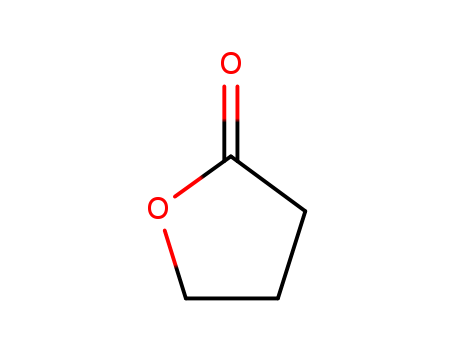
Hydrogenation of γ-Butyrolactone to 1,4-Butanediol over CuCo/TiO2 Bimetallic Catalysts
Huang, Zhiwei Barnett, Kevin J. Chada, Joseph P. Brentzel, Zachary J. Xu, Zhuoran Dumesic, James A. Huber, George W.
Titania-supported monometallic and bimetallic Cu-Co catalysts were prepared using (co)impregnation and studied for the hydrogenation of γ-butyrolactone (GBL) to 1,4-butanediol (BDO) at temperatures from 100 to 180 °C and a hydrogen pressure of 3.4 MPa. The highest catalytic activity occurred at a Cu:Co atomic ratio of 1:9 (Cu0.1Co0.9/TiO2), and a 95% yield of BDO was obtained. Characterization results showed mainly small nanoparticles (average size 2.6 nm) for pure Cu/TiO2, large particles (~19.8 nm) for pure Co/TiO2, and a bimodal particle size distribution of both small (~2.3 nm) and large (~16.5 nm) particles for the bimetallic catalyst with a Cu:Co ratio of 1:1. The addition of ~10 mol % Cu to Co/TiO2 increased the reducibility of the Co and resulted in the formation of core-shell CuCo bimetallic nanoparticles with a Co-rich core and Cu-rich shell. GBL hydrogenation in liquid ethanol and water produced an ester (ethyl 4-hydroxybutanoate) and a carboxylic acid (4-hydroxybutanoic acid) as the major products, respectively. GBL hydrogenation in 1,4-dioxane likely went through a 2-hydroxytetrahydrofuran (2-HTHF) intermediate. The 2-HTHF underwent facile ring-opening tautomerization to 4-hydroxybutanal (4-HB), followed by rapid hydrogenation to BDO at a reaction rate up to 700 times faster than GBL hydrogenation. The Cu0.1Co0.9/TiO2 catalyst maintained the BDO selectivity and about 80% of initial activity for GBL hydrogenation after 150 h time on stream in a continuous flow reactor.


