Products Categories
| CAS No.: | 121-79-9 |
|---|---|
| Name: | Propyl gallate |
| Article Data: | 41 |
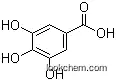
| Molecular Structure: | |
|
|
|
| Formula: | C10H12O5 |
| Molecular Weight: | 212.202 |
| Synonyms: | Tenox PG;Nipagallin P;Benzoic acid,3,4,5-trihydroxy-,esters,propyl ester;n-Propyl 3,4,5-trihydroxybenzoate;3,4, 5-Trihydroxybenzoic acid, propyl ester;Benzoic acid, 3,4, 5-trihydroxy-, propyl ester;Progallin P;Propyl 3,4,5-trihydroxybenzoate;n-Propyl ester of 3,4,5-trihydroxybenzoic acid;Nipa 49;Nipanox S 1;Gallic acid, propyl ester;3,4,5-Trihydroxybenzene-1-propylcarboxylate;n-Propyl gallate;Propyl Gallate BP/EP;Propyl Gallate (Tech.);propyl gallate;propyl 3,4,5-trihydroxybenzoate; |
| EINECS: | 204-498-2 |
| Density: | 1.363 g/cm3 |
| Melting Point: | 146-149 °C(lit.) |
| Boiling Point: | 448.6 °C at 760 mmHg |
| Flash Point: | 181.3 °C |
| Solubility: | ethanol: 50 mg/mL |
| Appearance: | white to light beige crystalline powder |
| Hazard Symbols: |
 Xn Xn
|
| Risk Codes: | 22-43 |
| Safety: | 24-37 |
| PSA: | 86.99000 |
| LogP: | 1.37020 |
- 144851-82-1METHYL2-AMINO-3-FLUOROBENZOATE
- 483366-12-7(2S,4R)-1-Boc-2-cyano-4-hydroxypyrrolidine
- 173606-50-3BOC-10-AMINODECANOIC ACID
- 361456-36-2METHYL (R)-(+)-ISOCYANATO-3-PHENYLPROPI&
- 5156-58-1N-(1-Benzyl-4-pipperidinyl)-N-phenylpropanamide HCl
- 81281-59-67-Benzylideneaminotheophylline
- 50288-62-5threo-Phenyl-2-piperidyl acetamide
- 82993-81-5D-threo-Ritalinic acid hydrochloride
- 47087-37-6Z-D-Glu-OMe
- 1219080-61-1IMIDAZOLE-2-BORONIC ACID

| Conditions | Yield |
|---|---|
| With brominated modified sulfonic acid resin at 100℃; for 5h; | 98% |
| With toluene-4-sulfonic acid at 107℃; under 9308.91 Torr; for 0.133333h; Temperature; Wavelength; Sealed tube; Microwave irradiation; | 94% |
| With thionyl chloride at 35 - 65℃; for 1h; | 91.6% |
| Conditions | Yield |
|---|---|
| With sulfuric acid In propan-1-ol; 2-methyl-propan-1-ol; water | 75% |
- 71-23-8
propan-1-ol

- 99-24-1
methyl galloate

A
- 121-79-9
Propyl gallate
B
- 149-91-7
3,4,5-trihydroxybenzoic acid
| Conditions | Yield |
|---|---|
| With tannase from Lactobacillus plantarum immobilised on glyoxyl-agarose at 25℃; pH=5; aq. acetate buffer; Enzymatic reaction; | A 55% B n/a |
| Conditions | Yield |
|---|---|
| With dipotassium hydrogenphosphate; tannase; phosphoric acid; water at 20 - 35℃; for 24h; Equilibrium constant; Thermodynamic data; ΔrHmo, ΔrGmo, ΔrSmo, other reagents: CH3COONa, CH3COOH; NaOH, 2-(N-morpholino)ethanesulfonic acid; various pH, other reaction time; |
- 71-23-8
propan-1-ol
- 18483-17-5, 23140-70-7, 135029-93-5
1,3,6-tri-O-galloyl-β-D-glucose
A
- 121-79-9
Propyl gallate
B
- 149-91-7
3,4,5-trihydroxybenzoic acid
| Conditions | Yield |
|---|---|
| With tannase from Lactobacillus plantarum immobilised on glyoxyl-agarose at 25℃; pH=5; aq. acetate buffer; Enzymatic reaction; |
| Conditions | Yield |
|---|---|
| With bio-imprinted tannase immobilized on ceolite In hexane; water at 40℃; for 24h; Enzymatic reaction; | |
| With tannase from Aspergillus oryzae In hexane; water at 40℃; Kinetics; Microbiological reaction; Enzymatic reaction; | |
| Stage #1: tannic acid With Aspergillus oryzae tannase at 20℃; for 0.0833333h; pH=6.0; Stage #2: propan-1-ol With D-Mannose; magnesium sulfate In hexane at 40℃; for 24h; Catalytic behavior; Reagent/catalyst; Enzymatic reaction; | |
| With immobilized tannase In hexane; water at 40℃; for 24h; Solvent; |
| Conditions | Yield |
|---|---|
| With Aspergillus fumigatus CAS-21 tannase In aq. buffer at 30℃; pH=6; Enzymatic reaction; |
| Conditions | Yield |
|---|---|
| With potassium carbonate In acetone for 48h; Williamson ether synthesis; Reflux; | 100% |
| Conditions | Yield |
|---|---|
| With potassium carbonate In N,N-dimethyl-formamide at 75℃; for 5h; | 99% |
| With potassium carbonate In N,N-dimethyl-formamide for 4h; Reflux; | 73% |
- 121-79-9
Propyl gallate
- 200112-75-0
3-(perfluorooctyl)propyl iodide
| Conditions | Yield |
|---|---|
| With potassium carbonate In acetone Inert atmosphere; Reflux; | 98% |

- 61336-70-7Amoxicillin trihydrate
- 25155-30-0Benzenesulfonic acid,dodecyl-, sodium salt (1:1)
- 63148-62-9Polydimethylsiloxane
- 638-07-3Ethyl 4-chloroacetoacetate
- 1308-38-9Chromium oxide
- 90045-36-6Ginkgo biloba extract
- 52-01-7Spironolactone
- 549-18-8Amitriptyline hydrochloride
- 104987-11-3Tacrolimus
- 141-53-7Sodium formate
- 8001-54-5Quaternary ammonium compounds, alkylbenzyldimethyl, chlorides
- 9003-39-8Povidone
- 10161-34-9Trenbolone acetate
- 402957-28-2Telaprevir
- 68-19-9Cyanocobalamin

What can I do for you?
Get Best Price


Chemistry
Molecular Structure of Propyl gallate (CAS NO.121-79-9):
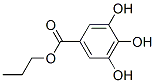
IUPAC Name: propyl 3,4,5-trihydroxybenzoate
Molecular Formula: C10H12O5
Formula Weight: 212.2
H bond acceptors: 5
H bond donors: 3
Freely Rotating Bonds: 7
Polar Surface Area: 53.99Å2
Index of Refraction: 1.595
Molar Refractivity: 52.93 cm3
Molar Volume: 155.6 cm3
Surface Tension: 62 dyne/cm
Density: 1.363 g/cm3
Flash Point: 181.3 °C
Enthalpy of Vaporization: 73.43 kJ/mol
Boiling Point: 448.6 °C at 760 mmHg
Vapour Pressure: 1.16E-08 mmHg at 25°C
Melting point: 146-149 °C(lit.)
Storage temp: 0-6°C
Solubility: ethanol: 50 mg/mL
Form: powder
Water Solubility: 0.35 g/100 mL (25 oC)
InChI
InChI=1/C10H12O5/c1-2-3-15-10(14)6-4-7(11)9(13)8(12)5-6/h4-5,11-13H,2-3H2,1H3
Smiles
c1(cc(c(O)c(c1)O)O)C(OCCC)=O
Toxicity Data With Reference
| 1. | mmo-sat 200 µg/plate | SYSWAE Shiyan Shengwa Xuebao. Journal of Experimental Biology. (Guozi Shudian, China Publications Center, P.O. Box 399, Peking, Peoples Republic of China) V.1- 1953- 12 (1979),41. | ||
| 2. | cyt-ham:fbr 40 mg/L | ESKHA5 Eisei Shikenjo Hokoku. Bulletin of the National Hygiene Sciences. 96 (1978),55. | ||
| 3. | orl-rat LD50:2100 mg/kg | NTIS** National Technical Information Service. (Springfield, VA 22161) (Formerly U.S. Clearinghouse for Scientific and Technical Information) PB245-441 . | ||
| 4. | ipr-rat LD50:380 mg/kg | FOTEAO Food Technology. 2 (1948),308. | ||
| 5. | orl-mus LD50:1700 mg/kg | JAOCA7 Journal of the American Oil Chemists Society. 54 (1977),239. | ||
| 6. | orl-cat LD50:400 mg/kg | 14CYAT Industrial Hygiene and Toxicology. 2 (1963),1897. |
Consensus Reports
NTP Carcinogenesis Bioassay (feed); No Evidence: mouse, rat NTPTR* National Toxicology Program Technical Report Series. (Research Triangle Park, NC 27709) No. NTP-TR-240 ,1982. . Reported in EPA TSCA Inventory.
Safety Profile
Hazard Codes:  Xn
Xn
Risk Statements: 22-43-36/37/38 (Harmful if swallowed; May cause sensitization by skin contact; Irritating to the eyes; Irritating to the respiratory system; Irritating to the skin)
Safety Statements: 24-37-36-26 (Avoid contact with skin; Wear suitable gloves; Wear suitable protective clothing; In case of contact with eyes, rinse immediately with plenty of water and seek medical advice)
WGK Germany: 2
RTECS: LW8400000
HS Code: 29182950
Poison by ingestion and intraperitoneal routes. Experimental teratogenic and reproductive effects. Questionable carcinogen with experimental tumorigenic data. Mutation data reported. Combustible when exposed to heat or flame; can react with oxidizing materials. When heated to decomposition it emits acrid smoke and irritating fumes.
Specification
Propyl gallate , with CAS number of 121-79-9, can be called 3,4,5-Trihydroxybenzene-1-propylcarboxylate ; Propyl Gallate BP/EP ; propyl gallate;propyl 3,4,5-trihydroxybenzoate ; n-Propyl ester of 3,4,5-trihydroxybenzoic acid ; Benzoic acid, 3,4, 5-trihydroxy-, propyl ester ; 3,4, 5-Trihydroxybenzoic acid, propyl ester . It is a white to light beige crystalline powder. Propyl gallate (CAS NO.121-79-9) is used as a triplet quencher in fluorescence microscopy. It is used as food and feed additives, and in foods, cosmetics, hair products, adhesives, and lubricants. n-PROPYL GALLATE is used to protect oils and fats in products from oxidation.