Products Categories
| CAS No.: | 9012-76-4 |
|---|---|
| Name: | Chitosan |
| Article Data: | 23 |
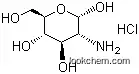
| Molecular Structure: | |
|
|
|
| Formula: | (C6H11NO4)n |
| Molecular Weight: | 161.16 |
| Synonyms: | Flonac C;Chitosan H;Marinkaito F 05N;Marinkaito F 05S;KW 5;TKS 250N;Sea Cure 123;FCM 117;SK 10 (polysaccharide);HC 1 (polysaccharide);North Chitosan MC 1;OTS 2;Sea Cure 143;SK 200;Sea Cure 340;HI-DENSITY CHITOSAN;Chitopearl BCW 3505;Chiton (molluscan common name)Chitopearl 3510;Chitopearl BCW 3507;Hiset KW 5;WOT Recovery Floc T;Kytex M;Sea Cure 243;Chitosan EL;Hydagen HCMF;Profloc 320; |
| EINECS: | 222-311-2 |
| Density: | 1.75g/cm3 |
| Melting Point: | 88oC |
| Appearance: | white Powder |
| Hazard Symbols: | Xn |
| Risk Codes: | 20/21/22-36/37/38 |
| Safety: | 24/25-36-26 |
| PSA: | 95.94000 |
| LogP: | -1.52550 |
- 958254-66-51H-Imidazo[4,5-b]pyridine-2-carboxaldehyde, 1-methyl-, hydrochloride
- 99170-93-1N-Methyl-2-oxazolamine
- 914458-26-7[5-(2-fluorophenyl)-1-pentyl-1H-pyrrol-3-yl]-1-naphthalenyl-Methanone
- 90221-55-92-bromo-5-methylbenzaldehyde
- 97730-31-9(S)-4'-(2-Methylbutyl)Biphenyl-4-Carbonitrile
- 926293-55-26-Bromo-2-methylpyridine-3-carboxaldehyde
- 911112-05-55-Iodo-3-(trifluoromethyl)-2-pyridinamine
- 95789-13-21,3,7-trimethylpurine-2,6-dione
- 956104-42-02-Bromo-5-nitro-3-(trifluoromethyl)pyridine
- 910247-97-11,2,3-Trimethylimidazolium dimethyl phosphate


| Conditions | Yield |
|---|---|
| With sodium hydroxide In water for 120h; Reflux; | 98% |
| Conditions | Yield |
|---|---|
| With sodium hydroxide at 60℃; for 72h; | 92.6% |
| With sodium hydroxide at 121℃; under 775.722 Torr; for 0.0833333h; Product distribution; Further Variations:; Temperatures; NaOH concentration; Deacetylation; | |
| With sodium hydroxide at 110℃; for 4h; |
| Conditions | Yield |
|---|---|
| With sodium hydroxide; water for 5h; |
| Conditions | Yield |
|---|---|
| With sodium hydroxide at 100℃; for 1h; |
| Conditions | Yield |
|---|---|
| With sodium hydroxide at 90℃; for 30h; |
- 106-95-6
allyl bromide

| Conditions | Yield |
|---|---|
| In neat (no solvent, solid phase) at -5 - -2℃; | 100% |
| Conditions | Yield |
|---|---|
| Stage #1: chitosan With hydrogenchloride In water; N,N-dimethyl-formamide at 20℃; Stage #2: methyl iodide In water; N,N-dimethyl-formamide at 20℃; for 1h; Stage #3: With sodium hydrogencarbonate In water; N,N-dimethyl-formamide at 60℃; for 26h; | 99% |
| With sodium iodide; sodium hydroxide In 1-methyl-pyrrolidin-2-one at 40℃; for 8h; | |
| Stage #1: chitosan With 1-methyl-pyrrolidin-2-one at 20℃; Stage #2: With sodium iodide; sodium hydroxide at 60℃; for 0.333333h; Stage #3: methyl iodide Further stages; |
| Conditions | Yield |
|---|---|
| With sodium carbonate; acetic acid at 100℃; pH=4; Microwave irradiation; | 97% |
| Conditions | Yield |
|---|---|
| With sodium cyanoborohydride In methanol; water; acetic acid at 20℃; for 24h; | 95% |
| Conditions | Yield |
|---|---|
| With sodium cyanoborohydride In methanol; water; acetic acid at 20℃; for 24h; | 95% |

- 75-75-2Methanesulfonic acid
- 1309-48-4Magnesium oxide
- 9004-57-3Ethyl cellulose
- 15307-79-6Diclofenac sodium
- 1327-41-9Aluminum chlorhydrate
- 123-77-3Azodicarbonamide
- 8002-43-5Lecithins
- 59-51-8DL-Methionine
- 104987-11-3Tacrolimus
- 141-53-7Sodium formate
- 8001-54-5Quaternary ammonium compounds, alkylbenzyldimethyl, chlorides
- 9003-39-8Povidone
- 10161-34-9Trenbolone acetate
- 402957-28-2Telaprevir
- 68-19-9Cyanocobalamin

What can I do for you?
Get Best Price


History
It was in the 1980s when the reserch and applications in agriculture and horticulture is begin.
Specification
The Chitosan, with the cas registry number 9012-76-4, is a kind of white colorless solid. This is stable but incompatible with strong oxidizing agents. And its product categories are including Miscellaneous Natural Products; Biochemistry; Polysaccharides; Sugars; Nutritional Supplements; Dextrins Sugar & Carbohydrates.
The physical properties of this chemical are as follows: (1)# of Rule of 5 Violations: 3; (2)ACD/BCF (pH 5.5): 1; (3)ACD/BCF (pH 7.4): 1; (4)ACD/KOC (pH 5.5): 1; (5)ACD/KOC (pH 7.4): 1; (6)#H bond acceptors: 48; (7)#H bond donors: 37; (8)#Freely Rotating Bonds: 55; (9)Polar Surface Area: 808; (10)Index of Refraction: 1.701; (11)Molar Refractivity: 336.803 cm3; (12)Molar Volume: 870.564 cm3; (13)Polarizability: 133.519 ×10⁻²⁴ cm3; (14)Surface Tension: 122.211 dyne/cm; (15)Density: 1.753 g/cm3; (16)Exact Mass: 179.079373; (17)MonoIsotopic Mass: 179.079373; (18)Topological Polar Surface Area: 116; (19)Heavy Atom Count: 12; (20)Complexity: 155.
The production method of this chemical is below: Add 20g Chitosan into the 300mL 50% NaOH solvent and wait for its complete infiltration; Then heat to 95℃ for about 1.5 hours, filter out the alkali liquor and then wash to be neutral; Lastly cool and dry to have colorless transparent schistose products 15.6g.
As to its usage, it is widely applied in many ways. It could be used as antistaling agent which is usually used in food industry, and thickening agent, flocculating agent; It could also be used in pharmaceutic, agricultural seed, daily expenses, waste water treatment.
When you are dealing with this chemical, you should be very cautious. Being a kind of harmful chemicals, it may cause damage to health. If by inhalation, in contact with skin and if swallowed, it is dangerous. Then it is irritating to eyes, respiratory system and skin. Therefore, you shoud take the following instructions. Wear suitable protective clothing, and then avoid contacting with skin and eyes. If in case of contact with eyes, rinse immediately with plenty of water and seek medical advice.
In addition, you could convert the following datas into the molecular structure:
(1)Canonical SMILES: C(C1C(C(C(C(O1)O)N)O)O)O
(2)Isomeric SMILES: C([C@@H]1[C@H]([C@@H]([C@H]([C@@H](O1)O)N)O)O)O
(3)InChI: InChI=1S/C6H13NO5/c7-3-5(10)4(9)2(1-8)12-6(3)11/h2-6,8-11H,1,7H2/t2-,3-,4-,5-,-/m1/s1
(4)InChIKey: MSWZFWKMSRAUBD-QZABAPFNSA-N