10.1039/b919531a
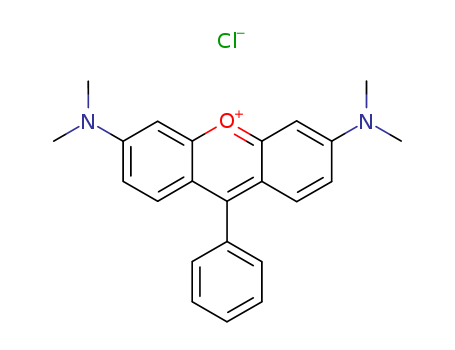
The study focused on the fluorescent probe dihydrorosamine 1 and its conjugated form, roseamine 2, for the detection of Cu2+. Dihydrorosamine 1 is a non-fluorescent compound due to its deconjugated structure, and fluoresces after oxidation to roseamine 2. The structure of the probe contains a bulky isopropylsilyl group, which enhances its stability and prevents auto-oxidation. After the probe interacts with Cu2+, the fluorescence intensity is significantly enhanced (up to 100 times), and the detection limit is 2.61×10^-7 M, which is lower than the typical concentration of copper in blood and the limit set by the US Environmental Protection Agency for drinking water. Compared with other metal ions and substances, the probe shows higher selectivity for Cu2+ and works effectively under biocompatible conditions, including newborn calf serum and living cells. The study also includes the separation and characterization of the products of the probe and Cu2+ binding, confirming the completeness of the oxidation reaction.