10.1016/j.ab.2021.114100
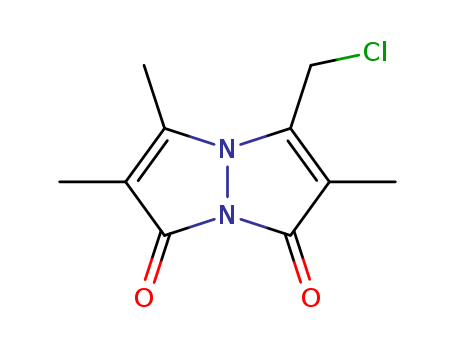
The research focuses on the development and validation of a fluorescence-based assay for determining the levels of the active thiol form of PrC-210, a direct-acting ROS-scavenger, in blood plasma. The study details experiments involving the reaction of PrC-210 with monochlorobimane to form a stable, fluorescent adduct, which is then quantified using a fluorescence plate reader. The reactants used include PrC-210, monochlorobimane, potassium phosphate buffer, and various biological samples such as plasma and whole blood from rats. The analyses encompass the optimization of reaction conditions, pH dependence, the stability of the adduct, and the assay's sensitivity and specificity. The experiments also investigate the processing of blood samples, the fate of PrC-210 in plasma and whole blood, and its radioprotective effects in mice. The assay's accuracy was validated through spiked samples, and its practical application was demonstrated by measuring PrC-210 levels in plasma post-irradiation, showcasing its potential for use in human clinical settings.