10.1002/ardp.200400921
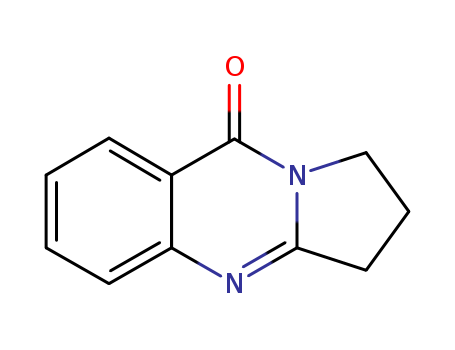
The research details an in vitro study on the biotransformation of Desoxypeganine, an anticholinergic quinazoline alkaloid, by rabbit liver microsomal enzymes. The purpose of the study was to investigate the metabolic pathways and kinetics of Desoxypeganine, which has therapeutic potential for Alzheimer's disease, alcoholism, and nicotine dependence. The researchers used aerobic incubation with rabbit liver homogenates as the enzyme source, supplemented with NADPH, and identified metabolites through high-performance liquid chromatography and mass spectrometry. The main conclusion was that Desoxypeganine is readily oxidized to its inactive metabolite Pegenone, which poses a challenge for dosage in pharmaceutical formulations. Key chemicals used in the process included Desoxypeganine, Pegenone, Vasicinone, Isovasicinone, NADPH, and various buffer solutions for the incubation and extraction steps.
10.1007/s10600-008-9105-0
The research focuses on the synthesis and bactericidal activity of 6-H(nitro)-9-arylidenedeoxyvasicinones and their perchlorates. Deoxyvasicinone and 6-nitrodeoxyvasicinone were reacted with various aromatic aldehydes, including 3,4-dimethoxybenzaldehyde, isovanillin, 2-bromoisovanillin, 5-bromovanillin, and furfurol, in glacial acetic acid to produce a series of target compounds (2a-e and 3a-i). These compounds were characterized by IR, PMR, and mass spectra. The study also involved the preparation of perchlorates (4a-i) by heating the synthesized compounds in acetic acid in the presence of concentrated HClO4. The synthesized compounds were tested for their bactericidal properties against various gram-positive and gram-negative bacterial strains, showing moderate to low activity.