Refernces
10.1016/S0040-4039(00)96887-4
The research aimed to explore the preparation and reactivity of simple 5,6-dihydropyridinium salts, specifically focusing on the simplest member of this class, 2 (R1 = alkyl, R2 = H), as new synthons for the synthesis of functionalized piperidine systems. The study commenced with the preparation of the starting N-methyl A2-piperidone 1, which was then reacted with acetyl chloride to form the dihydropyridinium salt 2. This salt was found to be sensitive to temperature but could be efficiently reacted with a series of Grignard reagents at -50°C, leading to the formation of C-2 substituted enol acetates 6a-f with yields ranging from 50-93%. The research concluded that these reactions were reproducible on both small and large scales, provided attention was paid to experimental details. The study also demonstrated a synthetic application of synthon 1 by converting the Grignard addition product to benzomorphan 12 in three steps, showcasing a method for double substitution at the C-4 position of the piperidine ring. Key chemicals used in the process included acetyl chloride, Grignard reagents, and various piperidone derivatives.
10.1016/S0040-4039(03)00420-9
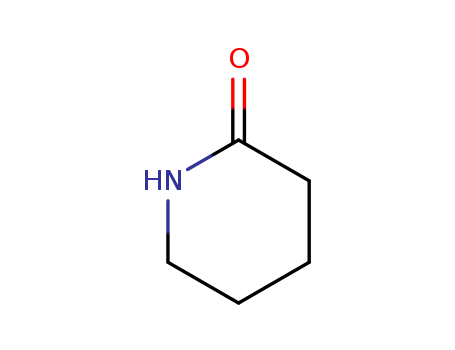
The research focuses on the concise and stereoselective synthesis of racemic erythro-methylphenidate (1), a compound that, despite its limited therapeutic properties, can be useful for the resolution and epimerization of the erythro-isomer. The study aims to develop a new synthetic strategy for this compound, starting from piperidine-2-one and employing a modified Eschenmoser sulfide contraction reaction. Key chemicals used in the process include piperidine-2-thione (3), 2-bromo-2-phenylmethylacetate (4), and various reducing agents such as NaBH4/AcOH, NaCNBH3/HCl, and NaHB(OAc)3/AcOH. The researchers successfully synthesized (+/?)-erythro-methylphenidate in three steps with an overall yield of 52%, while also observing the concurrent formation of thiazolidinone 5, which is subject to ongoing investigation regarding its formation mechanism. The study concludes with a novel and efficient method for synthesizing (+/?)-erythro-methylphenidate, highlighting the importance of reaction conditions in controlling the formation of desired products.
10.1039/c4cc02645d
The study presents an efficient synthetic route to produce tosyl-protected (2S)-phenyl-3-piperidone, a common intermediate for many drugs, from biomass-derived furfural. Furfural, a platform chemical derived from agricultural waste like rice straw, is transformed into the piperidone core structure through a series of reactions involving 4-methylbenzenesulfonamide, a Lewis acid catalyst, and a rhodium-catalyzed asymmetric arylation. The aza-Achmatowicz rearrangement and hydrogenation steps further convert the intermediate into the desired piperidone. The synthetic utility of this piperidone is demonstrated by synthesizing a NK1 receptor antagonist. This method is advantageous due to its short synthetic route, high yield, minimal loss of optical purity, and the use of a renewable biomass-derived starting material, addressing sustainability and environmental concerns associated with traditional methods and the disposal of agricultural waste.


 Xi
Xi


