Refernces
10.1016/S0957-4166(98)00087-1
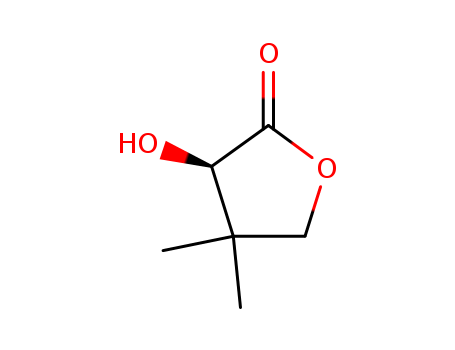
The research focuses on the asymmetric Diels–Alder addition of cyclopentadiene to chiral 1,4-naphthoquinones, with the aim of achieving high levels of diastereomeric excess. The purpose of this study was to develop a method for the stereoselective formation of cyclopentannulated products, which can be further transformed into pyranonaphthoquinones, a class of compounds related to the pyranonaphthoquinone antibiotics. The researchers used various chiral auxiliaries, including (R)-pantolactone, (S)-N-methyl-2-hydroxysuccinimide, and trans-2-phenylcyclohexanol, which when combined with Lewis acid conditions, led to significant asymmetric induction. The conclusions drawn from the study were that the use of chiral auxiliaries at C-2 of 1,4-naphthoquinones enabled up to 96% stereoinduction in Diels–Alder cycloadditions with cyclopentadiene. The chiral auxiliaries could be removed from the fragmented products in acceptable yields, allowing for the formation of cyclopentannulated pyranonaphthoquinone ring systems, similar to those found in nature.
10.1021/ol201336x
The study details the first enantiospecific total synthesis of isofregenedadiol, a bicyclic diterpene isolated from Halium Viscosum. The synthesis begins with D-(-)-pantolactone and involves a key one-pot quadruple reaction sequence comprising enyne ring-closing metathesis (RCM), cross-metathesis, Diels–Alder cycloaddition, and aromatization. This innovative sequence constructs the target skeleton efficiently. The enyne precursor is prepared from D-(-)-pantolactone through a series of steps including epoxide opening, protection, deprotection, and oxidation. The one-pot process yields the tetrahydronaphthalene derivative, which is then converted to isofregenedadiol through reduction, bromination, and deprotection. The synthesized compound's structure is confirmed by spectral data and single-crystal X-ray analysis, matching the natural product. Additionally, the synthesis of intermediate diene 8 allows for formal syntheses of 3(S)-hydroxytanshinone and 3(S),17-dihydroxytanshinone, highlighting the versatility of this synthetic approach.
10.1021/jo9712714
The research focuses on the enantioselective synthesis of α-dibenzylamino alcohols, which are key precursors to synthetically important R-amino aldehydes, also known as Reetz aldehydes. These compounds are valuable due to their stability and high diastereoselectivity in reactions with organometallics. The study presents a dynamic kinetic resolution process for the preparation of these alcohols from racemic α-halo acids, using (R)pantolactone esters and primary amines, including dibenzylamine, in the presence of tetra-n-butylammonium iodide. The process yields (S,R)-R-amino esters with good to excellent de's (77-98%) and acceptable yields (60-85%). The resulting esters are then reduced with LiAlH4 to give enantiomerically enriched α-dibenzylamino alcohols without loss of stereochemical integrity. The study also explores the use of tert-butyl (4S)1-methyl-2-oxoimidazolidine-4-carboxylate as a chiral auxiliary, which was found to be superior to (R)-pantolactone in the dynamic kinetic resolution process. The research concludes that these auxiliaries can provide a variety of α-dibenzylamino alcohols and the derived Reetz aldehydes in either enantiomeric form, offering an efficient route to these compounds.