10.1002/adsc.200404032
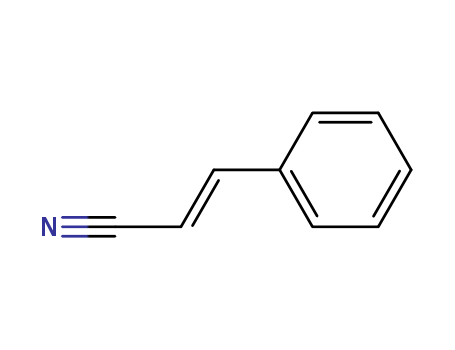
The research focuses on the asymmetric cis-dihydroxylation of cinnamonitrile to produce trans-3-[(5S,6R)-5,6-dihydroxycyclohexa-1,3-dienyl]-acrylonitrile using chlorobenzene dioxygenase (CDO) in recombinant Escherichia coli JM101 (pTEZ30). The experiments were conducted on different scales (20 mL, 2 L, and 30 L) to evaluate the biotransformation efficiency and volumetric productivity. Key reactants included cinnamonitrile and CDO-expressing bacterial cells, with analyses performed using HPLC to monitor product formation and determine yields. The study also involved assessing specific activities of CDO, growth rates of the bacterial cells, and the impact of substrate and product concentrations on biocatalytic performance, ultimately demonstrating the scalability and effectiveness of the process for producing valuable chiral compounds.
10.1016/j.jcat.2005.06.011
The research investigates the structure-selectivity relationship in the chemoselective hydrogenation of various unsaturated nitriles using different catalysts. The purpose of the study was to understand how the molecular structure of substrates influences the selectivity for unsaturated amines and to explore the scope and limitations of this type of hydrogenation. The researchers used several unsaturated nitriles, including cinnamonitrile, cyclohex-1-enyl-acetonitrile, acrylonitrile, 3,3-dimethyl-acrylonitrile, geranylnitrile, and 2- and 3-pentenenitrile, which were hydrogenated over Cr-doped Raney cobalt and nickel, as well as their undoped equivalents. The conclusions drawn from the study were that the position of the double bond relative to the nitrile group and the substitution of the double bond are crucial factors in determining the chemoselectivity for unsaturated amines. The highest selectivities were obtained when the double bond was not conjugated with the nitrile group, and the further the C=C bond was from the C≡N group, the higher the selectivity. Additionally, the presence of more substituents at the C=C bond increased the selectivity for unsaturated amines. The study also highlighted the suitability of Raney cobalt, especially Cr-doped Raney cobalt, for the chemoselective hydrogenation of unsaturated nitriles, while Raney nickel catalysts were found to be less selective due to their higher activity in C=C bond hydrogenation.


 Xi
Xi


