Refernces
10.1016/S0960-894X(01)00752-1
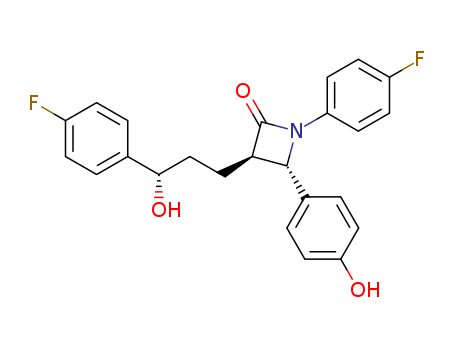
The study focuses on the design and synthesis of fluorescent analogues of cholesterol absorption inhibitors (CAIs), specifically those related to the 2-azetidinone class, such as Sch 58235. The researchers aimed to create single enantiomer fluorescent CAIs to investigate the mechanism of action (MOA) of these inhibitors. They initially synthesized a benzothiadiazole-containing analogue (7) and its glucuronide (8), but found the fluorescence too dim for detailed binding studies. Subsequent efforts involved creating analogues with fluorescein-like properties using palladium coupling technology, resulting in compound 14, which was abandoned due to sensitivity issues. Finally, they used a BODIPY moiety to produce a stable, highly fluorescent CAI (16) with suitable biological activity. All synthesized compounds were tested in a rapid cholesterol absorption assay in rats, confirming their potency as CAIs and suitability for MOA studies.
10.1002/anie.201803228
The study presents a nickel-catalyzed reductive cross-coupling method for the late-stage monofluoroalkylation of aryl halides with unactivated fluoroalkyl halides. The key to this method's success lies in the combination of diverse readily available nitrogen ligands, specifically bidentate and monodentate pyridine-type ligands, which generate easily tunable catalysts. This approach enables the synthesis of fluoroalkylated drug-like molecules under mild conditions with high efficiency and excellent functional group tolerance. The researchers optimized the reaction conditions using phenyl iodide as the substrate and 1-fluoro-1-iodo ethylbenzene as the coupling partner, identifying dmbpy and 4-CN-Py as the optimal ligands. The method demonstrated broad scope, successfully fluorinating various aryl iodides and bromides, including those with electron-donating and withdrawing groups, as well as complex pharmaceuticals like Ezetimibe and Estrone. The study also extended the method to non-fluorinated alkyl halides, showing its potential for late-stage alkylation of drugs. Mechanistic studies suggested the involvement of a nickel-based catalytic cycle with a free monofluoroalkyl radical. This combinatorial catalysis strategy offers a solution for nickel-catalyzed reductive cross-coupling reactions and provides an efficient way to synthesize fluoroalkylated drug-like molecules for drug discovery.