Anti-atherosclerotic Drugs
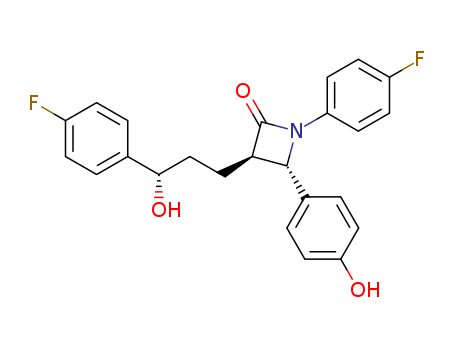
Anti-atherosclerotic drugs are medications designed to prevent or treat atherosclerosis, a condition characterized by the buildup of plaques within the arterial walls, leading to narrowed and hardened arteries. These drugs work through various mechanisms to reduce cholesterol levels, inhibit plaque formation, and improve overall cardiovascular health. Statins (such as atorvastatin and simvastatin) are commonly used to lower low-density lipoprotein (LDL) cholesterol by inhibiting the enzyme HMG-CoA reductase. Other drugs include PCSK9 inhibitors (like evolocumab) that reduce LDL cholesterol levels by enhancing its clearance from the bloodstream, and ezetimibe, which decreases cholesterol absorption in the intestine. Antiplatelet agents (such as aspirin) and anticoagulants help prevent blood clots that can form on plaques and lead to heart attacks or strokes.
- Structure
- Product name
- CAS No.
- Molecular formula
- Inquiry
Total:8 Page 1 of 1 1
![tert-Butyl (E)-3,5-dihydroxy-7-[3'-(4''-fluorophenyl)-1'-methylethyl-indol-2'-yl]-6-heptenoate](http://file1.lookchem.com/300w/substances/2022-03-09-04/cde1ba09-4053-4004-9816-8273c3f6e8aa.png)
![tert-Butyl (E)-7-[3-(4-fluorophenyl)-1-(1-methylethyl)-1H-indol-2-yl]-5-hydroxy-3-oxo-6-heptenoate](http://file1.lookchem.com/300w/substances/2022-03-09-04/53145d77-185e-47f7-813a-73b95ba8afe3.png)


![3-[(2R,5S)-5-(4-Fluorophenyl)-2-[(S)-[(4-fluorophenyl(amino)]][4-[trimethylsilyl]-oxy]phenyl]methyl]-1-oxo-5-[(trimethylsily)-oxy]pentyl]-4-phenyl-(4S)-2-oxazolidinone](http://file1.lookchem.com/cas/reactions/2021/07/03/14563080.png)