




Relevant articles and documents
Design, synthesis, crystal structure, biological evaluation and molecular docking studies of carbazole-arylpiperazine derivatives
Xu, Wei Huang, Junjun Shao, Binhao Xu, Xingjie Jiang, Renwang Yuan, Mu
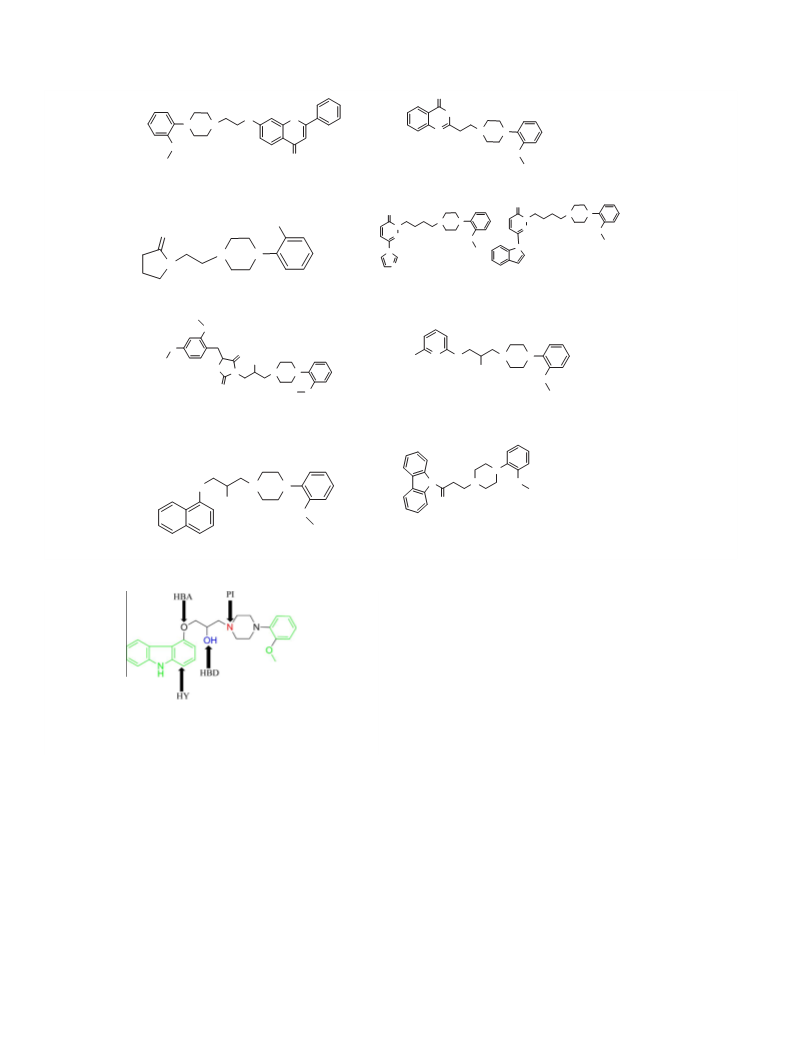
Subtype-selective α1-adrenoceptor (AR) antagonists display optimum therapeutic efficacies for the treatment of benign prostatic hyperplasia (BPH). In this study, we designed and synthesized novel carbazole-arylpiperazines derivatives (1 and 2) on the basis of the proposed pharmacophore model for α1-AR antagonists. Structural properties were investigated using single-crystal X-ray diffraction analysis. Comparison of crystal structures with ligand-based pharmacophore models revealed that the two agents may possess antagonistic effects on α1Dsubtype. Tissue functional assay in vitro showed that compound 2 exerted strong antagonistic activity on α1B-AR (pA27.13) with a poor selectivity for α1Aand α1Dsubtypes. Compound 1 exhibited enhanced antagonistic effect on α1Dsubtype (pA27.06) and excellent selectivity for α1Dover α1B(α1D/α1Bratio?=?79.4). To illustrate the relationship between antagonistic activity and chemical structure, molecular docking studies were performed using the homology models of α1receptors. Binding mechanism indicated that small hydrophobic substituents attached to the arylpiperazine moiety were essential for rational design of α1D-selective antagonists.


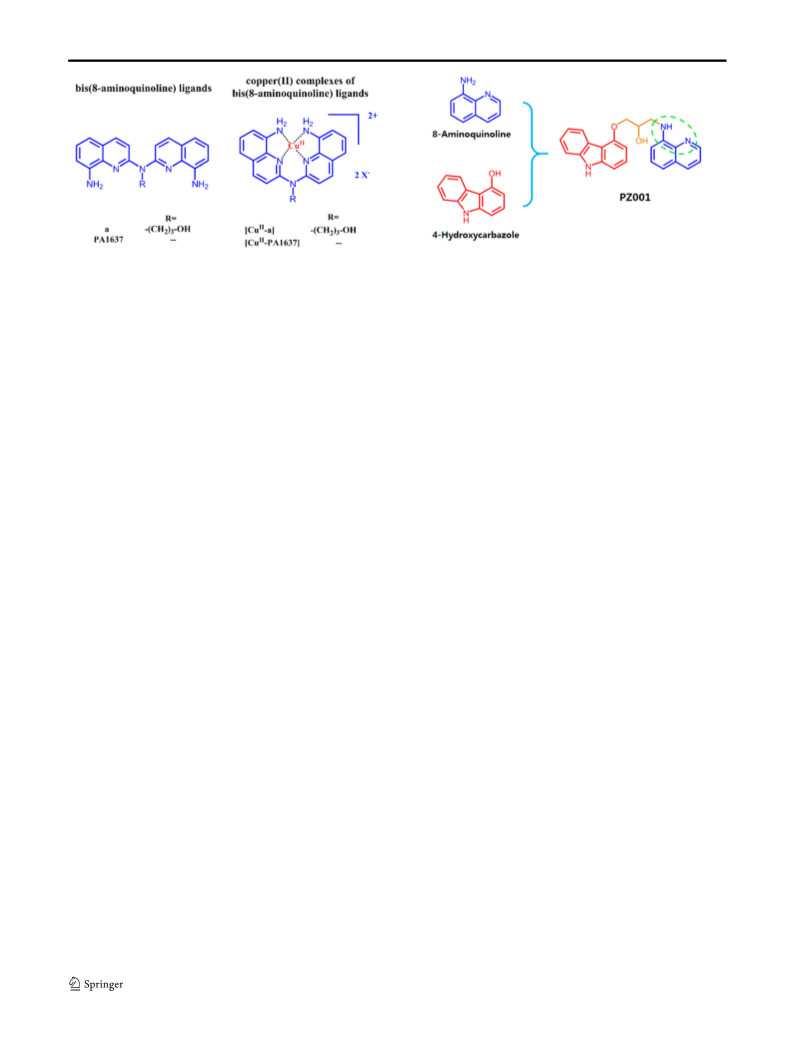
Discovery of a novel multifunctional carbazole–aminoquinoline dimer for Alzheimer's disease: copper selective chelation, anti-amyloid aggregation, and neuroprotection
Zhang, Xiao Wang, Ying Wang, Sheng-nan Chen, Qiu-he Tu, Ya-lin Yang, Xiao-hong Chen, Jing-kao Yan, Jin-wu Pi, Rong-biao Wang, Yan
A novel multifunctional carbazole–aminoquinoline dimer PZ001 was designed, synthesized, and evaluated. The results indicated that PZ001 possessed selective copper chelation, and inhibited copper-induced Aβ1–42 aggregation. Furthermore, PZ001 exerted powerful neuroprotection against glutamate-induced HT22 cell death. These results suggest that PZ001 may be a promising multifunctional anti-AD compound.


 Thailand | Contact:Pricha Siriarora
 South Africa | Contact:AAron Thomas
 India | Contact:sir