Products Categories
| CAS No.: | 628-63-7 |
|---|---|
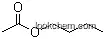
| Name: | Amyl acetate |
| Molecular Structure: | |
|
|
|
| Formula: | C7H14O2 |
| Molecular Weight: | 130.187 |
| Synonyms: | Acetic acid, pentyl ester; |
| EINECS: | 211-047-3 |
| Density: | 0.876 g/cm3 |
| Melting Point: | -100 °C(lit.) |
| Boiling Point: | 149.9 °C at 760 mmHg |
| Flash Point: | 23.9 °C |
| Solubility: | Slightly soluble in water |
| Appearance: | Clear colorless liquid |
| Hazard Symbols: |
 Xi Xi
|
| Risk Codes: | 10-66 |
| Safety: | 23-25-24/25 |
| Transport Information: | UN 1104 3/PG 3 |
| PSA: | 26.30000 |
| LogP: | 1.73970 |
- 81281-59-67-Benzylideneaminotheophylline
- 82993-81-5D-threo-Ritalinic acid hydrochloride
- 73441-42-6METHYL-5-CHLORO-2,2-DIMETHYLVALERATE
- 68439-39-4Poly(oxy-1,2-ethanediyl), alpha-(2-ethylhexyl)-omega-hydroxy-,
- 852475-26-4MC1568
- 958254-66-51H-Imidazo[4,5-b]pyridine-2-carboxaldehyde, 1-methyl-, hydrochloride
- 99170-93-1N-Methyl-2-oxazolamine
- 717878-06-31-(4-fluorophenyl)-4-nitro-1H-imidazole
- 914458-26-7[5-(2-fluorophenyl)-1-pentyl-1H-pyrrol-3-yl]-1-naphthalenyl-Methanone
- 894852-01-87-BROMO-2,2-DIMETHYL-2H-PYRIDO[3,2-B][1,4]OXAZIN-3(4H)-ONE

| Conditions | Yield |
|---|---|
| zirconium(IV) oxide at 200℃; in vapor-phase; | 100% |
| With K5 for 2h; Heating; | 90% |
| 18-crown-6 ether; potassium carbonate at 170℃; Product distribution; various catalysts; | 61 % Chromat. |
| 18-crown-6 ether; potassium carbonate at 170℃; | 61 % Chromat. |
| With Mycobacterium smegmatis acyl transferase In aq. phosphate buffer at 21℃; for 1h; pH=7.5; Inert atmosphere; Enzymatic reaction; |
| Conditions | Yield |
|---|---|
| With SiO2-supported Co(II) Salen complex catalyst at 50℃; for 0.833333h; | 99% |
| With N-methylmorpholinium propanesulfonic acid ammonium hydrogensulfate at 25℃; for 0.05h; Inert atmosphere; neat (no solvent); chemoselective reaction; | 98% |
| With Methylenediphosphonic acid at 20℃; for 2h; neat (no solvent); | 98% |
| Conditions | Yield |
|---|---|
| With K5 for 1h; Heating; | 97% |
| With Rhizomucor miehei lipase In n-heptane at 40℃; for 24h; Enzymatic reaction; | 96.3% |
| With Fe(SO4)3 * xH2O for 1.5h; Heating; | 94% |
| Conditions | Yield |
|---|---|
| With 3-((3-(trisilyloxy)propyl)propionamide)-1-methylimidazolium chloride ionic liquid supported on magnetic nanoparticle Fe2O3 at 20℃; for 0.833333h; | A 97% B n/a |
| Conditions | Yield |
|---|---|
| With Aliquat 336 at 120℃; | 95% |
| <p>-(CH2)3-<sup>+</sup>PBu3</p> In water at 110℃; for 8h; | 70% |
| Conditions | Yield |
|---|---|
| With [Zn(BH4)2(nmi)] In diethyl ether at 20℃; for 0.2h; | 95% |
| Conditions | Yield |
|---|---|
| With D-(+)-glucose In aq. buffer at 15℃; for 24h; | 73.6% |
| With disodium hydrogenphosphate; dichloromethane; trifluoroacetyl peroxide | |
| With 3-chloro-benzenecarboperoxoic acid In chloroform at 49.7℃; under 750.06 Torr; Kinetics; Thermodynamic data; Further Variations:; Pressures; Baeyer-Villiger oxidation; | |
| With glucose dehydrogenase; D-glucose; potassium chloride; NADPH In aq. buffer at 30℃; pH=8.5; Baeyer-Villiger Ketone Oxidation; Enzymatic reaction; regioselective reaction; |


- 463-04-7
n-Amyl nitrite
- 1112-67-0
tetrabutyl-ammonium chloride
- 108-90-7
chlorobenzene

A
- 628-63-7
1-pentyl acetate
B
- 20602-31-7
propanedioic acid dipentyl ester
| Conditions | Yield |
|---|---|
| With stannous chloride; nitrogen | A 59.1% B n/a |
| Conditions | Yield |
|---|---|
| under 630 Torr; Heating / reflux; | 38.1% |
- 71-41-0
pentan-1-ol
- 78-39-7
Triethyl orthoacetate
A
- 693-65-2
dipentyl ether
B
- 17952-11-3
1-ethoxypentane
C
- 628-63-7
1-pentyl acetate
| Conditions | Yield |
|---|---|
| silica gel at 20℃; for 12h; | A 10% B 10% C 35% |

- Total:22 Page 1 of 1 1

What can I do for you?
Get Best Price


Specification
The Amyl acetate, with the CAS registry number 628-63-7, is also known as 1-Pentyl acetate. It belongs to the product category of Pharmaceutical Intermediates. Its EINECS registry number is 211-047-3. This chemical's molecular formula is C7H14O2 and molecular weight is 130.18486. Its IUPAC name is called pentyl acetate. This chemical's classification codes are Human Data; Skin / Eye Irritant.
Physical properties of Amyl acetate are: (1)ACD/LogP: 2.314; (2)ACD/LogD (pH 5.5): 2.31; (3)ACD/LogD (pH 7.4): 2.31; (4)ACD/BCF (pH 5.5): 33.76; (5)ACD/BCF (pH 7.4): 33.76; (6)ACD/KOC (pH 5.5): 432.16; (7)ACD/KOC (pH 7.4): 432.16; (8)#H bond acceptors:2; (9)#Freely Rotating Bonds: 5; (10)Index of Refraction: 1.406 ; (11)Molar Refractivity: 36.254 cm3; (12)Molar Volume: 147.565 cm3; (13)Polarizability: 14.372 10-24cm3; (14)Surface Tension: 26.681999206543 dyne/cm; (15)Density: 0.882 g/cm3; (16)Flash Point: 23.889 °C; (17)Enthalpy of Vaporization: 38.684 kJ/mol; (18)Boiling Point: 149.942 °C at 760 mmHg; (19)Vapour Pressure: 3.93300008773804 mmHg at 25°C
Preparation of Amyl acetate: The compound is the condensation product of acetic acid and 1-pentanol
.bmp)
Uses of Amyl acetate: it can be used to produce pentan-1-ol at temperature of 25 °C. This reaction will need reagent polystyrene-CH2=O(CH2CH2O)5H copolymer, 60percent aq. KOH and solvent benzene with reaction time of 3 hours. The yield is about 100%.
.png)
When you are using this chemical, please be cautious about it as the following:
This chemical may cause inflammation to the skin or other mucous membranes. It is flammable. Repeated exposure may cause skin dryness or cracking. You should not breathe its gas/fumes/vapour/spray (appropriate wording to be specified by the manufacturer). What's more, you must avoid contacting it with skin and eyes.
You can still convert the following datas into molecular structure:
(1)Canonical SMILES: CCCCCOC(=O)C
(2)InChI: InChI=1S/C7H14O2/c1-3-4-5-6-9-7(2)8/h3-6H2,1-2H3
(3)InChIKey: PGMYKACGEOXYJE-UHFFFAOYSA-N
The toxicity data is as follows:
| Organism | Test Type | Route | Reported Dose (Normalized Dose) | Effect | Source |
|---|---|---|---|---|---|
| guinea pig | LDLo | intraperitoneal | 1500mg/kg (1500mg/kg) | American Industrial Hygiene Association Journal. Vol. 35, Pg. 21, 1974. | |
| human | TCLo | inhalation | 5000mg/m3/30M (5000mg/m3) | SENSE ORGANS AND SPECIAL SENSES: CONJUNCTIVE IRRITATION: EYE BEHAVIORAL: SOMNOLENCE (GENERAL DEPRESSED ACTIVITY) LUNGS, THORAX, OR RESPIRATION: OTHER CHANGES | Archiv fuer Hygiene. Vol. 78, Pg. 260, 1913. |
| rabbit | LD50 | oral | 7400mg/kg (7400mg/kg) | "Prehled Prumyslove Toxikologie; Organicke Latky," Marhold, J., Prague, Czechoslovakia, Avicenum, 1986Vol. -, Pg. 357, 1986. | |
| rat | LC | inhalation | > 3000ppm/6H (3000ppm) | National Technical Information Service. Vol. OTS0558878, | |
| rat | LD50 | oral | > 1600mg/kg (1600mg/kg) | National Technical Information Service. Vol. OTS0556694, |