
Base Information
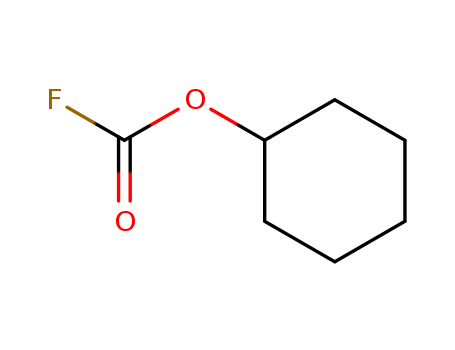
- Chemical Name:Carbonofluoridic acid, cyclohexyl ester
- CAS No.:351-79-1
- Molecular Formula:C7H11FO2
- Molecular Weight:146.162
- Hs Code.:
- Mol file:351-79-1.mol
Synonyms:
Synonyms:
98% *data from raw suppliers
There total 4 articles about Carbonofluoridic acid, cyclohexyl ester which guide to synthetic route it. The literature collected by LookChem mainly comes from the sharing of users and the free literature resources found by Internet computing technology. We keep the original model of the professional version of literature to make it easier and faster for users to retrieve and use. At the same time, we analyze and calculate the most feasible synthesis route with the highest yield for your reference as below:
Reference yield: 84.0%
Reference yield:
Reference yield:
The research explores a novel and efficient method for synthesizing (Z)-1,2-diorganothio-1-alkenes through the hydrothiolation of alkynyl sulfides using cesium hydroxide as a catalyst. The purpose of this study is to develop a mild, efficient, and highly stereoselective method for the preparation of both symmetrical and unsymmetrical (Z)-1,2-diorganothio-1-alkenes, which are important intermediates in organic synthesis and have applications in coordination chemistry and microelectronics. The key chemicals involved include alkynyl sulfides, arylthiols, and cesium hydroxide. The cesium hydroxide plays a crucial role as a catalyst, generating highly reactive anions that facilitate the nucleophilic addition of arylthiols to alkynyl sulfides, resulting in the formation of the desired (Z)-1,2-diorganothio-1-alkenes with excellent yields and stereoselectivity. The study concludes that this method is advantageous over existing methods as it does not require high temperatures or expensive transition metals and radical initiators. It provides a new and expedient way for the synthesis of these compounds, and the researchers suggest that further studies on related reactions catalyzed by cesium hydroxide will be reported soon.
The study presents an efficient method for the N-alkylation of sulfonamides and amines using alcohols as alkylating reagents, catalyzed by manganese dioxide (MnO2) under aerobic and solvent-free conditions. This approach is a greener alternative to traditional methods, as it avoids the use of noble metal catalysts, preformed complexes, and inert atmosphere protection. The researchers found that MnO2 is a less toxic, readily available, and recyclable catalyst that can facilitate the reaction at mild temperatures without the need for high pressure or large excess amounts of reagents. The method was successfully applied to a variety of sulfonamides and amines, yielding good to high product yields. Additionally, the study explores the potential mechanism of the reaction, suggesting a process involving Mn-mediated alcohol oxidation, condensation, transfer hydrogenation, and regeneration of the aldehyde, which completes the catalytic cycle. The developed method simplifies operation and workup procedures and may serve as a promising alternative to existing N-alkylation methods.
The research presents a highly efficient method for synthesizing phenols through the copper-catalyzed hydroxylation of aryl iodides, bromides, and chlorides under mild reaction conditions. The key chemicals involved include 8-hydroxyquinolin-N-oxide, which serves as an efficient ligand, and copper iodide (CuI) as the catalyst. The reaction system also utilizes cesium hydroxide (CsOH) as the base and a DMSO/H2O solvent mixture. This method is notable for its functional group tolerance and selectivity, making it a practical and cost-effective approach for converting aryl halides to phenols. Additionally, the protocol allows for the one-pot synthesis of alkyl aryl ethers from aryl halides and alkyl halides, further expanding its utility in organic synthesis.

What can I do for you?
Get Best Price

Total 8 Pictures about this product
![[1,3]-dioxolan-2-one](/Databaselist/images/loading.webp)


